Demand for Electronics Declines Due to Interest Rate Hikes and Recession Fears
[Asia Economy Reporter Kwon Haeyoung] As the global economic recession dampens demand for electronic products, semiconductor inventories are surging. The semiconductor industry has entered emergency management to overcome the 'semiconductor hardship period,' including reducing production and cutting jobs.
On the 27th (local time), The Wall Street Journal (WSJ) reported that demand for electronic products is declining due to interest rate hikes, stock market drops, and recession fears, stating that "semiconductors are overflowing worldwide."
The outlet cited the US investment firm SIG, reporting that the 'lead time'?the time from semiconductor orders to shipment?was quite long at the beginning of the pandemic but has rapidly shortened in recent months. As demand decreases, inventories are increasing. According to Swiss investment bank UBS, semiconductor inventory is usually measured in days, but recently it has exceeded the industry median of 40 days, soaring to the highest level in the past decade.
Just one to two years ago, the semiconductor industry faced supply disruptions, but it is now suddenly confronted with a crisis of rapidly increasing inventory. At the end of 2020, as the economy was gradually recovering from the COVID-19 shock, a supply shortage centered on automotive semiconductors spread. However, within just two years, the economy quickly cooled due to major countries' tightening policies amid high inflation, shrinking demand, and now the industry faces concerns over rising inventories.
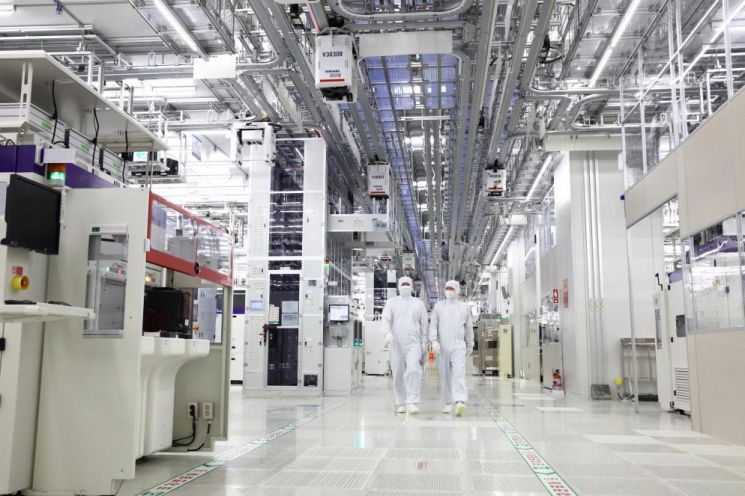
The WSJ reported that products from Hewlett-Packard (HP) and Dell, two of the world's largest PC manufacturers, are not selling recently and are staying longer in stores than at the beginning of the pandemic. HP stated, "Although there are signs of inventory depletion recently, inventory levels will remain high for the next two quarters," adding, "We hold a large amount of inventory especially in the personal product market and are driving very aggressive pricing policies to reduce inventory."
Accordingly, semiconductor manufacturers are "cutting jobs and reducing capital expenditures," and WSJ analyzed that "they are making desperate efforts to recover profitability, which has been deteriorating in recent months." US memory semiconductor manufacturer Micron confirmed market concerns about semiconductor inventory by announcing earnings shock-level results last week. This was right after Micron announced that its first-quarter (September to November) sales fell 47% year-on-year to $4.09 billion. Sanjay Mehrotra, CEO of Micron, said, "Semiconductor inventory levels are much higher than target levels," and "the semiconductor industry is experiencing the worst supply-demand imbalance in 13 years." Micron plans to cut 10% of its workforce.
However, despite this semiconductor oversupply, some manufacturers are preparing for medium- to long-term demand increases by promoting factory expansions. Micron plans to invest $100 billion to build a large-scale factory in northern New York.
WSJ reported, "The industry expects semiconductor demand to double by 2030, exceeding $1 trillion," and "some semiconductor companies see the recent inventory increase as an opportunity."
© The Asia Business Daily(www.asiae.co.kr). All rights reserved.
![Clutching a Stolen Dior Bag, Saying "I Hate Being Poor but Real"... The Grotesque Con of a "Human Knockoff" [Slate]](https://cwcontent.asiae.co.kr/asiaresize/183/2026021902243444107_1771435474.jpg)















