Success Two Years After Development Start
UL Eco-Friendly Certification & Highest Grade in Flame Retardant Test
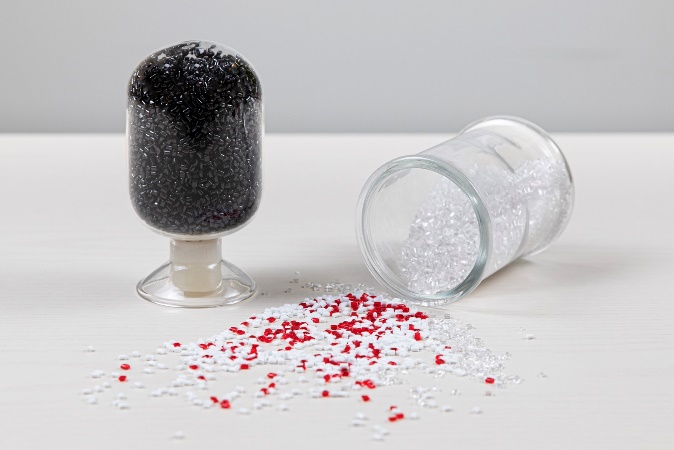
[Asia Economy Reporter Choi Seoyoon] Samyang Corporation, a chemical and food affiliate of Samyang Group, has succeeded in developing an eco-friendly material through plastic recycling for the first time in Korea.
On the 28th, Samyang announced that it had developed Korea's first eco-friendly polycarbonate (PC) containing more than 90% of post-consumer recycled polycarbonate (PCR PC) raw materials recycled after consumer use. PC, a transparent material, is an engineering plastic mainly used for automotive and home appliance interior and exterior parts, soundproof walls, and medical device components due to its resistance to impact and heat.
PCR PC is produced through a compounding process that mixes a certain ratio of recycled PC raw materials with new PC raw materials. This requires a high level of technology and know-how. During PC manufacturing, flame retardants, reinforcements, dyes, and other additives are added to enhance performance and aesthetics besides the polymer resin itself. However, these additives undergo deformation during the high-temperature melting process, weakening the inherent properties of PC. As a result, the maximum recycled PC content in PCR PC developed by domestic companies has been 85%, and most PCR PC products on the market contain 30-50% recycled PC raw materials.
Samyang started developing PCR PC last year and succeeded in developing PCR PC containing more than 90% recycled PC raw materials while maintaining the inherent properties of PC such as heat resistance, transparency, and impact resistance within two years. This was achieved by leveraging years of accumulated PC development know-how to redesign and optimize the ratios of recycled raw materials and additives during the compounding process from multiple angles. Securing a supply source of high-quality recycled PC raw materials with well-managed contamination and foreign substance control was also crucial.
PCR PC is environmentally friendly as it can reduce plastic waste and has the effect of reducing carbon emissions due to decreased energy consumption. Samyang stated that the PCR PC developed this time reduces carbon dioxide emissions by approximately 6,200 tons per 1,000 tons of production compared to general PC. This amount is equivalent to the carbon emissions of about 3,200 automobiles.
Recognizing this eco-friendliness, Samyang obtained the 'ECV (Environmental Claims Validations)' certification from UL, a U.S. safety standards development and certification organization. ECV is an environmental mark granted after verifying the validity of a product's environmental claims, such as the usage rate of reusable and recyclable materials. Additionally, it met the highest grade 'V-0' standard in the 'UL 94' vertical burn test. UL 94 is a flame retardancy test developed by UL, and V-0 is awarded only to plastics that self-extinguish within 10 seconds when ignited vertically.
Samyang plans to first apply the PCR PC to small electronics such as laptops. In the future, it will expand the application range to electronic products, interior products, and more, and continuously broaden the utilization by applying PCR PC to various plastic resins such as ABS and PBT.
Kang Hoseong, CEO of Samyang Corporation, said, “There are not many places worldwide that can produce PCR PC products containing more than 90% recycled plastic materials while maintaining the same properties as conventional PC,” adding, “We will continuously expand our high-quality eco-friendly product lineup to meet global market demand and contribute to enhancing the Group’s ESG competitiveness.”
Meanwhile, Samyang Group established its mid- to long-term growth strategy ‘Vision 2025’ last year and is promoting a growth strategy focused on ‘Eco-friendliness and Specialty.’ In July, Samyang developed an eco-friendly transparent flame-retardant PC without added flame retardants and is producing and selling base resin and compound products. In August, it expanded its eco-friendly business portfolio by signing a supply contract for plastic pellets made from recycled fishing nets.
Samyang Inochem began full-scale eco-friendly plastic business by building Korea’s first biomass material ‘Isosorbide’ plant capable of producing 15,000 tons annually at its Gunsan plant last November. In the packaging business, it is expanding its plastic recycling business by investing about 43 billion KRW in the Sihwa plant to establish a recycled PET chip production facility with a capacity of 21,000 tons.
© The Asia Business Daily(www.asiae.co.kr). All rights reserved.
![Clutching a Stolen Dior Bag, Saying "I Hate Being Poor but Real"... The Grotesque Con of a "Human Knockoff" [Slate]](https://cwcontent.asiae.co.kr/asiaresize/183/2026021902243444107_1771435474.jpg)
















