Bank of Korea, Global Economic Conditions and International Financial Market Outlook
Japan Completes Interest Rate Hikes Among Major Countries Except China
The Bank of Korea expects the global economic growth rate next year to significantly decline to around 2%, and explained that the global economy could slow down more than anticipated due to excessive monetary tightening policies by major central banks. As inflationary pressures weaken and the economy deteriorates, major countries including the United States, excluding Japan and China, are expected to conclude their interest rate hike cycles.
On the 27th, the Bank of Korea's Foreign Exchange Reserves Management Department analyzed this in its report titled "Outlook on Global Economic Conditions and International Financial Markets for Next Year." The Bank of Korea forecasted that growth rates in the US and Europe will decline due to the sharp tightening that began this year, increasing the likelihood of a recession next year. Conversely, China’s growth is expected to improve as private demand recovers following reopening.
The labor market is analyzed to inevitably see a rise in unemployment rates. In the US, as the real economy slows, the unemployment rate is projected to rise to the mid-4% range by the end of next year. With the Federal Reserve’s (Fed) terminal interest rate increasing, the unemployment rate could be even higher. The Euro area is also expected to experience a prolonged economic slowdown triggered by the energy crisis, with unemployment rates around 7%. China’s unemployment rate is expected to fall to the low 5% range due to economic recovery, while Japan is projected to maintain an unemployment rate in the mid-2% range, supported by sustained employment demand in the service sector centered on the tourism industry.
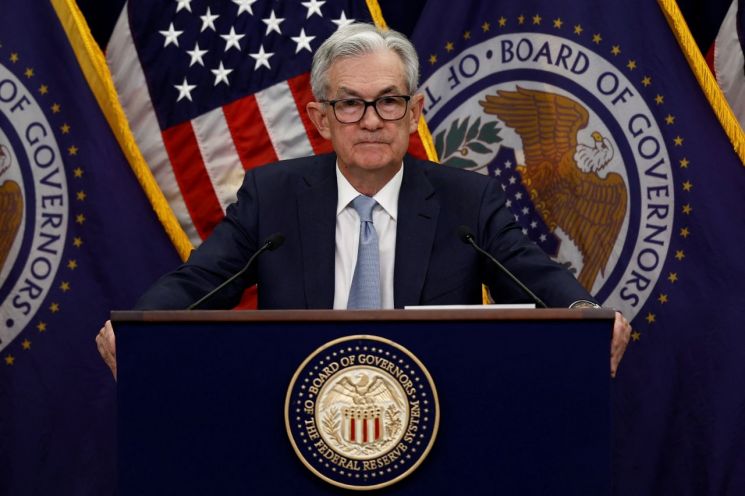
Inflation rates are expected to show differentiation by country. The US is projected to maintain a high level of service price inflation, exceeding 3%, while the Euro area is expected to experience high inflation around 6% despite reduced demand, due to energy supply issues. China’s inflation is expected to fluctuate in the mid-2% range as private demand increases, and Japan’s inflation is projected to hover in the mid-1% range due to the easing of the weak yen phenomenon.
In the first half of next year, major central banks excluding China and Japan are expected to slow the pace of policy rate hikes and conclude the rate hike cycle. This is because, having sharply raised policy rates this year, it is necessary to consider the cumulative effects of monetary tightening and policy transmission lags, and inflation is expected to gradually stabilize next year.
The Bank of Korea explained, "The Fed is expected to raise policy rates further in the first half of next year, pushing the terminal rate above 5%. Thereafter, it is expected to maintain a restrictive monetary policy stance until inflation stabilizes and keep policy rates unchanged until the end of next year." The European Central Bank (ECB) is expected to raise deposit rates to the low to mid-3% range in the first half of next year. Afterward, additional rate hikes will cease, but no rate cuts are expected.
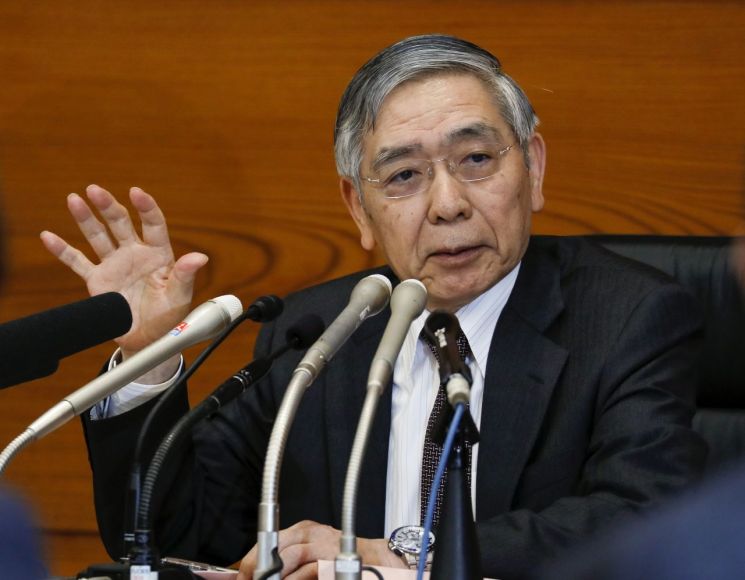
The Bank of Japan (BOJ) is expected to gradually withdraw its accommodative monetary policy stance following this month’s yield curve control (YCC) policy, which is perceived as a signal of a policy shift. After Governor Haruhiko Kuroda’s retirement in April next year, there is a possibility of a full-scale policy shift, including further adjustments to YCC and the abolition of the negative interest rate policy.
The People’s Bank of China is expected to maintain an accommodative monetary policy to support economic recovery next year. The Bank of Korea stated, "With the delay in China’s real estate market rebound and the expected end of rate hikes by major countries, policy rates are likely to remain low. If easing is necessary, quantity-based monetary policy tools such as lending will be used rather than price-based policies."
The Bank of Korea explained that with the normalization of monetary policy, market interest rates will rise significantly, fundamentally changing the investment environment. As bond yields provide substantial returns, asset allocation between stocks and bonds will differ from the past low-interest-rate environment, and risk assessment functions in the bond market will be activated, leading to a full-scale differentiation in yields among bonds. The Bank of Korea emphasized, "It is necessary to pay attention to capital flows depending on changes in the correlation between bonds and stocks and the continuation of alternative investments."
© The Asia Business Daily(www.asiae.co.kr). All rights reserved.
![Clutching a Stolen Dior Bag, Saying "I Hate Being Poor but Real"... The Grotesque Con of a "Human Knockoff" [Slate]](https://cwcontent.asiae.co.kr/asiaresize/183/2026021902243444107_1771435474.jpg)

















