Health Monitoring at Home Starting from the 8th of Next Month
Quarantine Eased in Some Cities Including Beijing
[Asia Economy Beijing=Special Correspondent Kim Hyunjung] China is abolishing the mandatory facility quarantine system for overseas arrivals, which it had strictly enforced as part of its COVID-19 prevention measures.
The Chinese National Health Commission and the Joint Prevention and Control Mechanism of the State Council announced on the 26th that they will abolish the facility quarantine system for overseas arrivals starting from the 8th of next month as part of optimized border epidemic prevention measures.
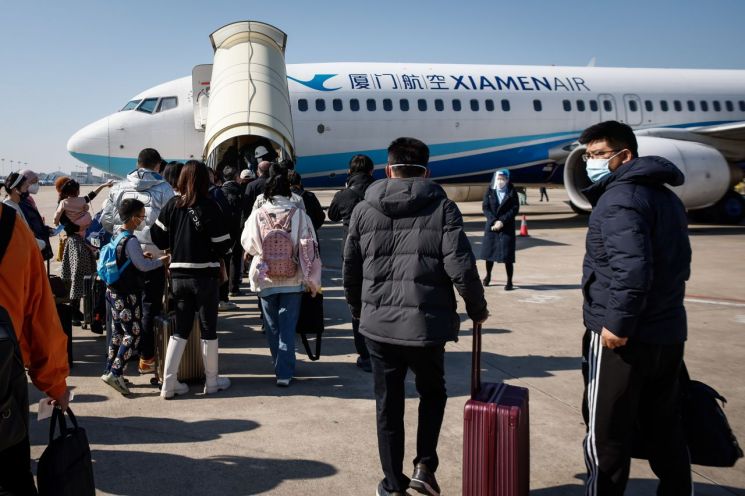
Until now, China had implemented the "5+3" policy, which mandated 5 days of facility quarantine followed by 3 days of self-quarantine for overseas arrivals. However, with this regulatory relaxation, travelers entering China from abroad will no longer be required to stay in separate quarantine facilities or hotels, but will only undergo health monitoring such as temperature checks at home or other accommodations.
If there are no abnormalities during the health declaration and quarantine process upon arrival in China, the previously mandatory polymerase chain reaction (PCR) test will no longer be required. However, a negative PCR test certificate conducted within 48 hours prior to departure from overseas must still be submitted mandatorily.
On the same day, authorities also announced plans to downgrade the COVID-19 infectious disease classification from the highest level A to level B. Furthermore, they stated that future efforts will focus on treatment rather than quarantine, and emphasize reducing the risk of severe illness through vaccination.
On the ground, the facility quarantine guidelines that had been strictly enforced have already become relaxed. A Korean expatriate recently received instructions to leave the quarantine facility just two days after arriving in Beijing. Another Chinese national who visited the United States and returned to Shenyang, Liaoning Province last weekend was allowed to go home without quarantine. The usual concentrated management, where authorities transport individuals to their residences in disinfected vehicles on the day of quarantine release, has also disappeared. Recently, authorities have been advising people to use taxis or other means on their own.
Major foreign media outlets have predicted that this regulatory easing will improve tourism consumption within China. However, international flights to and from China have not yet returned to previous levels, and tourist visas are still not being issued, making a rapid increase in overseas arrivals unlikely in the short term. Bloomberg reported, "Tourism revenue in China decreased by 26% compared to the previous year during the National Day holiday in October, but this easing of requirements could lead to an increase," adding, "Although there is a high possibility of a short-term backlash due to a rise in infection cases, once the wave of infections passes, a path toward full recovery will open."
© The Asia Business Daily(www.asiae.co.kr). All rights reserved.
![Clutching a Stolen Dior Bag, Saying "I Hate Being Poor but Real"... The Grotesque Con of a "Human Knockoff" [Slate]](https://cwcontent.asiae.co.kr/asiaresize/183/2026021902243444107_1771435474.jpg)















