Gaining Support for Approval Rate Rebound and Defense Strengthening
Finding a Unique Identity for the 'Hiroshima Plan'
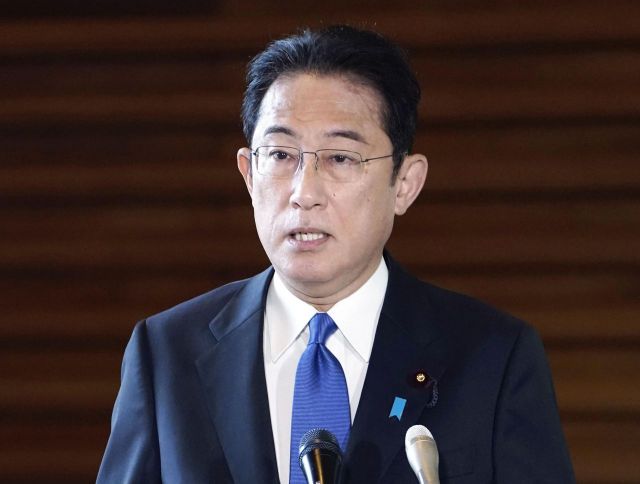
[Asia Economy Reporter Jeon Jinyoung] The Japanese government is drawing international attention as it is reported to invite U.S. President Joe Biden and G7 leaders to Nagasaki and Hiroshima, the sites of atomic bombings, in line with the upcoming Group of Seven (G7) summit scheduled for May next year. Holding an international event with major world leaders at the atomic bomb sites, which represent the most tragic moments in Japan's history, is being seen as unprecedented.
Inside and outside Japan, there are evaluations that Prime Minister Fumio Kishida, who has recorded historically low approval ratings, has thrown the atomic bomb sites into the political arena. Analysts suggest that he will use this opportunity to showcase his strength as a diplomatic and security expert and gain persuasive power for strengthening defense capabilities.
◆Historically Low Approval Ratings... Need to Persuade on Defense Enhancement
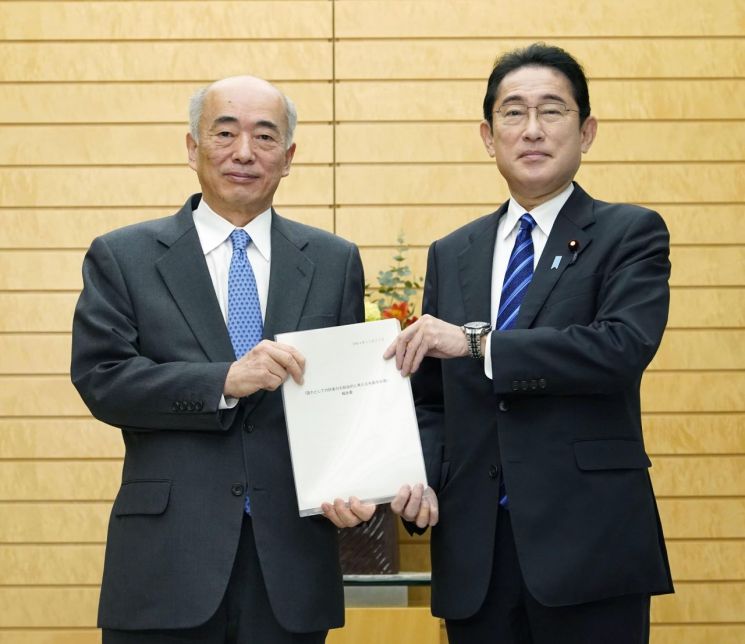
According to NHK on the 23rd, G7 leaders are scheduled to tour the Hiroshima Atomic Bomb Museum before the G7 meeting held in Hiroshima. President Biden will visit Nagasaki during his trip to Japan. It is highly likely that Prime Minister Kishida will accompany both the Nagasaki and Hiroshima visits. NHK reported that this visit schedule was due to unofficial inquiries by the Japanese government.
This invitation is analyzed to be related to Kishida's declining approval ratings. Kishida's approval ratings have indeed continued to fall. According to a survey conducted by Asahi Shimbun from the 17th to 18th among 1,357 voters nationwide, the approval rating for the Kishida Cabinet was 31%, marking the lowest since its inception. The disapproval rating rose to 57%, up 6 percentage points from the previous week’s 51%.
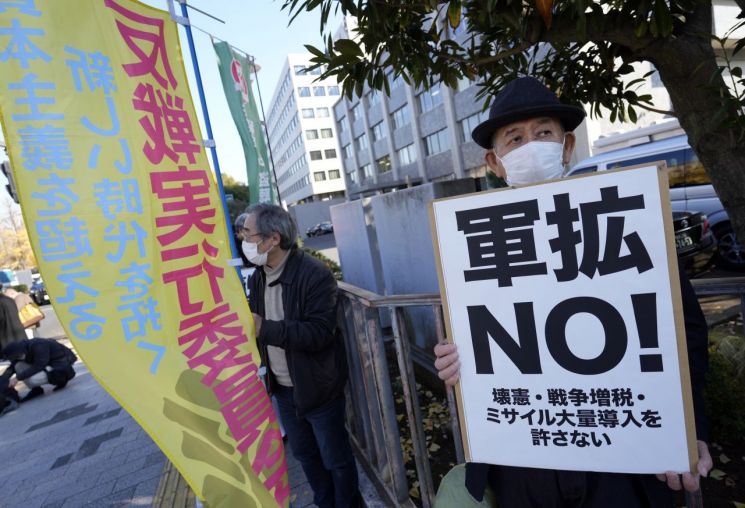
Asahi Shimbun cited the revision of the three security documents as the main cause of the approval rating decline. Prime Minister Kishida revised the security documents in a direction to strengthen defense capabilities, but the issuance of government bonds and tax increases to fund the defense budget increase are inevitable, leading to strong public opposition. In the Asahi Shimbun survey, 67% opposed issuing government bonds to increase defense spending, while 27% supported it. Among the 67% opposing bond issuance, 62% said they do not support the Kishida Cabinet.
Therefore, the visit of world leaders to the atomic bomb sites, especially President Biden’s visit to Nagasaki, appears largely aimed at gaining support for the recently announced defense enhancement. According to Kyodo News, U.S. Ambassador Rahm Emanuel positively evaluated Japan’s security document revision on the 20th, stating that "the U.S. government and bipartisan Congress support it." Emphasizing a world without nuclear weapons alongside world leaders at the atomic bomb sites can serve as an opportunity to stress that defense strengthening must underpin this goal.
Choi Eun-mi, a research fellow at the Asan Institute for Policy Studies, told this publication in a phone interview, “What Japan continues to emphasize through the revision of security documents is deterrence enhancement. Currently, threat countries such as Russia and North Korea continue to pose security threats. It is an opportunity to deliver a message aiming for a nuclear-free world at the atomic bomb sites of Hiroshima and Nagasaki while emphasizing the necessity of strengthening defense capabilities.”
◆Leverage Diplomatic Expertise to Aim for a Comeback
Facing the urgent need to put out the fire of declining approval ratings, the area where Prime Minister Kishida can make a decisive move is diplomacy and security. He served as Foreign Minister for 4 years and 8 months under the Abe Cabinet, building a domestic and international reputation as a diplomatic expert.
Previously, Kishida invited former U.S. President Barack Obama to Hiroshima during his tenure as Foreign Minister. If he invites President Biden to Nagasaki, it would mean calling both U.S. presidents to the atomic bomb sites. This is an opportunity to publicly demonstrate the strength of the U.S.-Japan alliance. The Tokyo Shimbun analyzed, “Amid repeated nuclear threats from Russia, it seems the two leaders of the U.S. and Japan want to show the international community their determination to make Hiroshima and Nagasaki the last atomic bomb sites.”
By continuously inviting world leaders to the atomic bomb sites and showing such movements, it can create a scenario where countries support Kishida’s unique diplomatic achievements. Kishida is promoting the 'Hiroshima Action Plan,' which includes the continued non-use of nuclear weapons, transparent disclosure of nuclear forces, and ongoing nuclear disarmament. Born in Hiroshima, the first city to suffer an atomic bombing, Kishida has described a nuclear-free world as his “life’s work.”
On the 21st, Chief Cabinet Secretary Hirokazu Matsuno said at a press conference, “It is important to firmly inform the world of the realities of the atomic bombings, including high-ranking officials from various countries, as this forms the foundation of all efforts toward nuclear disarmament.” He added, “We hope the G7 leaders will show the world a strong promise in Hiroshima that such a tragedy will never happen again due to nuclear weapons.”
◆Opportunity to Solidify Position Amid Rising Hardliners
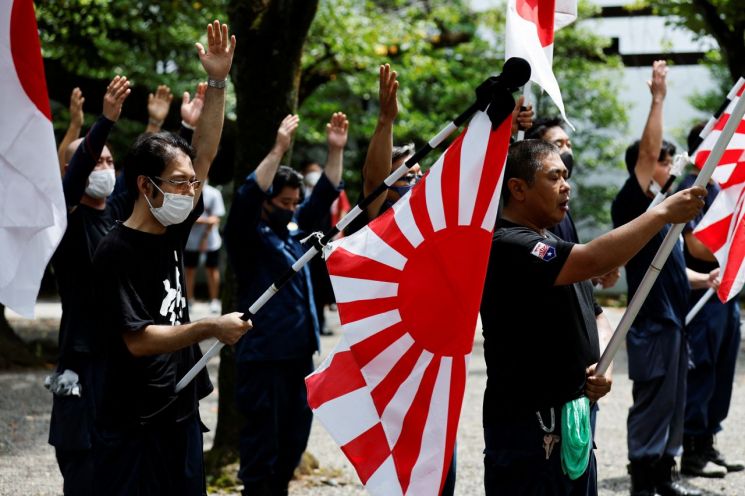
There is also analysis that this invitation is ultimately related to solidifying Kishida’s position within his party. Kishida belongs to the dovish faction within the Liberal Democratic Party (LDP). Compared to the Hosoda and Aso factions, which have been dominant under Abe’s leadership, his faction is relatively moderate and liberal. However, since the cabinet formation, he has been criticized for not fully escaping Abe’s shadow by appointing figures like LDP’s 'number two' Toshimitsu Motegi.
Especially, Secretary-General Motegi advocates nuclear sharing, which is completely opposite to Kishida’s stance, and has recently been expanding his influence amid the Kishida Cabinet’s faltering support. Weekly magazine Daily Shincho reported that as the Kishida Cabinet hits historically low approval ratings, Motegi is working behind the scenes to challenge Kishida’s position.
In this context, the visits by world leaders delivering messages of peace can indirectly suppress voices within the LDP calling for nuclear armament. However, some point out that Kishida cannot easily take action in the current situation. A diplomatic source said, “Because the approval ratings are so low, it will be difficult for Prime Minister Kishida to take actions such as countering political rivals at this time.”
© The Asia Business Daily(www.asiae.co.kr). All rights reserved.
![Clutching a Stolen Dior Bag, Saying "I Hate Being Poor but Real"... The Grotesque Con of a "Human Knockoff" [Slate]](https://cwcontent.asiae.co.kr/asiaresize/183/2026021902243444107_1771435474.jpg)


















