Strasbourg Christmas Market with Lights Off
Lighting Hours Limited Amid Worsening Power Shortages Across Europe
[Asia Economy Reporter Jeong Hyunjin] Strasbourg, a city in northern France once called the "Capital of Christmas." Since the 16th century, a large-scale Christmas market has been held here every year, attracting 2 million visitors from around the world. The symbol of this place was the dazzling lights that created a Christmas atmosphere. However, this year, due to the energy crisis across Europe, the organizers of the Strasbourg event faced a major dilemma over the lighting.
The New York Times (NYT) reported on the atmosphere in Strasbourg, where France's oldest and largest Christmas market is held, on December 22 (local time), just before Christmas. The NYT stated, "As Europe makes significant efforts to save energy to survive the winter without Russian gas, Europe's iconic Christmas markets have become a major target."
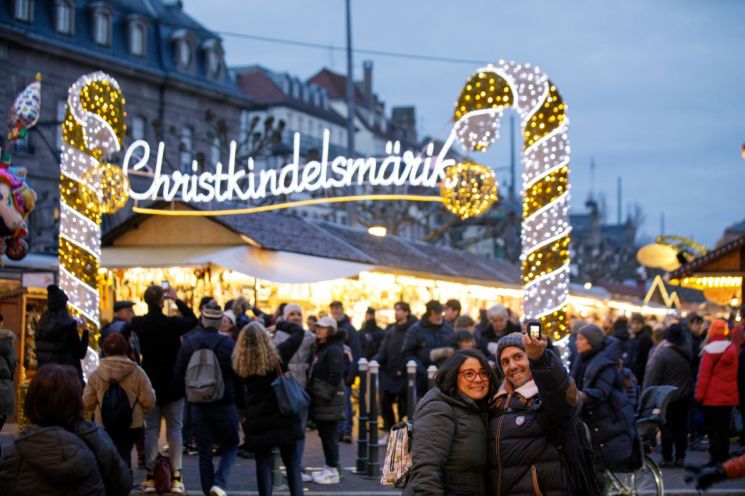
Since the outbreak of the Ukraine war in February this year, Europe has been suffering from power shortages including gas and electricity. France is no exception. The French government has decided to reduce energy consumption by 10% over the next two years and has taken extensive measures such as reducing building heating and lighting. Strasbourg is also aiming to reduce energy consumption by 10% compared to last year by cutting city-managed lighting by 20% and turning off lights one hour earlier at night.
The Christmas market is no exception. Every December, more than 300 stalls are set up in 12 squares in downtown Strasbourg. At the same time, 30 miles (about 48 km) of lights and chandeliers in pink, blue, and golden hues are installed. This year, some of these decorations were still placed without omission. However, as the lighting was concentrated in the central area, some parts of the city suffered from the impact of power saving. Locals expressed regret that "the lights that created a fairy-tale atmosphere have disappeared," the NYT reported.
Also, outdoor heaters, which were originally installed on the streets for Christmas market vendors, were not set up this time. The NYT conveyed the atmosphere, saying that vendors wearing thick clothes and gloves in subzero weather were angry and looked enviously at shops boiling wine in large pots.
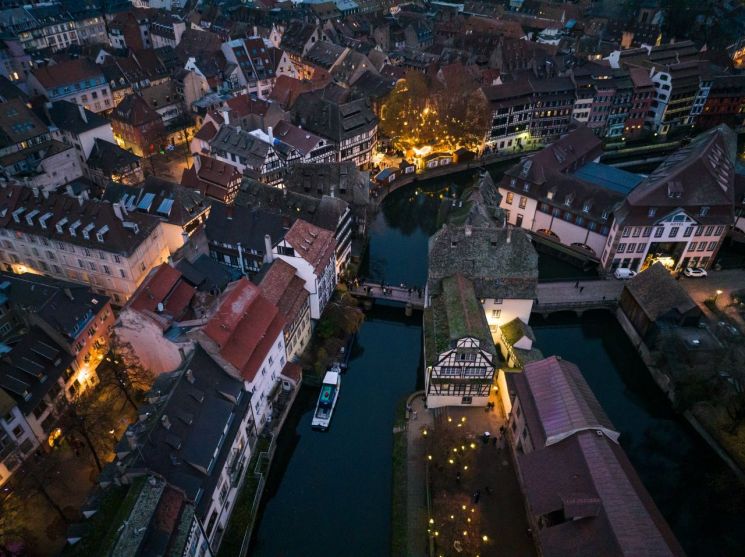
Guillaume Ripsik, Deputy Mayor of Strasbourg in charge of the Christmas market event, said that several years ago Strasbourg switched the Christmas market lights to LED, reducing power usage by 90% compared to before, but still spends hundreds of thousands of euros on lighting-related budgets. He said, "In the past, you just pressed a button and the lights turned on. At that time, no one wondered where that power came from." He added, "The issue here is how to find a balance between the magic (of the Christmas market) and responsibility."
Not only Strasbourg but all across Europe, this year’s power shortage has led to a "dark" Christmas. In particular, the most widely adopted measure has been limiting the hours during which lights can be turned on to reduce power consumption.
According to U.S. economic media Business Insider and Bloomberg News, in London's bustling West End, Christmas lights are turned on only from 3 p.m. to 11 p.m. Last year, the lights were on all day, but this measure was taken to reduce energy consumption. It is reported that small towns in the UK have decided not to turn on Christmas lights this year.
The Portuguese government has designated the Christmas lighting hours from 6 p.m. to midnight until December 6. In Copenhagen, the capital of Denmark, the Christmas lighting hours have been reduced from 16 hours a day to 6 hours, and in Dublin, Ireland, from 14 hours a day to 10 hours. Berlin, Germany, also turns off Christmas lights at 10 p.m. instead of midnight.
© The Asia Business Daily(www.asiae.co.kr). All rights reserved.
![Clutching a Stolen Dior Bag, Saying "I Hate Being Poor but Real"... The Grotesque Con of a "Human Knockoff" [Slate]](https://cwcontent.asiae.co.kr/asiaresize/183/2026021902243444107_1771435474.jpg)
















