"Building Where the History of the Development of Korean Catholicism Can Be Confirmed"
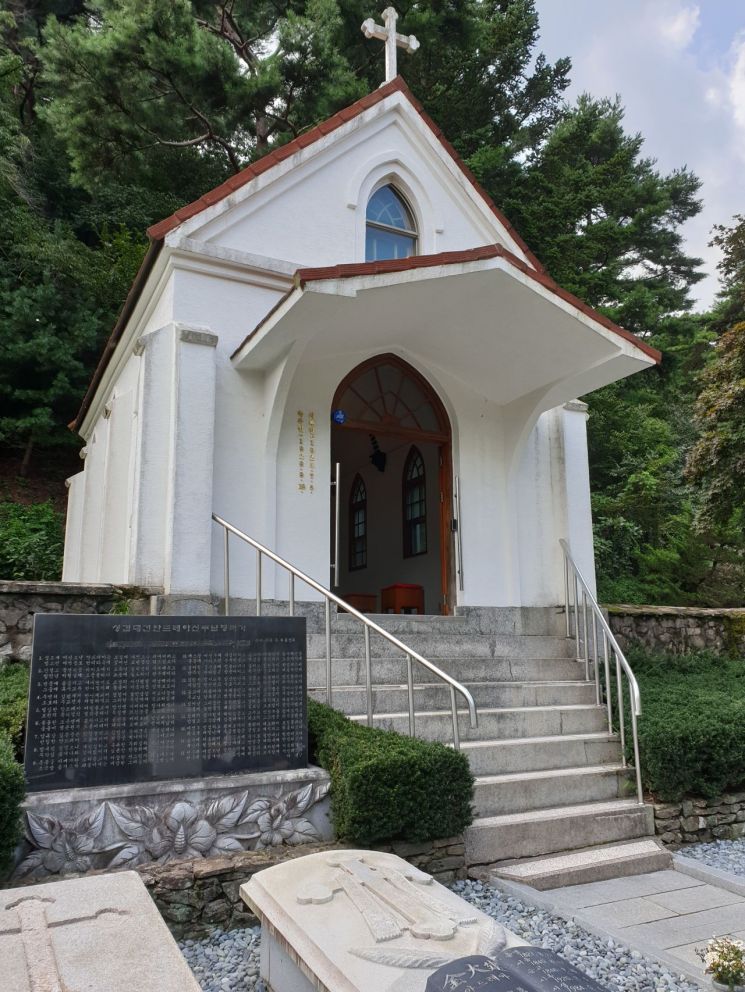
The church and burial site built to commemorate Father Kim Dae-geon (1821?1846) are being managed as cultural heritage. On the 20th, the Cultural Heritage Administration announced the registration of the 'Anseong St. Kim Dae-geon Andrea Memorial Church' as a cultural heritage site. Opinions from various sectors will be collected for a month, and the registration will be finalized after review by the Cultural Heritage Committee.
The 'Anseong St. Kim Dae-geon Andrea Memorial Church' located in Misan-ri, Yangseong-myeon, Anseong-si, Gyeonggi-do, is a building owned by the Catholic Diocese of Suwon Foundation. Kim Dae-geon was Korea's first Catholic priest and martyr. He was ordained as a priest at Geumgahang Seminary and celebrated the first mass. He secretly encouraged and evangelized believers while traveling covertly after infiltrating Gang-gyeong, Chungnam. In 1846, while surveying near Baengnyeongdo to open a secret route for missionaries' entry, he was arrested and martyred at the age of twenty-six.
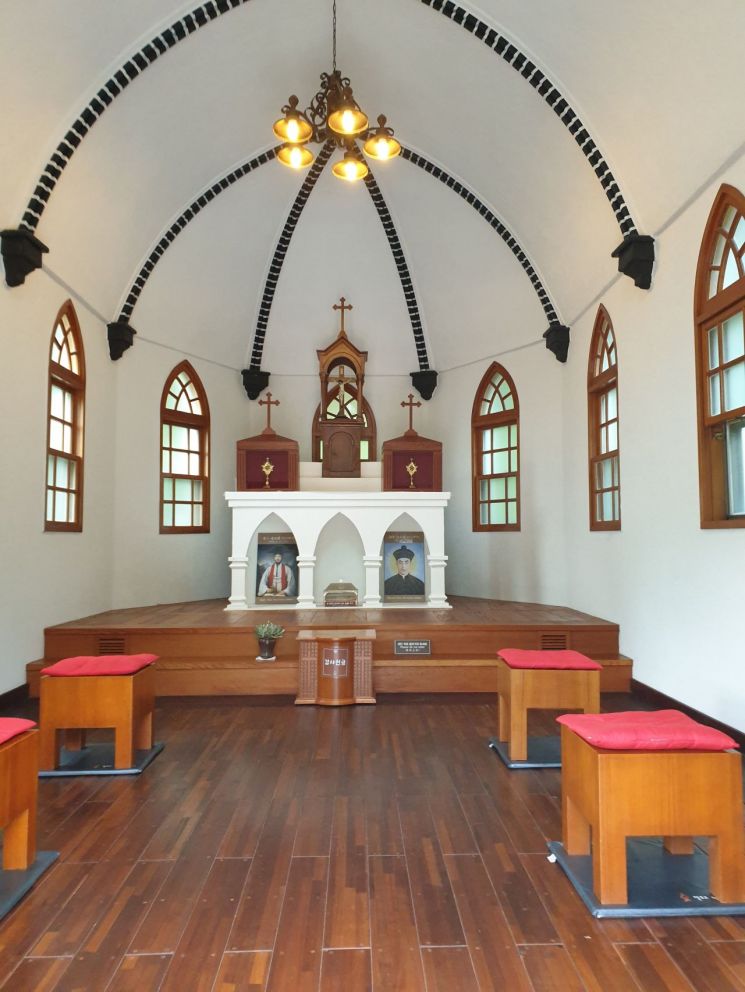
Misan-ri, Yangseong-myeon, is the place where his remains are interred and is called the Mirinae Holy Site. Kim Dae-geon was declared a Servant of God (Gagyeongja, a title given posthumously to those with outstanding faith and virtue) in 1857, beatified in 1925, becoming a Blessed (Bokjapum, a status recognized by the Church allowing veneration before sainthood). In April 1984, he was canonized and elevated to sainthood by Pope John Paul II during his visit to Korea. The 'Anseong St. Kim Dae-geon Andrea Memorial Church' was built in the Gothic style to commemorate his beatification. The Cultural Heritage Administration evaluated it as "a building that confirms the development history of Korean Catholicism," noting that "its original form is very well preserved, and the burial sites in front of the church clearly demonstrate symbolism and a sense of place."
© The Asia Business Daily(www.asiae.co.kr). All rights reserved.
![Clutching a Stolen Dior Bag, Saying "I Hate Being Poor but Real"... The Grotesque Con of a "Human Knockoff" [Slate]](https://cwcontent.asiae.co.kr/asiaresize/183/2026021902243444107_1771435474.jpg)
















