First Increase in Lithium-Ion Battery Imports Since Statistics Began in 2012
Most Imports from China
Hyundai and Kia Usage Soars
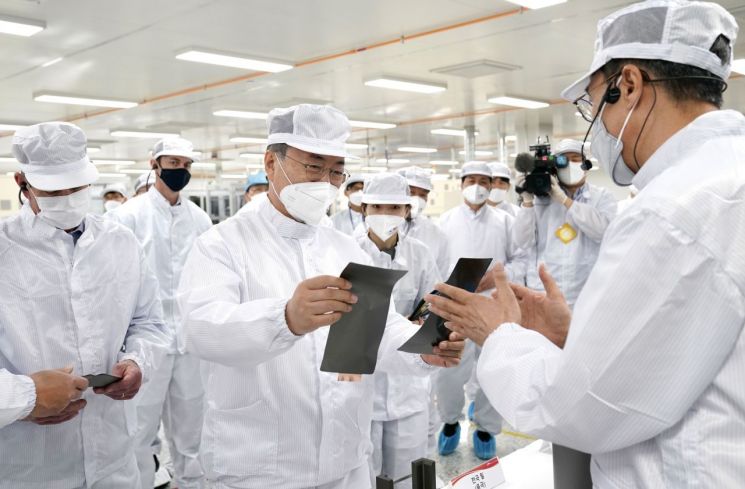 In May of last year, President Moon Jae-in visited the SK Battery factory in the United States and examined battery cell products.
 [Asia Economy Reporter Choi Dae-yeol] It has been revealed that the volume of lithium-ion battery imports in South Korea has surpassed exports. Lithium-ion batteries are rechargeable secondary batteries used in electronics, and their usage has significantly increased recently with the rise in electric vehicle adoption. Going forward, the demand is expected to grow even more compared to domestic production capacity, which suggests that the trade imbalance will deepen further.
According to statistics from the Korea International Trade Association on the 19th, South Korea imported 14,441 tons of lithium-ion batteries last month, while exports amounted to 13,516 tons. This is the first time since lithium-ion batteries were separately categorized in trade statistics in 2012 that monthly imports have exceeded exports.
In terms of value, exports last month were $546 million, and imports were $535 million, resulting in a slight trade surplus. The export value is somewhat higher due to the higher unit price of domestically produced batteries, but the surplus is also the smallest ever recorded. Just two or three years ago, lithium-ion batteries generated an annual trade surplus of $2 to $3 billion, making them a representative foreign currency earning item.
The increase in battery imports is largely due to the accelerated adoption of electric vehicles. Lithium-ion batteries were mainly used in electronics such as smartphones, laptops, and power tools, but in the past two to three years, the volume used in electric vehicles has surged. In particular, the battery capacity of recent domestically produced mid-sized electric vehicles exceeds 70 kWh, which is about 4,000 to 5,000 times larger than the batteries used in smartphones.
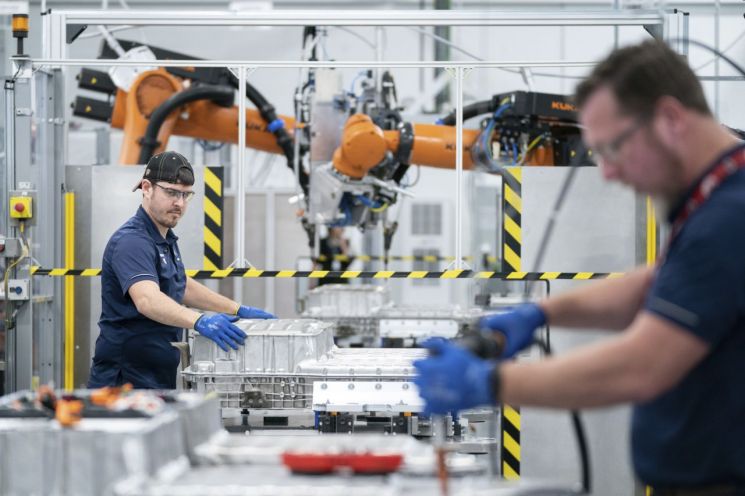
This year alone, up to last month, about 190,000 pure electric vehicles were produced domestically, more than doubling compared to the same period last year. Most of these are electric vehicles manufactured by Hyundai Motor Company and Kia. Additionally, demand for internal combustion engine-derived electric vehicles and hybrid vehicles has also increased significantly, causing a surge in battery demand. While demand has increased substantially, domestic battery production capacity has remained virtually unchanged for several years. Although domestic battery companies have recently made large-scale investments, most have focused on expanding overseas factory facilities. For electric vehicle batteries, weight and volume are significant factors, and proximity to the final assembly plant of the automaker is considered important.
Most of the batteries entering South Korea are made in China. Battery imports began to increase significantly after surpassing $1 billion in 2018, and since then, China has accounted for more than 90% of total imports annually. This year as well, about 94% of imported volumes up to last month came from China. China is the world's largest producer of electric vehicle batteries and has strategically nurtured its electric vehicle ecosystem early on, expanding the size of its battery industry.
Hyundai Motor Company and Kia, which account for most domestic electric vehicle production, are also rapidly increasing the proportion of Chinese-made batteries installed. According to data provided by Hyundai Motor Company to Representative Gu Ja-geun of the People Power Party, the proportion of electric vehicles equipped with Chinese batteries was less than half until 2018 but rose to 82% last year and 86% this year. Hyundai and Kia mainly use products from domestic battery companies such as LG Energy Solution and SK On, but they use battery cells produced at LG and SK's Chinese factories, which are then assembled into modules and packs domestically.
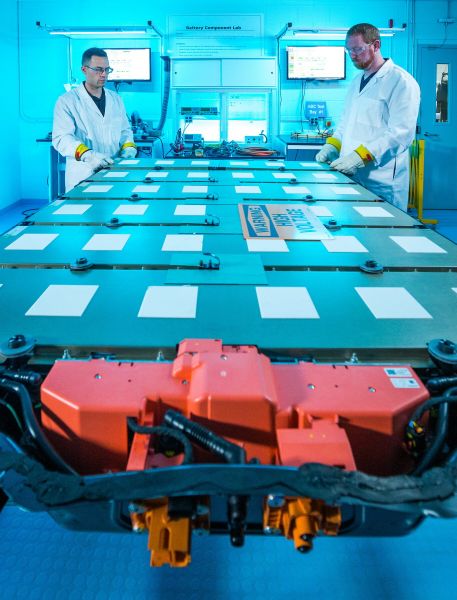 Electric vehicle battery pack made by Ultium Cells, a battery joint venture between LG Energy Solution and US-based GM. LG has recently made large-scale investments to supply batteries within the United States.
 Additionally, some models like the Niro use batteries from CATL, the world's largest battery company based in China. Hyundai and Kia have decided to equip some newly released dedicated electric vehicles from next year onward with CATL products, so import volumes are expected to increase further. SsangYong Motor has also decided to use batteries from BYD, a Chinese company, for its new electric vehicles under development.
As electric vehicles have become a key pillar of future mobility and the share of renewable energy is expected to increase, the battery industry has become more important than ever before. The United States enacted the Inflation Reduction Act (IRA) because it recognized that batteries would play a crucial role in securing domestic energy security.
The South Korean government has also identified secondary batteries centered on lithium-ion batteries as one of the 15 core export items and expressed its intention to foster the industry. However, in reality, the country is on the verge of becoming a net importer of batteries. Professor Lee Ho-geun of Daeduk College said, "The U.S. Inflation Reduction Act also aims to reduce dependence on China in the battery industry. Domestic battery companies must lower their reliance on China and enhance their technological competitiveness through localization."
© The Asia Business Daily(www.asiae.co.kr). All rights reserved.
![Clutching a Stolen Dior Bag, Saying "I Hate Being Poor but Real"... The Grotesque Con of a "Human Knockoff" [Slate]](https://cwcontent.asiae.co.kr/asiaresize/183/2026021902243444107_1771435474.jpg)

















