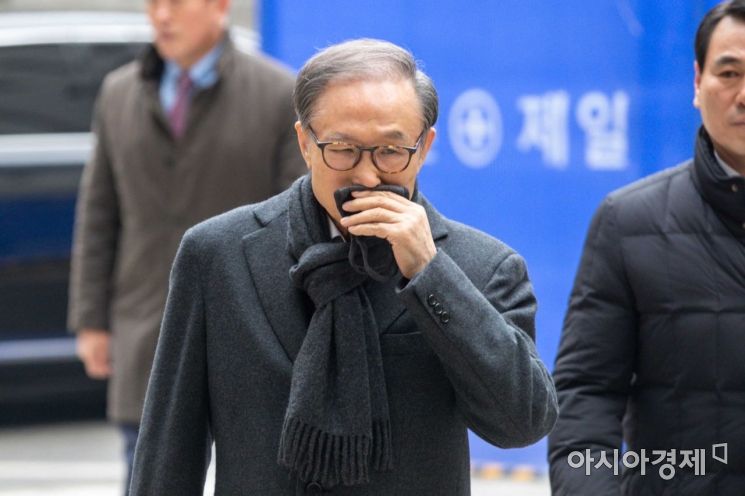
[Asia Economy Reporter Kang Juhee] Former President Lee Myung-bak (MB) and former Gyeongnam Governor Kim Kyung-soo are being strongly considered for special pardons at the end of the year. Former Governor Kim stated that he "does not want parole," drawing attention to the differences among related systems such as 'special pardon,' 'parole,' and 'suspension of sentence execution.'
A 'special pardon' refers to exempting the execution of a sentence for a specific criminal. It is an inherent presidential authority guaranteed by Article 79 of the Constitution and does not require the consent of the National Assembly.
Generally, a pardon includes the concept of 'restoration of rights.' Restoration of rights means recovering qualifications (such as eligibility for election, employment restrictions, etc.) that were lost or suspended due to the effect of the sentence.
For example, during the Liberation Day special pardon implemented on August 12, Lee Jae-yong, Vice Chairman of Samsung Electronics, was included among those restored. Although Lee, involved in the state affairs manipulation scandal, had completed his sentence in July this year, he was restricted from employment for five years, and restoration of rights allowed him to return to the forefront of management.
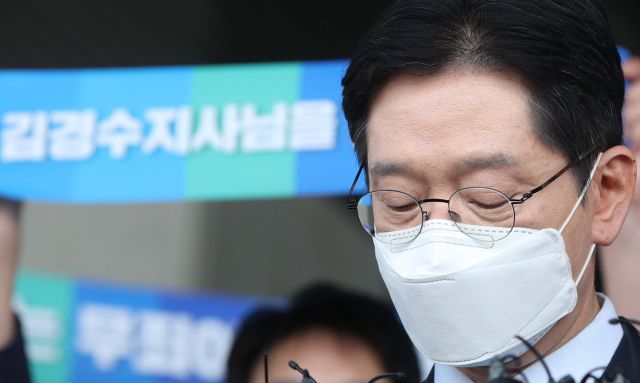
Special pardons differ. A pardon may be granted alone, or a pardon and restoration of rights may be granted together. It depends on the president's judgment. In this special pardon, it is expected that former President Lee will receive both pardon and restoration of rights, while former Governor Kim will be pardoned but not restored. Kim, who was sentenced to two years in prison for the 'Druking comment manipulation' case, will have his eligibility for election restricted until August 2028 (five years after sentence completion) if not restored, preventing him from running in the upcoming 2024 general election and the 2027 presidential election.
'Parole' is a system that conditionally releases an inmate before the sentence is completed. Since it does not exempt the sentence like a pardon, eligibility for election and other restrictions remain. On the 13th, Kim expressed through his wife and Democratic Party lawmaker Ki Dong-min that he "does not want parole." If only a pardon without restoration of rights is granted, it means he cannot run for election, which is interpreted as being no different from parole.
'Suspension of sentence execution' refers to temporarily halting the execution of a sentence on humanitarian grounds when it is considered harsh to keep the inmate imprisoned. If it is judged that the reason for suspension no longer exists, the inmate must be re-incarcerated to complete the remaining sentence.
Former President Lee, who has 15 years remaining on his sentence, applied for suspension of sentence execution on June 28 due to old age and health reasons, and was temporarily released. The suspension was extended once (for three months) and is set to end on the 27th. If Lee’s pardon is decided, it is highly likely to be implemented the following day, the 28th.
© The Asia Business Daily(www.asiae.co.kr). All rights reserved.
![Clutching a Stolen Dior Bag, Saying "I Hate Being Poor but Real"... The Grotesque Con of a "Human Knockoff" [Slate]](https://cwcontent.asiae.co.kr/asiaresize/183/2026021902243444107_1771435474.jpg)
















