Interview with Kim Jong-min, Democratic Party Lawmaker
Post-Presidential Election Defeat, Democratic Party Lawmakers Hold 'Reflection and Innovation' Relay Forum
Kim Jong-min: "Democratic Party Issues Cannot Be Attributed Solely to Leader Lee Jae-myung"
"Leader Lee Jae-myung Should Be Evaluated on Whether He Reforms Politics"
"I Do Not Agree That the Moon Jae-in Administration Failed"
Committed to Leading Practical Reforms of 'Reflection and Innovation'
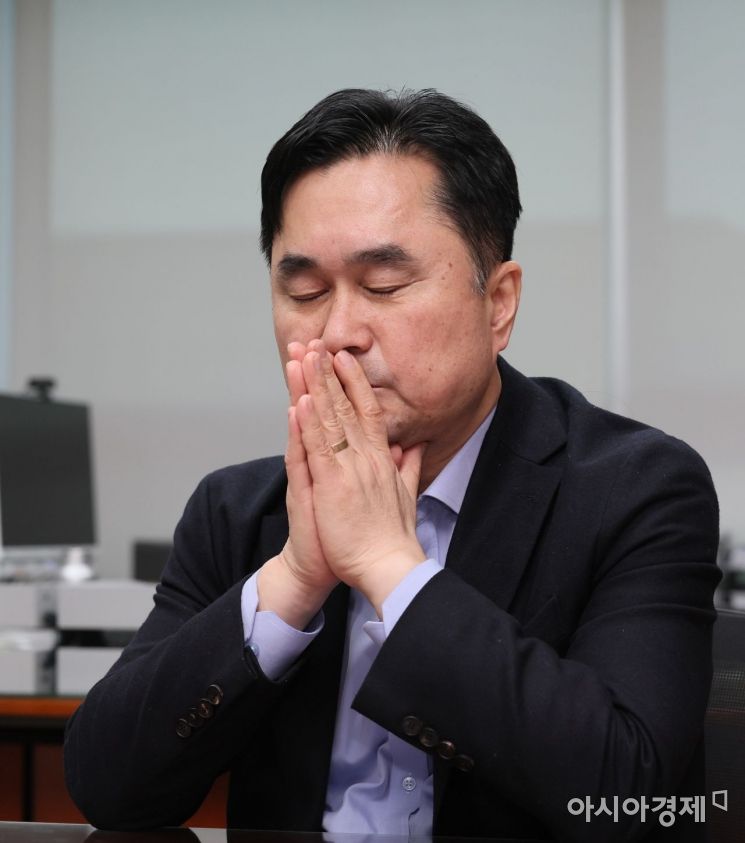
[Asia Economy Reporter Naju-seok] After losing both the presidential election and the local elections, dozens of members of the Democratic Party of Korea held a series of discussion sessions on ‘reflection and innovation.’ In Season 1 (July 19?August 16), which discussed reflection and innovation within the Democratic Party, 27 members participated, and in Season 2 (September 14?November 29), which focused on reforming Korean politics, 36 members took part. Every Tuesday morning or lunchtime, members sustained themselves with sandwiches while fiercely debating reform measures for the Democratic Party and, more broadly, Korean politics. However, these calls for reform were dismissed as ‘anti-Lee Jae-myung (Bi-myeong) faction’ discussions, and the direction and claims of reform were ignored.
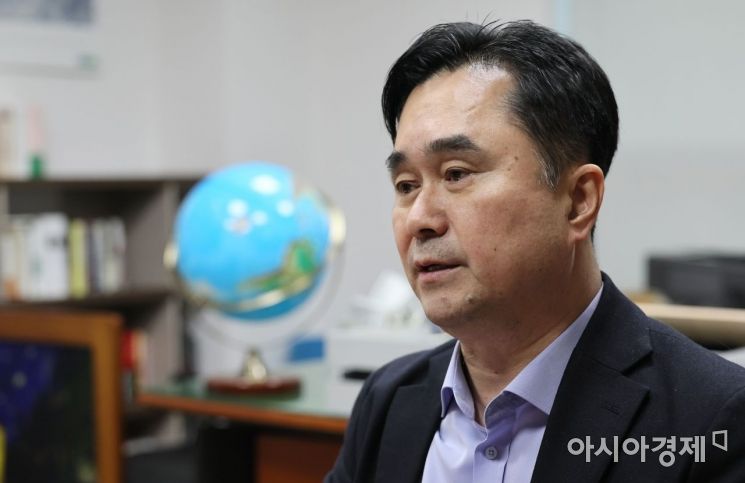
Kim Jong-min, a Democratic Party member who led the discussions, responded to the view that the months-long talks were a ‘Bi-myeong faction’ movement by saying, “While discussing the path the Democratic Party should take and how to change our politics, the topic of Lee Jae-myung, the Democratic Party leader, may come up, but whether one supports or opposes him is not the core issue.” He also expressed regret over the perspective that views the Democratic Party’s problems as revolving solely around Lee Jae-myung.
The challenge facing ‘reflection and innovation’ is a deeper consideration beyond focusing on Lee Jae-myung alone, seeking more practical actions. Kim, who chaired the reflection and innovation discussions, spoke in an interview at the National Assembly on the 7th about the problems in Korean politics, ways to overcome them, and political reform tasks such as the electoral system.
What do you think should have been done?
Both President Yoon and Leader Lee should have made efforts to change the public’s distrust in politics. Although I opposed Lee’s candidacy, he became the party leader. Once the proper procedures are followed, you cannot simply say ‘step down’ or ‘quit’; you must accept the outcome. However, if you accept the direction of public sentiment, extraordinary efforts to reform politics and overcome political distrust should have been made. President Yoon, without such efforts, insists on doing things his way, heading down a path of autocracy and unilateralism, and Leader Lee is complacent with confrontational politics and politics of reflexive benefits without reflection. I see no future in this. This is not just about the Democratic Party’s reflection but a concern for the entire political sphere. ‘Change and innovation’ was created as an appeal that President Yoon and Leader Lee should be the subjects of reflection.
The discussions continued, but no meaningful change was seen.
I don’t believe a few discussion sessions alone produce results. I think these voices need to be raised louder and persistently. Politics is about winning and losing, so some say you must pursue immediate victory. But since the election is about a year away, I see this as an opportunity to upgrade our politics to the next level. If we focus only on winning and neglect those who reflect and strengthen their stamina, there will be no future for the next game.
What are the future plans for reflection and innovation?
In January and February, we plan to gather more practical ideas. If we truly want to reflect and innovate, action is crucial. We are organizing the contents discussed in Seasons 1 and 2. After compiling these into a book and sharing it, we will seek ways to improve systems, amplify voices within the party, and promote legislation. Above all, concrete actions on electoral reform, constitutional amendment, party reform, and National Assembly operation reform?issues we have discussed?are needed. We must set goals and gather discussions to legislate accordingly.
What is the top priority in political reform?
We must change the winner-takes-all system. Next, political parties need to change. Electoral reform and National Assembly reform must be prioritized. Then, the Yoon Seok-yeol administration must shift from autocracy and unilateralism to leadership that unites the people. After that, political parties must change.
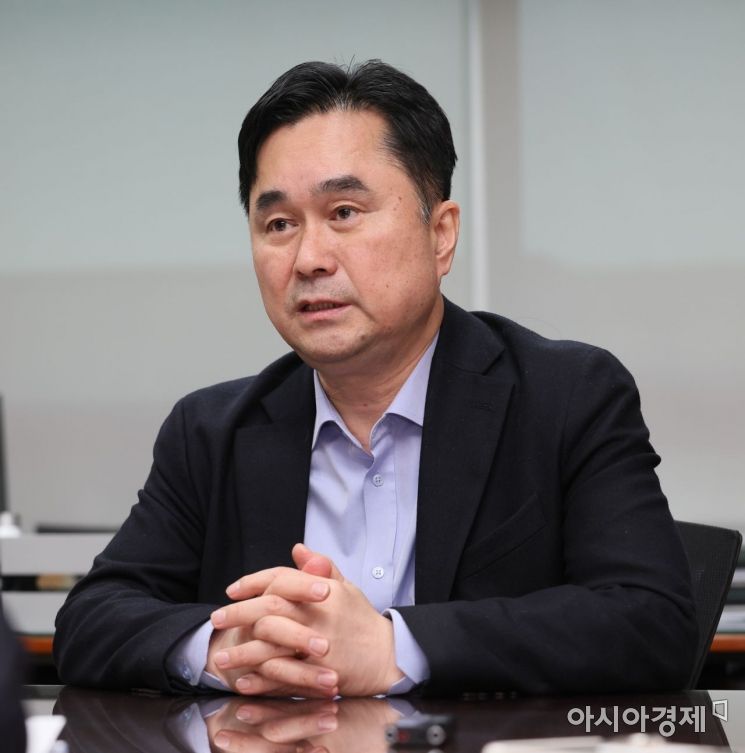
What is the direction of party reform?
Many party members have joined online. However, because only hardline voices respond through YouTube and other platforms, many citizens grow distrustful of parties and lose interest. Only the hardline factions on both sides participate in parties. Is this kind of participation truly democratic? Is it not just fostering extreme hatred, hostility, and animosity rather than integrating the majority opinion? Providing answers to this problem is party reform. It is naturally good for ordinary citizens and party members to participate actively. But if participation only intensifies hatred and hostility aimed at attacking opponents, that is not the path of democracy. The biggest concern for parties is finding ways to channel participatory energy more healthily and productively. Currently, one million people gather around extreme voices. While everyone expresses their views, we must coexist despite differences and reach a single conclusion. The question before us is whether democracy led by extremists or certain YouTubers is what we want. Different opinions must be respected.
Is there a similar aspect in National Assembly operations?
Political parties must change. Inside parties, diverse opinions should be expressed, majorities and minorities respected, and minorities accept the majority’s decisions. To achieve this, decision-making by party consensus should be minimized. Constitutionally, the National Assembly is meant to aggregate diverse opinions as representatives of the people. Having the red and blue parties decide everything contradicts the meaning of mediation in a democratic republic and parliament. Even when party consensus is unavoidable, diverse judgments should be made to allow various public sentiments to participate in the National Assembly’s melting pot. Issuing only one or two opinions and rejecting all others would hinder democracy within parties.
Some view the reflection and innovation discussions as a Bi-myeong faction gathering. What is your view on this?
They see all Democratic Party problems centered on Leader Lee. It’s a geocentric theory, or rather a ‘Myung-centric’ theory. Lee is a party leader with a two-year term. The Democratic Party’s problems are multiple, not just Lee’s. Lee ran to solve those problems himself. Others who opposed his candidacy thought he would be an obstacle to solving the problems. That was the only issue. But since the party convention is over, the issue is settled. Now, the question is whether Lee is leading change and reforming politics. This issue should be discussed separately. The key point in the reflection and innovation discussions is not whether participants support or oppose Lee. The main topic is what path the Democratic Party should take and what reflection and innovation are needed to change our politics. Lee may come up in the process, but the discussion does not start from pro-Lee or anti-Lee factions.
The Democratic Party failed to gain public support in the last presidential election. What was the problem?
I do not agree with the idea that ‘the Moon Jae-in administration failed and must reflect.’ We should praise what was done well and coldly reflect and change what was wrong. The biggest regret was that ‘politics did not change.’ Looking back at important issues like the minimum wage, the Cho Kuk incident, prosecution reform, budget, and Ministry of Strategy and Finance reform, there is regret that things could have been run more democratically. The president and presidential aides, as well as the party leader and floor leader, made decisions, but lawmakers had more diverse opinions. If those diverse opinions had been followed, the Moon administration would have been much more successful. In issues like minimum wage and prosecution reform, lawmakers’ opinions should have been gathered through discussions and reflected on the ground. Because this did not work, decisions were made distant from the majority of lawmakers and public opinion. Evaluating this, if lawmakers had taken the lead in communicating with the field and acted democratically, things would have turned out better.
Reflection and innovation discussions began after defeats in the presidential and local elections. Why were these discussions held?
The last presidential election showed how deeply the public distrusts politics. President Yoon Seok-yeol, the People Power Party’s candidate, and Leader Lee Jae-myung, the Democratic Party’s candidate, were not central figures in their parties. That these two became the main candidates of the two major parties and that the election was the most disliked in history reflects the public’s disappointment. Five months after his election, President Yoon has fallen into a frame of autocracy and unilateralism, and Leader Lee chose to become a lawmaker and party leader as a way to ‘change politics through sacrifice and dedication.’ This caused the public’s trust in the Democratic Party to decline and their hearts to turn away. Of course, some of this is a backlash because people dislike the Yoon administration.
© The Asia Business Daily(www.asiae.co.kr). All rights reserved.
![Clutching a Stolen Dior Bag, Saying "I Hate Being Poor but Real"... The Grotesque Con of a "Human Knockoff" [Slate]](https://cwcontent.asiae.co.kr/asiaresize/183/2026021902243444107_1771435474.jpg)

















