Market Outlook Falls Short of 62.1 Billion Yen Surplus
Sharp Rise in Raw Material Imports Including LNG and Crude Oil
Trade Balance Deficit Trend Expected to Continue
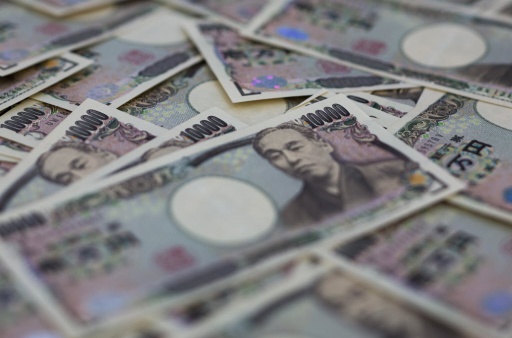 A 10,000 yen bill symbolizing Japan, which is benefiting from the effect of the weak yen.
[Asia Economy Reporter Lee Ji-eun] Japan's current account balance turned to a deficit in October for the first time in nine months. It is analyzed that the deficit widened due to increased energy-related import costs caused by the weak yen and soaring raw material prices.
According to the preliminary balance of international payments for October announced by the Japanese Ministry of Finance on the 8th, the current account recorded a deficit of 64.1 billion yen (approximately 620 billion KRW). This is significantly below the market expectation of 62.1 billion yen. Since 1985, this is only the second time Japan's current account has recorded a deficit in October, following 2013. The current account consists of the trade balance, which is exports minus imports, primary income from overseas securities investments, and the services balance.
The trade balance recorded a deficit of 1.8754 trillion yen, which had a major impact on the current account deficit. Imports reached 10.8646 trillion yen, a 56.9% increase compared to the same month last year, due to the sharp rise in raw material prices such as crude oil and liquefied natural gas (LNG). Exports increased by 26.9% year-on-year to 8.9892 trillion yen, driven by expanded exports of semiconductors and automobiles. The sharp rise in raw material prices caused by the Russia-Ukraine war, combined with the rapid depreciation of the yen, had a significant effect.
The services balance recorded a deficit of 722.4 billion yen as payments for overseas research and development increased. The travel balance, which is the consumption of foreign visitors to Japan minus the overseas spending of Japanese nationals, recorded a surplus of 43 billion yen. This is the largest surplus since January 2020 (296.2 billion yen), when the COVID-19 virus outbreak began. Nihon Keizai explained, "The effect of the Japanese government allowing foreign tourists to enter is becoming apparent."
Primary income from overseas securities investments increased due to the yen's depreciation effect, resulting in a surplus of 2.8261 trillion yen, but it was not enough to cover the trade deficit.
Nihon Keizai pointed out, "Due to the sharp rise in raw material prices and the weak yen, the trend of trade deficits is expected to continue for the time being," and added, "There is a growing tendency for Japanese companies to offset trade deficits through earnings from overseas dividends."
© The Asia Business Daily(www.asiae.co.kr). All rights reserved.
![Clutching a Stolen Dior Bag, Saying "I Hate Being Poor but Real"... The Grotesque Con of a "Human Knockoff" [Slate]](https://cwcontent.asiae.co.kr/asiaresize/183/2026021902243444107_1771435474.jpg)














