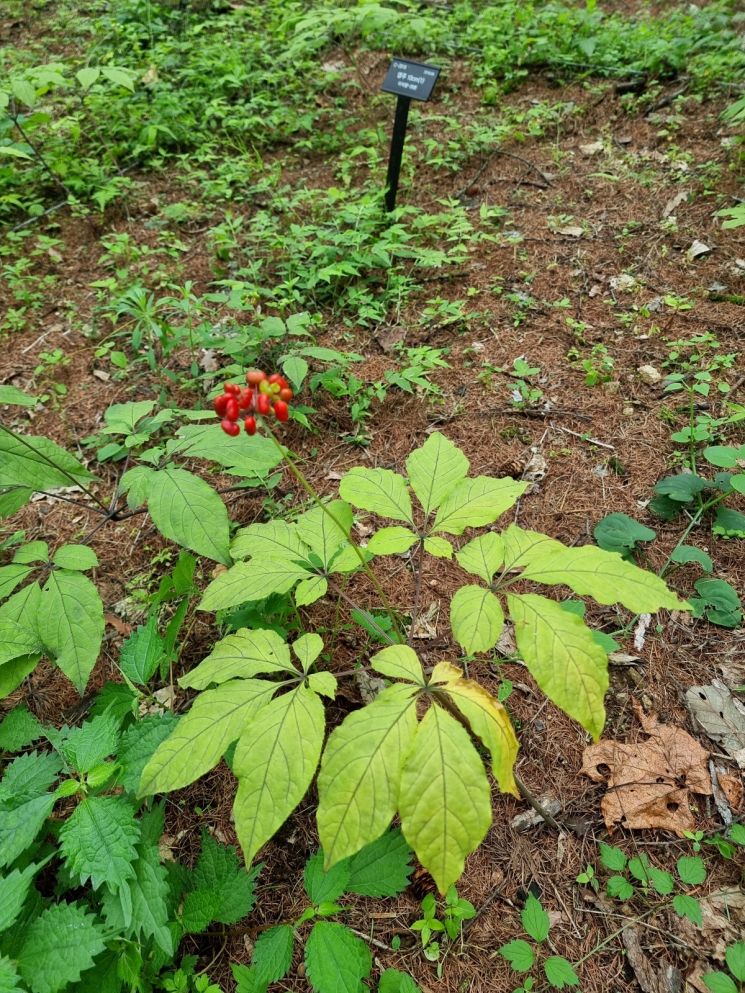
[Asia Economy (Daejeon) Reporter Jeong Il-woong] The Korea Forest Service is abolishing the period restriction applied when leasing national forests for the purpose of cultivating wild ginseng (Sanyangsam).
The Korea Forest Service announced on the 8th that starting this month, it will abolish the lease period limit, which was previously capped at a maximum of 20 years when leasing national forests for wild ginseng cultivation.
In addition, the regulation requiring submission of consent forms with approval from one-third of all village residents when applying for new usage permits or leases for wild ginseng cultivation will also be removed, improving regulations on national forests.
This decision was made in response to requests from forestry groups who reported that limiting the lease period caused significant damage to wild ginseng cultivators.
Wild ginseng requires a minimum cultivation period of 7 to 9 years or more, and forestry groups argue that the 20-year lease limit is relatively short to achieve successful cultivation and generate substantial profits.
Accordingly, the Korea Forest Service has revised the system to set the initial lease period at 5 years, similar to other forest products cultivation, allowing for renewal, after comprehensively considering the voices and fairness for field forestry workers.
Furthermore, by abolishing the regulation requiring submission of village residents’ consent forms, the Korea Forest Service expects to alleviate difficulties faced by returnees to rural areas.
Nam Sung-hyun, Administrator of the Korea Forest Service, stated, “To open a forest renaissance era, we will continuously listen to field voices, identify and improve problems, and revise national forest usage plans to contribute to increasing forestry workers’ income.”
© The Asia Business Daily(www.asiae.co.kr). All rights reserved.
![Clutching a Stolen Dior Bag, Saying "I Hate Being Poor but Real"... The Grotesque Con of a "Human Knockoff" [Slate]](https://cwcontent.asiae.co.kr/asiaresize/183/2026021902243444107_1771435474.jpg)















