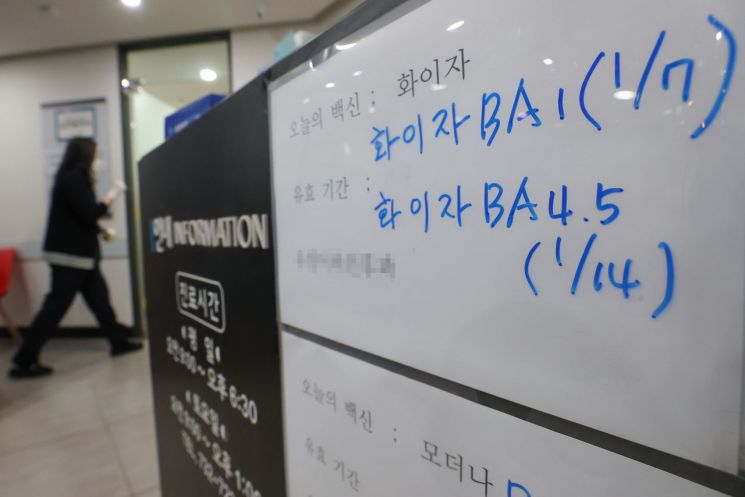
[Asia Economy Reporter Byun Seon-jin] It has been found difficult to establish causality between diseases such as liver failure, renal failure, nephritis, and glomerulonephritis that appeared after COVID-19 vaccination and the vaccine itself. The COVID-19 Vaccine Safety Research Center announced on the 5th at its first forum the findings on the ‘vaccine association with liver failure, renal failure, nephritis, and glomerulonephritis after COVID-19 vaccination.’ The research center, established under the Korea Disease Control and Prevention Agency at the end of last September, is an institution that scientifically investigates causality between vaccines and side effects.
Experts unanimously stated that “although some clinical cases of liver failure, renal failure, nephritis, and glomerulonephritis after vaccination have been reported in Western countries, more data needs to be secured.”
Professor Choi Jong-ki (Ulsan University College of Medicine) said, “There have been clinical cases suspected of acute liver failure after COVID-19 vaccination, but causality with the vaccine has not been clearly established.” Cases of liver failure and acute liver dysfunction after vaccination are likely to have occurred coincidentally as hundreds of millions of people worldwide have been vaccinated. Professor Choi explained, “To discuss causality with the COVID-19 vaccine, a large amount of data on which individuals experience acute liver failure after vaccination is necessary.”
Professor Han Seung-seok (Seoul National University College of Medicine) said, “There are some hypotheses that vaccination can trigger immune responses in the kidneys, but no association with the COVID-19 vaccine has been identified.” Acute renal failure is a non-infectious kidney dysfunction disease characterized by a rapid decline in kidney function. Professor Han added, “The kidney disease reported as a clinical case after vaccination is glomerulonephritis,” but also explained, “For such acute kidney diseases, specific risk assessments through multi-center cohort studies and other research are needed.”
Professor Choi Nam-kyung (Ewha Womans University College of Medicine) presented the first-year (September 2021 to July 2022) research results and the research center’s operational plans. The key points were that ▲total deaths did not significantly increase after COVID-19 vaccination, ▲causality was established for myocarditis and pericarditis after mRNA vaccination, and ▲medical expense support was provided as a basis for abnormal uterine bleeding (bleeding and frequent menstruation) after vaccination.
Professor Choi said, “Going forward, we are preparing plans to diversify research through follow-up surveys on specific adverse events after COVID-19 vaccination,” and “We plan to analyze reports and monitoring data to discover evidence on potential risks and safety that may arise after the introduction of bivalent vaccines.” The research center plans to present a framework for systematic causality assessment through expert collaboration and establish research plans to ‘secure diagnostic validity of health insurance claim diseases.’
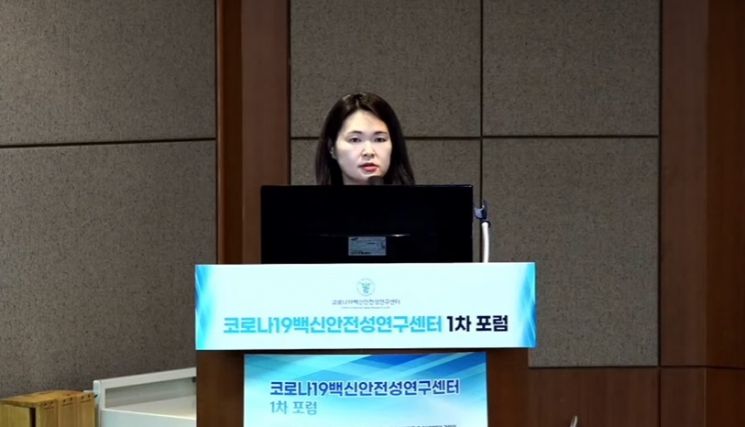
Research Center Director Park Byung-joo said, “It is true that vaccines were developed and approved in a relatively short time, so safety could not be fully confirmed in pre-approval clinical trials nor was long-term safety fully understood,” but added, “At a time when the COVID-19 pandemic has not ended, vaccination has been widely confirmed to reduce the severity and mortality of infected patients. The benefits outweigh the side effects caused by vaccination.”
© The Asia Business Daily(www.asiae.co.kr). All rights reserved.
![Clutching a Stolen Dior Bag, Saying "I Hate Being Poor but Real"... The Grotesque Con of a "Human Knockoff" [Slate]](https://cwcontent.asiae.co.kr/asiaresize/183/2026021902243444107_1771435474.jpg)
















