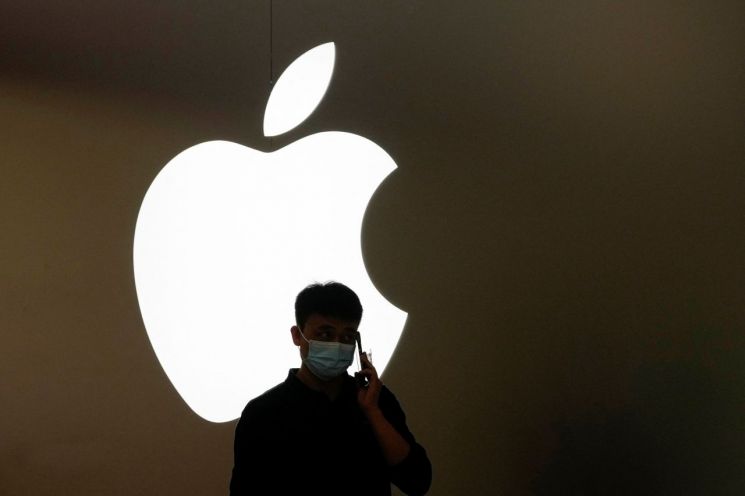
[Asia Economy Reporter Jeong Hyunjin] Apple is reportedly accelerating its 'de-China' plan by announcing plans to shift product manufacturing from China to other Asian countries such as India and Vietnam.
On the 3rd (local time), the Wall Street Journal (WSJ), citing sources, reported that Apple recently conveyed this stance to its partners. It is also known that Apple plans to reduce its dependence on its largest partner, Taiwan's Foxconn.
This news is interpreted as a result of recent workforce departures and protest incidents at the Zhengzhou factory in China. The Zhengzhou factory operated by Foxconn is the largest production base for iPhones, producing most of the iPhone 14 Pro and iPhone 14 Pro Max.
Last month, local workers strongly opposed the Chinese government's COVID-19 lockdown policy. When COVID-19 infections occurred at the factory, employees who felt anxious collectively fled and returned to their hometowns. Subsequently, newly recruited workers also protested over wage issues and strict quarantine policies before leaving the factory.
Alan Young, a former Foxconn executive in charge of the U.S., told WSJ, "In the past, we did not worry about concentrating production in one place. Free trade was the standard and the situation was predictable," adding, "Now we have entered a new world."
The countries Apple has chosen instead of China are India and Vietnam. Guo Mingqi, an Apple analyst at TF Securities, predicted that in the long term, the share of production in India will increase to 40-45%. Currently, the proportion of Apple products produced in India is in the single digits. Guo also forecasted that more of Apple's other products, such as AirPods and smartwatches, will be produced in Vietnam.
If Apple continues to exit China, it is expected to impact the Chinese economy. Foxconn exported products worth $32 billion (approximately 41.6 trillion KRW) from the Zhengzhou factory alone in 2019. Last year, Foxconn accounted for 3.9% of China's total exports.
However, some analyses suggest that if India or Vietnam only handle simple assembly of parts rather than full production, they may not threaten Chinese factories. Additionally, it is pointed out that there are differences in production environments, as regulations in India are more complex than in China, and it is difficult to gather labor in one place in Vietnam.
© The Asia Business Daily(www.asiae.co.kr). All rights reserved.

















