Plans to Reduce Dependence on China Among 79 Companies
38% of Firms Rely on China for Specific Parts by 80%
Japan and Thailand Mentioned as Alternative Supply Chain Locations
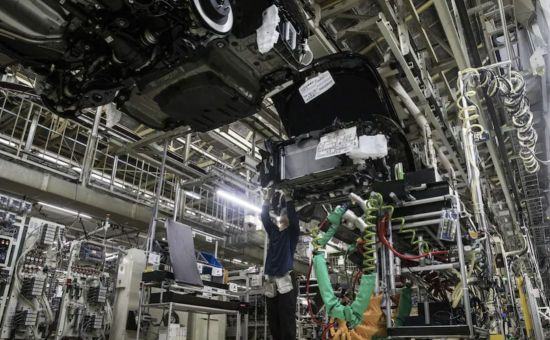
[Asia Economy Reporter Lee Ji-eun] A survey revealed that nearly half of Japanese manufacturers plan to relocate their major parts supply chains, which were primarily dependent on China. Amid escalating US-China tensions and the possibility of armed conflict between China and Taiwan, the Japanese government and industry are expected to take more proactive measures to reduce their dependence on Chinese supply chains.
On the 2nd, the Nihon Keizai (Nikkei) newspaper reported that a survey of 100 major Japanese manufacturers found that 50% of the 79 responding companies plan to reduce their dependence on parts supply chains from China. By industry, 60% of machinery-related companies and 57% of automobile and chemical companies expressed intentions to reduce their reliance on China.
The main reasons companies are reducing their dependence on China include concerns about potential armed conflict between China and Taiwan (80%, multiple responses allowed) and the impact of the zero-COVID policy (67%). Due to China's lockdown policies causing logistics bottlenecks and rising military tensions around the Taiwan Strait, China is increasingly viewed as an unstable supply source.
Some manufacturers rely heavily on China for parts procurement, and if a geopolitical crisis involving China arises, they are expected to suffer significant damage. According to the survey, 38% of all companies depend on China for 80% of specific parts.
Japan was the most preferred alternative supply chain location in preparation for this. A total of 86% (multiple responses allowed) answered that Japan is a suitable alternative. Thailand (76%) and Vietnam (72%) were also mentioned as alternative supply chain locations, but Nikkei reported that Japan's attractiveness was highlighted due to a decline in wage growth caused by prolonged deflation and increased overseas production costs due to the weak yen.
However, there are concerns that production costs will increase significantly if supply chains are reorganized. According to statistics from Ouluze Consulting Group, a Japanese business strategy advisory firm, if all parts procured from China are supplied from Japan, Thailand, and Vietnam, the final product cost will increase by 5.34 trillion yen (approximately 51.2885 trillion won).
Japanese manufacturing companies are calling for government-led support measures for supply chain relocation. A representative from Shionogi Pharmaceutical, which is preparing to relocate production from China to Japan, stated, "It is financially burdensome for companies to reduce dependence on China alone," and added, "Nation-led industrial development and support are necessary.".
© The Asia Business Daily(www.asiae.co.kr). All rights reserved.
![Clutching a Stolen Dior Bag, Saying "I Hate Being Poor but Real"... The Grotesque Con of a "Human Knockoff" [Slate]](https://cwcontent.asiae.co.kr/asiaresize/183/2026021902243444107_1771435474.jpg)















