UNESCO Intangible Heritage Committee Recognizes "Artisan Know-How and Culture"
President Macron Describes It as the 'Magic of 250g'...Claims Registration Four Years Ago
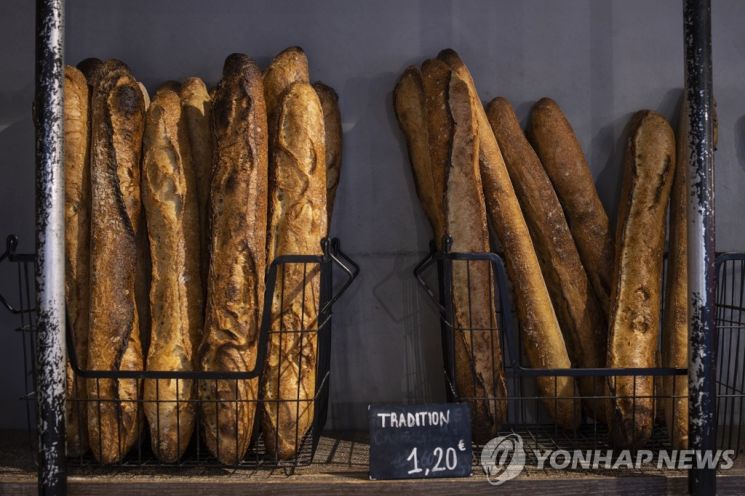
[Asia Economy Reporter Bang Je-il] The baguette, a symbol of French food culture and the "national bread" and staple food of the French people, has been recognized as a UNESCO Intangible Cultural Heritage.
The Intergovernmental Committee for the Safeguarding of the Intangible Cultural Heritage (Intangible Heritage Committee) announced on the 30th (local time) at a meeting held in Rabat, Morocco, that the "artisan know-how and culture of baguette bread" has been inscribed on the Representative List of the Intangible Cultural Heritage of Humanity, according to major foreign media reports.
French President Emmanuel Macron shared the news on his Twitter, saying, "The magic and perfection of 250g are in our daily lives," and added, "Bakers and gourmets have worked together for years to gain recognition for this technique."
He had previously suggested in 2018 that the baguette should be registered as a UNESCO cultural heritage.
Audrey Azoulay, former French Minister of Culture and current UNESCO Director-General, said, "The baguette is a daily ritual and an important component of meals, synonymous with sharing and enjoyment," adding, "It will now be possible to maintain craftsmanship and social customs into the future."
The word baguette means "stick" in French, named after the thin and long shape of the bread. It is characterized by a crispy crust and a soft, fluffy interior.
France’s food law stipulates that baguettes must be made with only four ingredients: flour, water, yeast, and salt. Artisans who carefully bake baguettes have felt threatened by mass production factories.
In 1970, there were 55,000 bakeries run by artisans, averaging one bakery per 790 residents, but today there are only 35,000 bakeries, averaging one per 2,000 residents, AFP reported.
Polling agency IFOP released a report in 2019 estimating that France produces 16 million baguettes daily and 6 billion annually.
The origin of the baguette is not clearly known. There are theories that Napoleon’s military devised the long bread for easier transport, that it evolved from Austria’s long bread called 'Pain Viennois,' or that it was made thin and long to shorten baking time following a labor law protecting bakers enacted in 1920.
Meanwhile, at the same Intangible Heritage Committee meeting where the baguette was inscribed as a UNESCO Intangible Cultural Heritage, South Korea’s "Korean Talchum" (mask dance) and North Korea’s "Pyongyang Naengmyeon customs" were also added to the Representative List of the Intangible Cultural Heritage of Humanity.
© The Asia Business Daily(www.asiae.co.kr). All rights reserved.
![Clutching a Stolen Dior Bag, Saying "I Hate Being Poor but Real"... The Grotesque Con of a "Human Knockoff" [Slate]](https://cwcontent.asiae.co.kr/asiaresize/183/2026021902243444107_1771435474.jpg)















