Airbus Offset Deals Require Purchasing SME Items but Implementation Rate Only 10%
Lockheed Martin, Exporter of F-35, Refuses to Transfer KF-X Core Technology, Sparking Controversy
[Asia Economy Yang Nak-gyu, Military Specialist Reporter] It has been revealed that the offset trade fulfillment rate for weapons imported from overseas is low. Offset trade is a system in which the country selling weapons provides counter-benefits such as technology transfer and parts orders to the importing country. It was created with the intention of compensating for the losses to the domestic defense industry caused by weapon imports.
According to the military on the 1st, four A330 MRTT aerial refueling aircraft were introduced from November 2018 through the KC-X aerial refueling aircraft project and deployed to the Air Force. Airbus, which delivered the aerial refueling aircraft, agreed to provide $662.6 million in offset trade to our side (technology transfer $84.3 million, SME exports $536.3 million, military support $6.3 million). However, the offset trade fulfillment rate is low. The technology transfer fulfillment rate is 92.6%, but SME exports are only 10%, and military support is just 1%. Airbus must fulfill the offset trade by 2024, but the industry believes that 100% fulfillment is practically impossible.
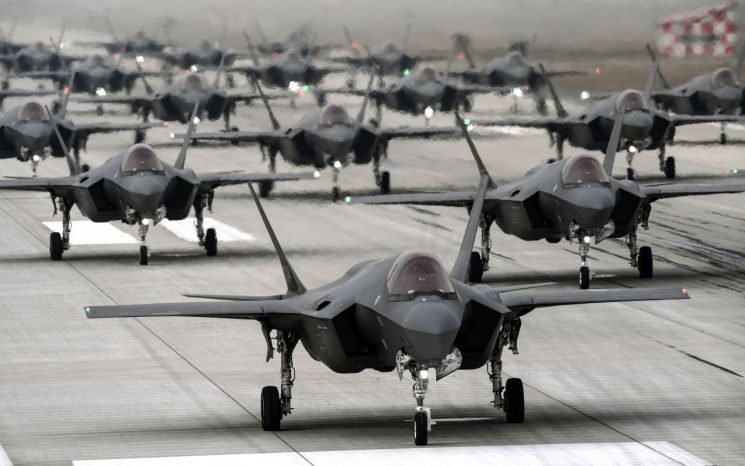
The same applies to the American defense company Lockheed Martin. Our Air Force invested about 7.77 trillion won in budget and introduced a total of 40 F-35As starting with the first unit in March 2018. Through this contract, Lockheed Martin agreed to provide military communication satellites ($2.1 billion), KF-X technology transfer ($1.4 billion), and SME exports ($300 million) as offset trade to our side.
The Defense Acquisition Program Administration (DAPA) claims that the military communication satellite project has been completed, but there were no penalties such as delay damages for the project being behind the original schedule. Although 25 technologies necessary for the development of the Korean fighter KF-X were to be transferred, Lockheed Martin is reported to have refused to transfer four core technologies including radar. Regarding the KF-X transfer issue, DAPA stated that it cannot disclose the fulfillment rate. The SME export fulfillment rate is also only 23.4%. The Ministry of SMEs and Startups recommended 246 items from 73 domestic SMEs to Lockheed Martin, but actual purchases were limited to 30 items from 12 companies.
Although Lockheed Martin’s offset trade fulfillment rate is low, DAPA effectively confirmed in July that it will invest 3.9 trillion won in the F-X Phase 2 project to import an additional 20 F-35As.
DAPA said, “If the fulfillment period is extended, the obligation value of fulfillment increases,” adding, “For the first one-year extension, the unfulfilled value increases by 20%, and for each subsequent one-year extension, the unfulfilled value increases by 10%.”
An official from an overseas defense company said, “Civil aviation parts are brought in from Korea, but they are not recognized as offset trade,” and added, “Even if we want to purchase SME volumes, the fulfillment rate of offset trade is minimal due to low expertise and competitiveness.”
© The Asia Business Daily(www.asiae.co.kr). All rights reserved.