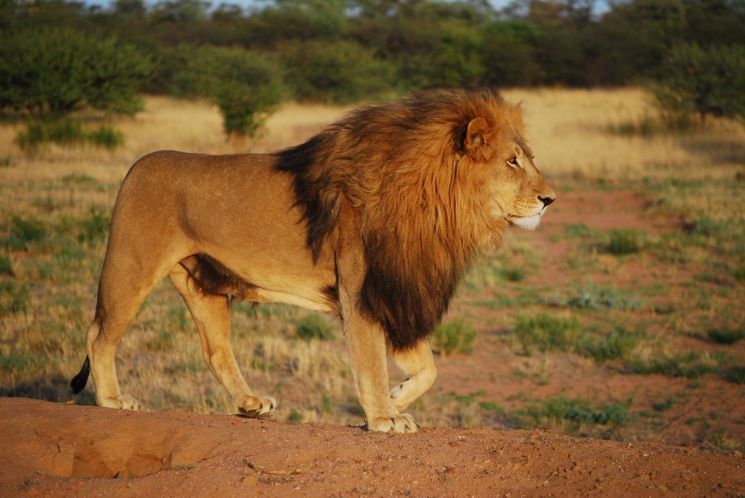
Multiple Male Lions with Less Attractive Manes Mate Sequentially with Several Females
Fruit Flies Increase Number of Male Mates at Higher Temperatures to Boost Fertilization Rates
Rising Temperatures Lead to Increased Energy Expenditure and Weakened Male Reproductive Ability
[Asia Economy Intern Reporter Lee Gyehwa] The Washington Post (WP) reported on the 28th (local time) that due to global warming, some male animals are reducing their efforts to attract females, leading to a decrease in the males' vibrant colors.
Characteristics for animal mating, such as coloration and dancing behaviors, are often solely for mating purposes. However, in the era of global warming, many animals are abandoning these mating traits and repurposing them. There are also signs that humans are experiencing changes in mating behaviors influenced by climate change. Warnings have been issued that if changes in mating behaviors do not keep pace with the rapidly progressing climate change, up to one-sixth of all plant and animal species could become extinct.
When the dark areas on dragonfly wings increase, the dragonfly's body temperature can rise by up to 2 degrees Celsius. Professor Michael Moore of the University of Colorado observed over 3,000 dragonflies and confirmed that the black areas on dragonfly wings have decreased over recent decades. The hotter the year, the smaller the black areas. Professor Moore stated, "This is evidence that dragonflies with more wing decorations are being eliminated during hot years."
Animals identify mating partners by appearance. The larger, more colorful, and more distinctive the better. Male lions are characterized by their large, dark manes. For male lions, a large and dark mane serves to display that they are superior males who can withstand heat well. Evolutionary biologists say, "Eye-catching traits often represent dominant genes." Females select males with noticeable traits to pass these genes on to the next generation. However, Professor Clay Packer of the University of Minnesota, who has studied lions for decades, said, "Lions with large, dark manes seek shade more often, drink more water, and rest longer after mating." This contrasts with lions with smaller manes, which mate with multiple females consecutively.
As global temperatures rise, it is known that females' criteria for selecting mating partners are also changing. In fruit flies, which typically mate with one male, the number of male mates increases as temperatures rise. Professor Noah Reiss of Saint Louis University explained, "As temperatures increase, male sperm production decreases, so females change their behavior to increase fertilization rates."
The same applies to humans. Research shows that after several days of exposure to temperatures above 27 degrees Celsius, birth rates drop by 0.4% after 8 to 10 months. Birth rates then rise again over the following months. Higher temperatures lead to reduced frequency of sexual activity in humans, resulting in lower pregnancy rates. Studies also show that higher temperatures reduce male sperm production, decreasing fertility.
© The Asia Business Daily(www.asiae.co.kr). All rights reserved.
![Clutching a Stolen Dior Bag, Saying "I Hate Being Poor but Real"... The Grotesque Con of a "Human Knockoff" [Slate]](https://cwcontent.asiae.co.kr/asiaresize/183/2026021902243444107_1771435474.jpg)















