Workarounds for Russian Sanctions... Mainly Imported from Western Europe
Russian Crude Oil Price Cap Also Faces Difficulties... Controversy Over $60 Threshold
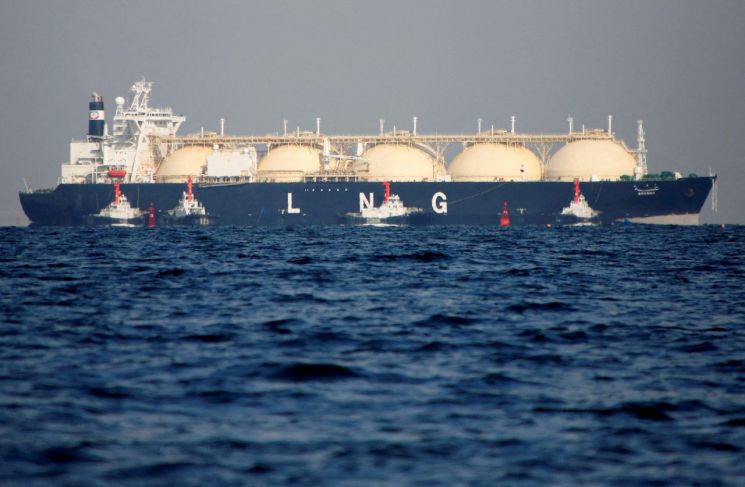
According to major foreign media on the 28th (local time), data compiled by the U.S. financial information firm Refinitiv shows that from January to October this year, European countries imported 17.8 billion cubic meters of Russian LNG, an increase of more than 42% compared to the same period last year. This figure accounts for 16% of all LNG imported by sea into the entire European region.
Since the Ukraine war, pipeline gas imports have sharply decreased since May due to Russia’s threats to gas supply, but LNG imports have actually increased. In particular, France, Belgium, Spain, and the Netherlands have significantly increased their LNG imports.
These countries are reportedly continuing LNG imports not through Gazprom, Russia’s largest state-owned gas company currently under sanctions, but through Novatek, the second-largest gas company. According to major foreign media, Western countries are circumventing sanctions and continuing LNG imports through Yamal LNG, a joint venture subsidiary of Novatek. This company shares ownership with France’s energy company Total and China National Petroleum Corporation (CNPC), among others.
Amid growing concerns over the weakening of sanctions due to the prolonged Ukraine war and worsening inflation, negotiations on the EU’s proposed price cap on Russian crude oil are also reportedly stalled. According to Bloomberg News, EU countries have lowered the proposed price cap for Russian crude oil from the previously considered $65?70 per barrel to around $62 per barrel and are continuing talks, but negotiations remain difficult due to opposition from Eastern European countries.
Eastern European countries bordering Russia, such as Poland and Estonia, argue that the price cap on Russian crude oil should be lowered to around $20 per barrel. Considering that Russian crude oil is currently being sold at a discounted price of $60?70 per barrel, they claim the current price cap lacks effectiveness.
However, countries with significant economic reliance on tanker shipping, such as Greece, Malta, and Cyprus, oppose lowering the price cap. They fear that if the price cap is set too low, shipping companies may refuse to transport Russian crude oil altogether. Bloomberg News also reported that the U.S. government opposes passing an excessively low price cap to prevent a sharp rise in oil prices.
© The Asia Business Daily(www.asiae.co.kr). All rights reserved.
![Clutching a Stolen Dior Bag, Saying "I Hate Being Poor but Real"... The Grotesque Con of a "Human Knockoff" [Slate]](https://cwcontent.asiae.co.kr/asiaresize/183/2026021902243444107_1771435474.jpg)















