Alongside the historic plunge in apartment prices, unsold housing inventory is rapidly accumulating. The number of unsold units in Seoul has risen to its highest level in nearly seven years, and in some areas where the sales market has already stagnated, discounted sales are occurring one after another. With the government announcing additional deregulation measures within the year, there is particularly growing interest in the revival of the registered rental business system.
According to the Seoul Real Estate Information Plaza on the 29th, as of the end of October, the number of unsold private housing units in Seoul recorded 866 units, an increase of 147 units from the previous month (719 units). The number of unsold apartment units in Seoul, which was below 50 units at the beginning of the year, steadily increased and surpassed 800 units, marking the highest level in 6 years and 8 months since February 2016 (884 units). It is estimated that there are actually more unsold units hidden beyond these figures, as reporting unsold units is not mandatory for developers. For example, 'Eunpyeong Xi The Star' in Eunpyeong-gu, Seoul, is conducting first-come, first-served sales but is not reflected in Seoul city statistics.
The fear of unsold units is similar in Gyeonggi Province. According to the Gyeonggi Real Estate Portal, the number of unsold housing units increased sharply from 855 units at the beginning of the year to 5,080 units in October. Tearful discounted sales are also underway. 'Unjeong Prugio Parkline' in Paju, Gyeonggi, is being sold at about 200 million KRW lower than the initial sale price. 'Cantavil Suyu Palace' in Suyu-dong, Gangbuk-gu, Seoul, is offering a 15% discount on the sale price, and 'Cheonwang Station Moa Elga' in Oryu-dong, Guro-gu, Seoul, promises a cash payment of 30 million KRW upon contract.
Although November statistics have not yet been released, the situation is expected to worsen further. The unsold housing inventory index for November, announced by the Korea Housing Industry Research Institute, recorded 131.4, the highest figure this year. The institute forecasted, "If postponed sales schedules concentrate due to the real estate market downturn, the outlook for unsold inventory may increase further."
With the government announcing additional deregulation measures within the year, the market's interest in the 'registered rental business system' is particularly high. On the 28th, Deputy Prime Minister and Minister of Economy and Finance Choo Kyung-ho held an emergency macroeconomic and financial meeting at the Seoul Banking Hall and stated, "We will closely monitor market conditions and promote additional deregulation of real estate, including the reform of the registered rental business system within the year."
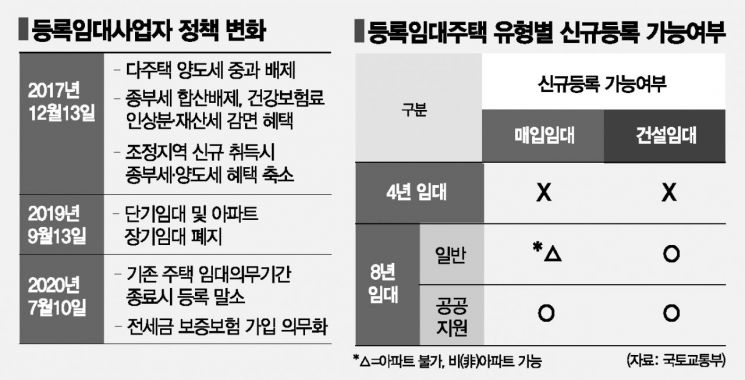
The registered rental business system provides benefits such as exclusion from the comprehensive real estate tax aggregation for businesses registered as rental operators. While the government encouraged this system at the end of 2017, it was downsized and restructured in the July 10, 2020 measures due to criticism that it was used as a tax avoidance tool by multi-homeowners. Currently, only long-term registered rental businesses for non-apartment properties are allowed.
The revival of the registered rental system is expected to impact not only the reduction of unsold units but also the alleviation of the transaction drought. Lim Byung-chul, team leader at Real Estate R114, said, "If improvement measures for registered rental business operators are introduced, interest in urgent sale properties may follow, potentially easing the transaction freeze to some extent."
© The Asia Business Daily(www.asiae.co.kr). All rights reserved.
![Clutching a Stolen Dior Bag, Saying "I Hate Being Poor but Real"... The Grotesque Con of a "Human Knockoff" [Slate]](https://cwcontent.asiae.co.kr/asiaresize/183/2026021902243444107_1771435474.jpg)
















