Unemployment Benefit Recipients Increase Since 2020
Medical Service Usage Declined Sharply Then Rising
But Has Not Recovered to Preceding Years' Levels
[Asia Economy Reporter Kim Young-won] A study has revealed that the COVID-19 pandemic has impacted employment and healthcare utilization. Since 2020, the number of unemployment benefit recipients has increased, while medical usage such as outpatient visits has decreased and has not returned to pre-pandemic levels.
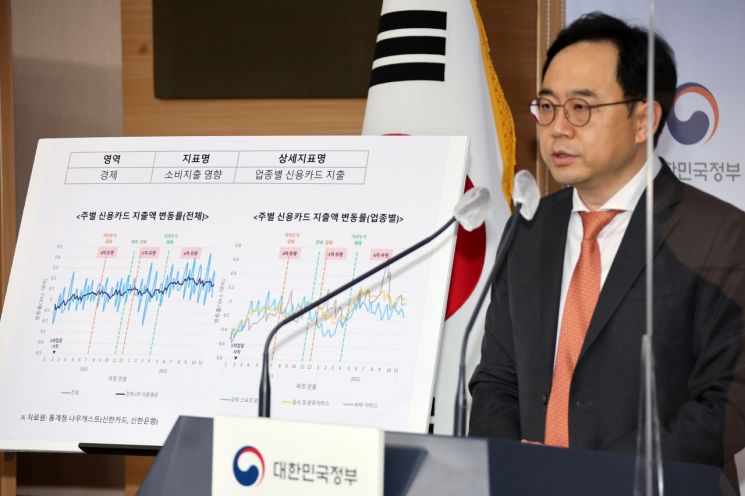
On the 28th, the National Infectious Disease Crisis Response Advisory Committee announced the 'Establishment and Utilization Plan of Socioeconomic Indicators for Infectious Disease Crisis Response,' which includes these findings. The advisory committee conducted a preliminary study selecting 10 indicators across 3 areas that allow multifaceted examination of changes in citizens' lives, have high policy sensitivity, short measurement cycles, and easy data accessibility. The indicators are consumption expenditure, employment, small business owners, vulnerable households, social isolation, healthcare accessibility, educational environment, population trends, population movement, and risk perception.
Economic and Healthcare Utilization Worsened After COVID-19 Outbreak... Effects of Social Distancing Lift and Vaccination Also Noted
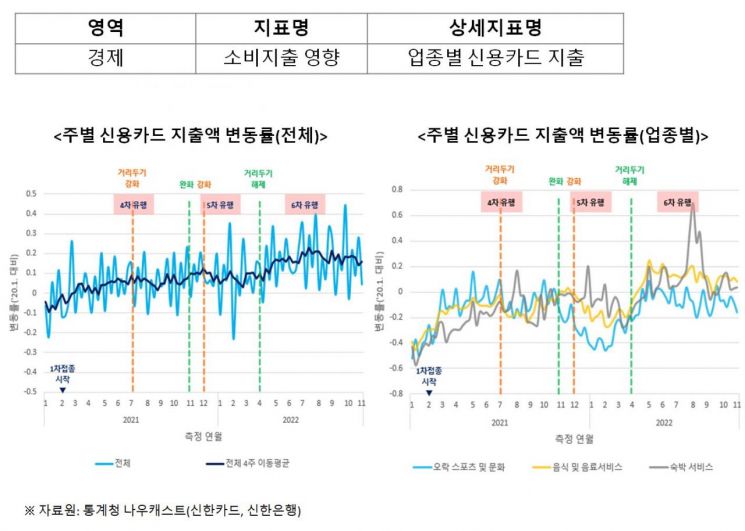
The study found that credit card spending by industry in the economic sector tended to decrease with the COVID-19 outbreak and the strengthening of social distancing measures. Particularly, industries involving multi-use facilities such as food services and leisure were more sensitive to changes. However, during the sixth wave this summer, spending levels did not significantly decline. Hong Seok-cheol, chair of the socioeconomic subcommittee and professor of economics at Seoul National University, explained, "This is partly due to the lifting of social distancing and changes in the public's risk perception of COVID-19."
Regarding employment, the number of unemployment benefit recipients increased after 2020 compared to before the COVID-19 outbreak. Notably, since 2020, female recipients have consistently outnumbered males. The advisory committee analyzed that the increase in childcare demand at home due to reduced face-to-face classes influenced this trend. Chair Hong stated, "In the educational environment, as non-face-to-face classes expand rather than in-person classes, students' lessons and daily management mostly occur at home, which likely led to a significant decrease in women's economic participation."
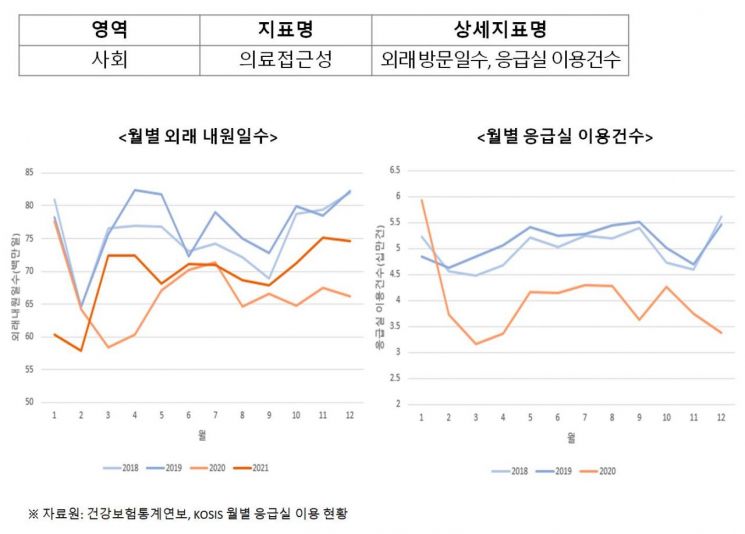
Healthcare utilization sharply declined due to the COVID-19 outbreak and is currently recovering but has not reached pre-pandemic levels. From 2018 to 2019, healthcare usage tended to increase, but after the spread of COVID-19 cluster infections in March 2020, outpatient visits and emergency room visits dropped to about half of usual levels. According to the advisory committee, from March to November 2020, healthcare utilization decreased by approximately 16% compared to the same period in 2019, and emergency room visits decreased by about 26%. From March 2021, healthcare utilization rebounded. The committee attributed this to reduced perceived risk of hospital visits following the start of vaccinations. Chair Hong emphasized, "The decrease in healthcare accessibility does not affect all citizens equally; it is particularly problematic for patients with underlying conditions and the elderly who have health issues but cannot access timely medical care due to COVID-19 risks."
In terms of social isolation, measured by the number of depression patients, a sharp increase was observed after the onset of COVID-19. Monthly outpatient visits for depression significantly increased from March 2021. By gender, the increase in visits was higher among women than men. The advisory committee believes that prolonged social distancing led to severed social relationships and reduced activity levels, which influenced this trend.
"Socioeconomic Indicators Should Be Used for Quarantine Policies and Disaster Relief"
Based on these results, the advisory committee proposed ▲advancing the socioeconomic indicator system for infectious disease crisis response and developing innovative indicators ▲tracking changes and segmenting indicators related to vulnerable groups during infectious disease crises ▲developing indicators related to the medium- to long-term impacts of infectious diseases across sectors ▲establishing a system to predict and evaluate the socioeconomic impacts of quarantine policies ▲and recommending government-wide attention and research support.
Chair Hong advised that socioeconomic indicators should be utilized for supporting vulnerable groups during infectious disease crises and for decision-making in quarantine policies. He said, "During the COVID-19 experience, there were delays in timely support such as disaster relief funds and aid for vulnerable groups and small business owners. Identifying vulnerable groups as a priority and determining what support is needed can be significantly aided by these indicators."
He added, "Until now, decisions on social distancing have been based on changes in confirmed cases and severe patients, but prolonged social distancing causes considerable economic and social damage. Monitoring such indicators will play a very important role in decision-making."
© The Asia Business Daily(www.asiae.co.kr). All rights reserved.
![Clutching a Stolen Dior Bag, Saying "I Hate Being Poor but Real"... The Grotesque Con of a "Human Knockoff" [Slate]](https://cwcontent.asiae.co.kr/asiaresize/183/2026021902243444107_1771435474.jpg)

















