Concerns Raised Over Surveillance and Wiretapping Data Leak Under Chinese Communist Party Orders
Chinese Company States "Expressions of National Security Threat Are Incorrect... No Database Management"
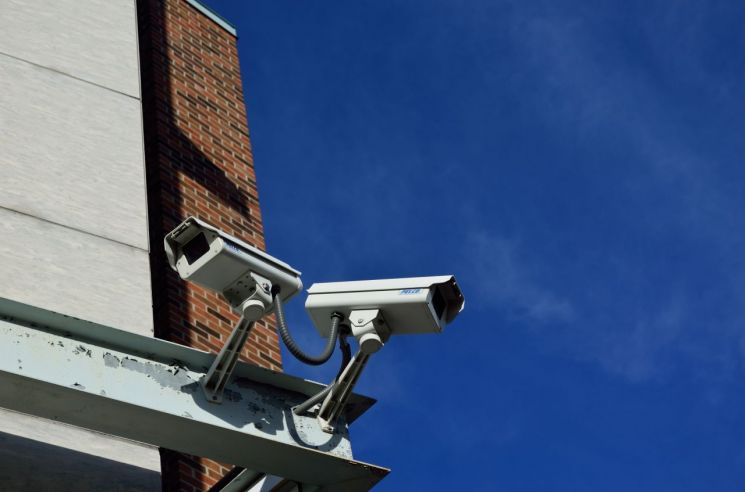
[Asia Economy Reporter Kim Junran] The UK has banned the use of Chinese-made closed-circuit television (CCTV) cameras in key government security facilities, citing concerns over national security, Reuters and other agencies reported on the 24th (local time).
The UK government issued guidelines to each ministry on the same day, prohibiting the installation of CCTV cameras produced by companies subject to China's National Intelligence Law inside buildings where sensitive information could be leaked. For equipment already installed, it recommended isolating them from internal computer networks and considering their complete removal in the future.
Chinese companies are required under the National Intelligence Law to cooperate with the Chinese government, specifically the leadership of the Chinese Communist Party. Accordingly, some countries have raised security concerns over the possibility that Chinese companies might have devices in their equipment to secretly extract information and activate them later.
Oliver Dowden, UK Chancellor of the Duchy of Lancaster, stated in a written submission to the House of Commons, "This decision was made after reviewing the maximum potential risks associated with installing video surveillance equipment within government facilities, both current and future." He added, "Considering the threats facing the UK and the increasing functionality and connectivity of these systems, we concluded that additional controls are necessary."
Previously, the UK House of Commons Foreign Affairs Committee had called for a ban on the sale and use of CCTV cameras manufactured by companies such as Hikvision and Dahua Technology, in which the Chinese government holds shares. Concerns cited included the potential for personal data leaks and human rights violations. In June last year, there was controversy when it was revealed that the CCTV camera that recorded the leak of then-Health Secretary Matt Hancock's private life was a Hikvision product.
In response, the privacy protection group 'Big Brother Watch' pointed out in July that the majority of UK public institutions use surveillance cameras made by Hikvision and Dahua. They emphasized that many ministries, including the Home Office and the Department for Business, Energy and Industrial Strategy, extensively use Hikvision CCTV cameras on building exteriors.
Hikvision responded to the UK government's decision by stating, "It is wrong to portray our company as a threat to national security," and explained, "Hikvision cannot transmit end-user data to third parties, nor do we manage user databases."
Meanwhile, last month, the US Federal Communications Commission (FCC) reportedly established regulations banning the sale of video surveillance equipment produced by Chinese companies such as Hikvision, Dahua, and Hytera within the United States.
Since 2017, China has been enforcing the National Intelligence Law, which significantly strengthens the authority of intelligence agencies to wiretap, surveil, and investigate dissidents both inside and outside China. This has led to ongoing concerns in the international community.
In particular, Hikvision, the world's largest surveillance equipment manufacturer, has been suspected of involvement in the Chinese government's repression of ethnic minorities such as the Uyghurs and has faced various sanctions, including being placed on the US trade blacklist in 2019.
Some view the sanctions against Chinese CCTV companies not merely as security concerns but as part of a technological hegemony competition over future advanced technologies and big data dominance. In this context, Mao Ning, spokesperson for the Chinese Ministry of Foreign Affairs, emphasized at a regular briefing on the 25th, "The Chinese government firmly opposes the arbitrary expansion of the concept of national security," and stated, "We are closely monitoring related developments and will resolutely safeguard the legitimate and lawful rights and interests of Chinese companies."
© The Asia Business Daily(www.asiae.co.kr). All rights reserved.
![Clutching a Stolen Dior Bag, Saying "I Hate Being Poor but Real"... The Grotesque Con of a "Human Knockoff" [Slate]](https://cwcontent.asiae.co.kr/asiaresize/183/2026021902243444107_1771435474.jpg)















