Ruling Party Opposes Raising Comprehensive Real Estate Tax Threshold for Multiple Homeowners
Threshold Raised to 1.1 Billion KRW While Maintaining 600 Million KRW Deduction
Ruling Party: "If Official Price Is Below 1.1 Billion KRW, Tax Exempt... Above That, 3 Million KRW Bombshell"
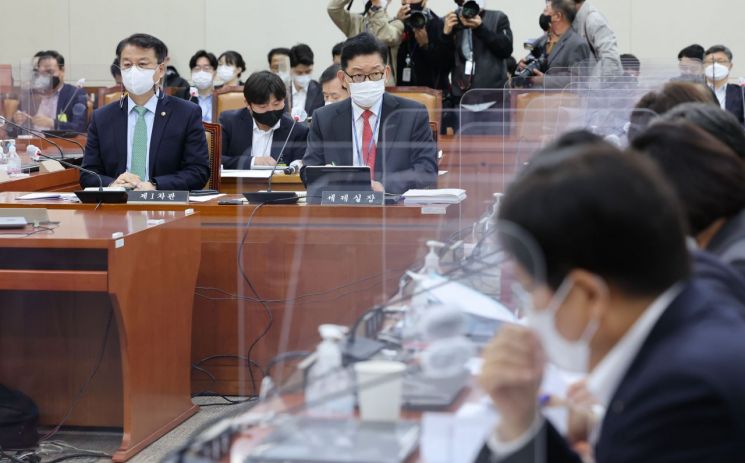
[Asia Economy Reporter Lee Hyun-joo] The ruling and opposition parties agree on the principle of reducing the burden of the Comprehensive Real Estate Holding Tax (종합부동산세, 종부세), but they have not reached a consensus on detailed criteria for taxing multiple homeowners and whether to abolish the heavy taxation. As the 종부세 bomb hit even the Democratic Party's strongholds, there is a stance that revisions can be made on a broad scale, but significant differences remain in the details, making the final conclusion difficult. Most of the decisions on the relevant tax law amendment are expected to be made in the so-called 'closed-door negotiations' of the small subcommittee.
According to political circles on the 24th, ruling party lawmakers on the National Assembly's Planning and Finance Committee reportedly expressed reluctance at the tax subcommittee meeting the day before regarding the opposition's proposed amendment to the 종부세 law, citing the 'threshold effect.' The 종부세 threshold effect refers to the phenomenon where the tax burden sharply increases around the imposition criteria.
This concern arose after the Democratic Party expressed a position to push for legal amendments based on the 종부세 law amendment proposed by Policy Committee Chairman Kim Seong-hwan. Chairman Kim's amendment aims to raise the 종부세 taxation threshold for multiple homeowners from the current 600 million KRW to 1.1 billion KRW, while maintaining the deduction amount at the current 600 million KRW. For single homeowners, the deduction amount is 600 million KRW plus an additional 500 million KRW, so 종부세 is paid only if the value exceeds 1.1 billion KRW; the proposal is to apply the same standard to multiple homeowners but impose heavier taxation on the taxable amount.
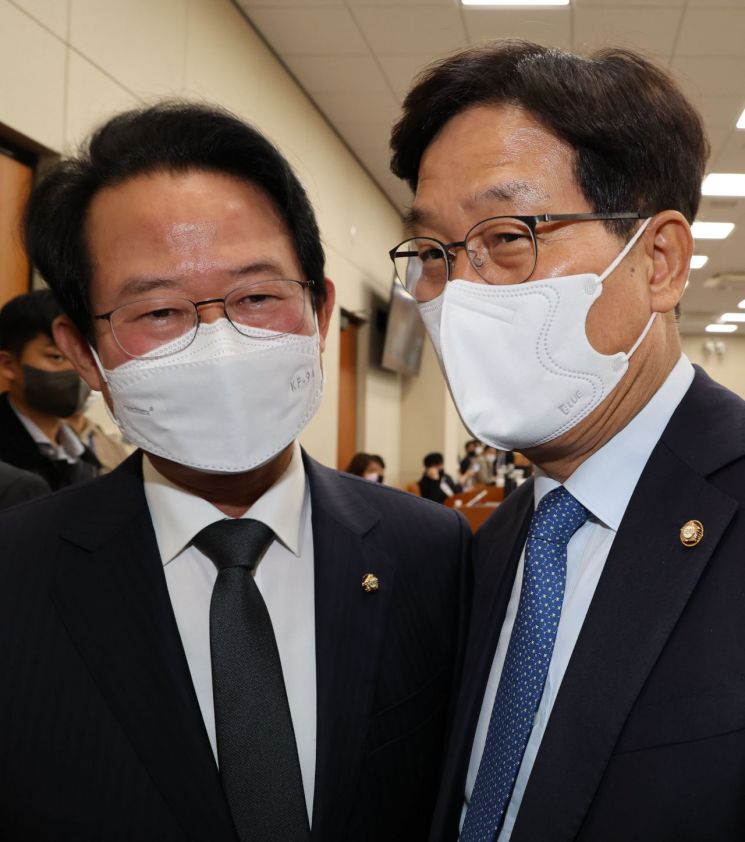
The ruling party opposed this plan, arguing that it could trigger 'tax resistance' among taxpayers. Maintaining the deduction amount at 600 million KRW while raising the 종부세 imposition threshold to 1.1 billion KRW would cause a sharp tax gap around the threshold. For example, if the total publicly announced price of two or more houses is 1.09 billion KRW, the taxpayer is excluded from 종부세 despite the gap with the deduction amount. However, if the publicly announced price is 1.1 billion KRW, the taxpayer becomes subject to taxation and must pay 종부세 of 3.6 million KRW even when applying a 60% fair market value ratio. The tax burden varies significantly with a 10 million KRW difference in publicly announced price.
A People Power Party official pointed out, "The 'threshold effect' can occur around the 1.1 billion KRW imposition standard," adding, "The tax gap becomes too large, raising concerns about tax resistance."
Since most of the tax law amendment proposals failed to reach a conclusion at the tax subcommittee meeting the day before, this issue is likely to be addressed in the small subcommittee, which includes some members of the subcommittee. A Planning and Finance Committee member from the People Power Party said, "The claims of opposition lawmakers are all different, so no agreement was reached." Some Democratic Party Planning and Finance Committee members also judge that there are problems with Kim Seong-hwan's proposal and expect adjustments such as raising the deduction amount.
The People Power Party plans to persuade the opposition to raise the basic deduction amount from the current 600 million KRW to 900 million KRW according to the government's proposal. To reduce the threshold effect, the basic deduction amount must be increased to lower the tax burden on those subject to taxation.
Among those subject to 종부세 taxation in Seoul this year, the proportion outside the Gangnam area exceeded that of the Gangnam 4 districts (Gangnam, Seocho, Songpa, Gangdong) for the first time since its introduction in 2005. This means that 종부세 imposition has increased in Democratic Party strongholds.
Nevertheless, the Democratic Party strongly opposes the proposal to abolish the 종부세 heavy tax rate, which can reach up to 6.0%. They also opposed the abolition of heavy taxation at the subcommittee meeting the day before. A Democratic Party Planning and Finance Committee member said, "I believe the purpose of introducing 종부세 has not changed," adding, "It should be clear that 종부세 was intended to prevent speculative demand."
© The Asia Business Daily(www.asiae.co.kr). All rights reserved.
![Clutching a Stolen Dior Bag, Saying "I Hate Being Poor but Real"... The Grotesque Con of a "Human Knockoff" [Slate]](https://cwcontent.asiae.co.kr/asiaresize/183/2026021902243444107_1771435474.jpg)

















