Russian Missile Strikes Destroy Electricity, Heating, and Water Infrastructure
Donbas Region Faces -20 to -30°C in March... Worst Situation Since Independence from the Soviet Union
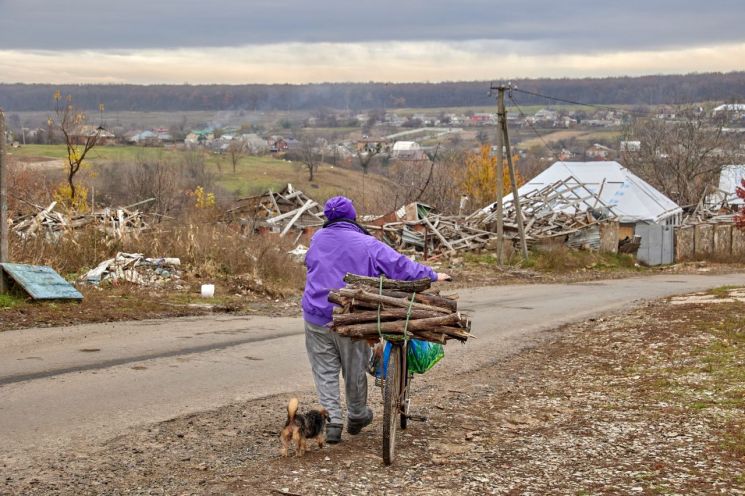 On the 3rd (local time), a citizen is walking while pushing a bicycle in the village of Yakoblyuka, Donetsk, Ukraine. Photo by EPA Yonhap News
[Asia Economy Reporter Sumi Hwang] This winter in Ukraine is expected to be particularly cold. With major infrastructure such as electricity, heating, and water supply destroyed by Russian missile strikes, some regions have already experienced subzero temperatures. Concerns are being raised that civilian casualties could increase as Russia continues its deliberate attacks on energy infrastructure.
According to the weather specialist website Weather.com on the 22nd (local time), the lowest temperature in Kyiv, the capital of Ukraine, was recorded at minus 4 degrees Celsius that night. Snow has also begun to fall in some areas. The BBC reported that playgrounds and park benches in Kyiv were covered with snow the previous day, and most people had disappeared from the streets.
The problem is that winter has not yet fully begun. Ukraine’s winter weather is known to be quite harsh. In the eastern city of Kharkiv, the average temperature in November is minus 0.8 degrees Celsius, and the average temperature in March of the following year is minus 1.9 degrees Celsius. In the Donbas region, temperatures of minus 20 to 30 degrees Celsius are not uncommon in December, January, February, as well as in November and March.
Although Ukraine’s autumn temperatures this year were milder than usual, as autumn ends, the cold is gradually dropping below freezing. In particular, the Associated Press reported that temperatures in some areas are expected to fall below minus 20 degrees Celsius.
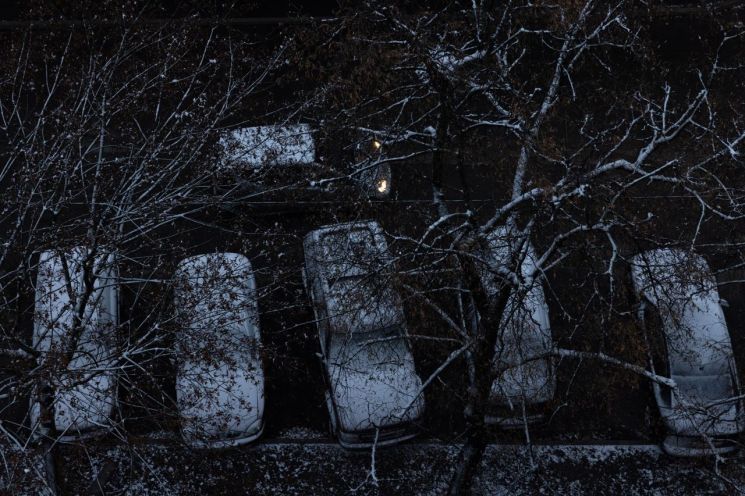 On the 17th (local time), vehicles parked covered in snow in Kyiv, the capital of Ukraine, which experienced a blackout. Photo by EPA Yonhap News
Russia’s attacks on power facilities are pushing Ukrainian citizens further into the cold. Recently, Russia has begun targeting civilian infrastructure in major rear cities with missiles, damaging residents’ living conditions. Missiles have been raining down on major Ukrainian cities such as Kyiv in the north and Lviv in the west, far from the active front lines. On the 15th, Russia launched about 90 missiles at major cities, marking the largest-scale airstrike since the war began in February.
As a result, more than half of the main power facilities needed to survive the winter in major Ukrainian cities have been damaged. Residents cut off from heating, electricity, gas, and water supplies are forced to struggle in fear. The Wall Street Journal reported that although a celebration filled the square in the recently recaptured Kherson region, it disappeared along with the cold. Instead, the streets were filled with residents seeking food and water to endure the harsh winter. Ukrainian authorities predict that millions of people in Kyiv and other cities will live without power and water supply at least until the end of March next year.
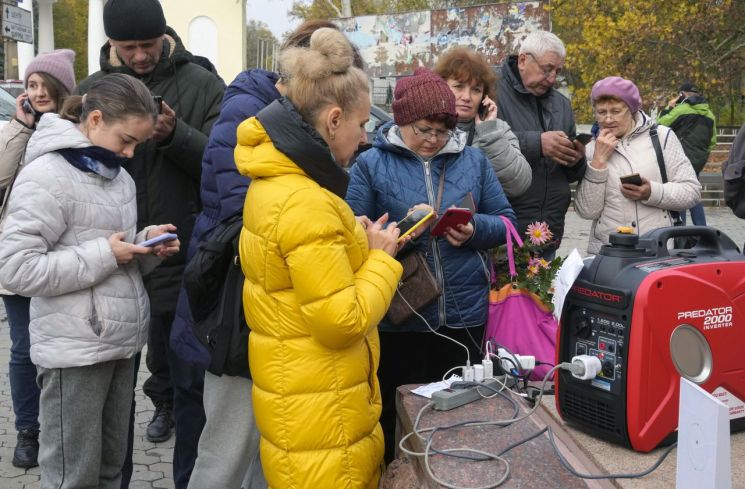 On the 17th (local time), residents in Kherson, southern Ukraine, are charging their mobile phones. Photo by AP Yonhap News
Ukrainian President Volodymyr Zelensky expressed anger at Russia’s attacks targeting civilians. According to AFP on the 22nd, President Zelensky criticized in a video message to the French Market Association, saying, "The Kremlin wants to turn this winter’s cold into a weapon of mass destruction." He added, "To survive this winter and prevent Russia from turning the cold into a tool of terror and submission, we need a lot," requesting the association’s support for generators, medical equipment, and mine clearance operations.
Oleksandr Honcharenko, mayor of Kramatorsk near Donetsk in the east, said, "It seems this will be the harshest winter since independence from the Soviet Union 30 years ago," warning, "People could lose their lives." The World Health Organization (WHO) expressed particular concern about the collapse of medical facilities. According to WHO, Russia has attacked about 700 medical facilities in Ukraine so far, causing disruptions in the supply of essential medicines in some areas and difficulties in operating intensive care units. As Russia’s attacks on Ukraine’s power grid continue, warnings have emerged that millions of Ukrainians face life-threatening risks.
© The Asia Business Daily(www.asiae.co.kr). All rights reserved.
![Clutching a Stolen Dior Bag, Saying "I Hate Being Poor but Real"... The Grotesque Con of a "Human Knockoff" [Slate]](https://cwcontent.asiae.co.kr/asiaresize/183/2026021902243444107_1771435474.jpg)

















