[Seoul District News] Seocho-gu Signs Site Exchange Agreement with City and Education Office for Cheongdam High School Site on 11th & Resolution of 3-Year Stalled Site Exchange Issue Achieved through Cooperative Efforts with National and City Council Members in 8th Term... Seocho-Style Care Community Produces and Distributes 'How to Find Vulnerable Households'... Gwangjin-gu Awards 'Video & SNS Content Contest'
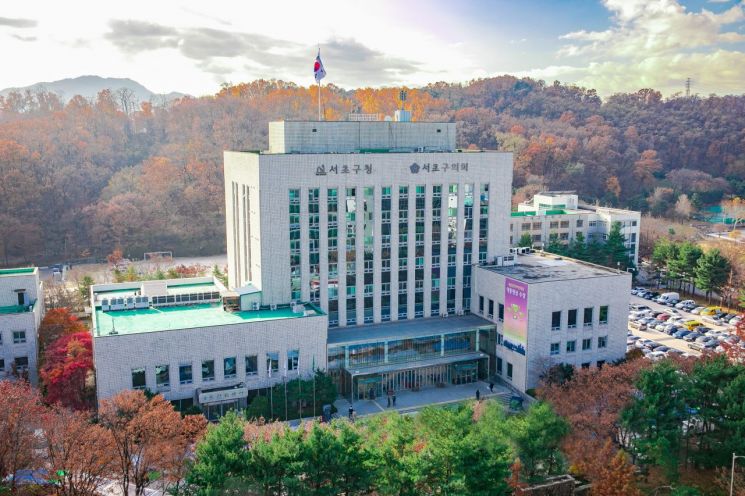
[Asia Economy Reporter Park Jong-il] The long-cherished wish of Seocho-gu for 30 years to establish a high school in the Jamwon area is reaching a visible stage, raising residents' expectations.
This is the result of an all-out effort by the district, local members of the National Assembly, city council members, and related officials working together.
Seocho-gu (Mayor Jeon Seong-su) warmly welcomes the land exchange agreement between Seoul City and the Seoul Metropolitan Office of Education for the relocation of Cheongdam High School to the Jamwon area (signed on the 11th, between 66 Sinbanpo-ro 23-gil, Seocho-gu and 419 Apgujeong-ro, Gangnam-gu), and stated that it will cooperate with all related organizations to push forward until the school relocation is successfully completed.
The project to attract a high school to the Jamwon area has been a consistent effort by Seocho-gu to address the inconvenience faced by residents who had to attend distant schools due to the absence of a high school in the area.
In particular, during the 6th and 7th terms of the elected mayor Jo Eun-hee (then Seocho-gu mayor, now a member of the National Assembly for Seocho-gap of the People Power Party), continuous resident briefings were held to gather opinions, and steady consultations were conducted with Seoul City and the Seoul Metropolitan Office of Education, the institution responsible for school establishment. In January 2019, an inter-agency memorandum of understanding was signed with the Office of Education to attract a high school to the Jamwon area, marking the beginning of progress.
Accordingly, in November of the same year, the Office of Education announced the administrative notice for the relocation of Cheongdam High School, deciding on its move to Jamwon-dong, marking a smooth start.
However, the project was stalled for three years thereafter. Negotiations were suspended due to differences in position between the Office of Education and Seoul City, the owner of the planned relocation site, regarding the land exchange.
With the start of the 8th term of the elected mayor, the land exchange process regained momentum. Mayor Jeon Seong-su also pledged the Cheongdam High School relocation as a campaign promise and mobilized all district capabilities. Local members of the National Assembly and city council members cooperated closely, actively mediating between the two institutions, demonstrating a simultaneous and cooperative effort.
In particular, Assemblywoman Jo Eun-hee held direct meetings with Superintendent of Education Cho Hee-yeon and requested support from relevant Seoul City department heads to resolve the project. City council members Lee Sook-ja and Park Sang-hyuk also hosted several meetings with department heads from both institutions to mediate ongoing issues, showing continuous efforts.
During this process, Seoul City took a magnanimous stance on the high school relocation and engaged in negotiations, ultimately reaching an agreement on the land exchange with the Office of Education.
Following the land exchange agreement, the district plans to actively cooperate with both institutions to swiftly proceed with all necessary matters for the high school relocation, including demolition of existing facilities.
To this end, on the 14th, the district will sign an agreement with the Seoul Metropolitan Office of Education to resolve pending issues related to securing school land for the relocation of Cheongdam High School.
Mayor Jeon Seong-su of Seocho-gu said, “I am very relieved and pleased that the long-awaited project to attract a high school to the Jamwon area can proceed after overcoming many difficulties,” and expressed deep gratitude to Assemblywoman Jo Eun-hee, city council members Lee Sook-ja and Park Sang-hyuk, Seoul Mayor Oh Se-hoon, Seoul City department heads (including Yeo Jang-kwon, Director of the Balanced Development Headquarters, and Yoo Chang-soo, Director of the Housing Policy Office), Superintendent of Education Cho Hee-yeon, and all related parties. He added, “Seocho-gu will carefully oversee the smooth progress of this project going forward.”
In April, a call came to the Dong Community Service Center in Seocho-gu. “There is a tenant in our building who has not gone out and has been three months behind on rent. Is there any way to help?” It was the building manager concerned about the resident. When welfare staff from the community center and district office visited the home, they found piled-up mail and a notice of power disconnection posted. Inside the cold house was a thin woman who said, “I don’t need any help,” refusing all support. She was a reclusive middle-aged person more accustomed to being alone. After persistent persuasion, Ms. H came out into the world; she was diagnosed with ALS and is currently receiving customized care support such as Seoripul Care SOS and basic livelihood security.
In August, another case involved Ms. L, whose registered address differed from her actual residence. She was battling cancer but had given up treatment and was about to end her life. Thanks to a report from an acquaintance, she was discovered early, preventing a potential solitary death.
How did they see these neighbors? Through genuine concern. Concern has power. Things that might be overlooked suddenly become visible when attention is given, and neighbors around you start to appear.
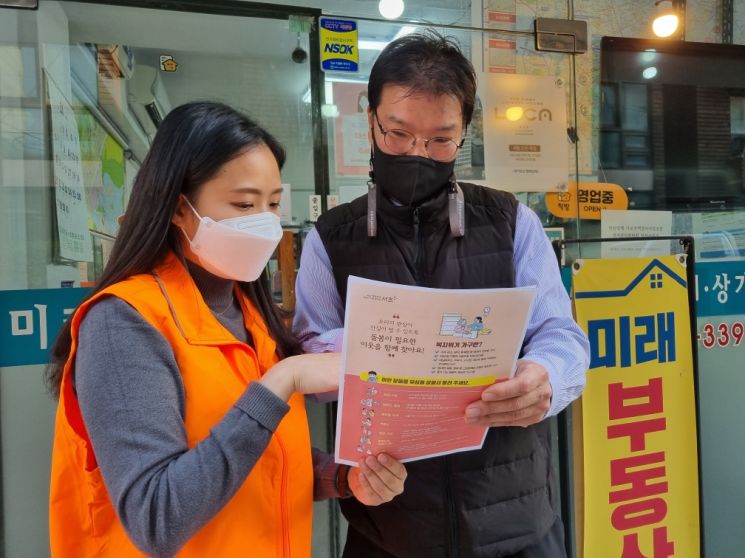
Seocho-gu (Mayor Jeon Seong-su) is launching the nation’s first project to produce and distribute a ‘Guide to Finding Neighbors in Need’ to local residents and related organizations to identify neighbors in welfare blind spots.
This guide shares valuable tips that anyone can easily use to find neighbors around them who need care, simply by paying a little attention and observing carefully. It will be a useful companion to keep close and remember.
First, it categorizes neighbors and social contacts such as local residents, convenience stores, supermarkets, and medical institutions into 16 categories, introducing neighbors to watch for in daily life by case type. This is a nationwide first attempt. The cases are based on the experiences of welfare staff at community centers and case managers at the district office, tailored to relevant situations.
For example, at convenience stores, it advises paying attention to people who frequently buy alcohol and always smell of it; at medical institutions, those hesitating to receive treatment due to medical expenses; and for Yakult managers, to carefully check for piled-up delivery products or mail.
It also includes actual cases of resident discovery, guiding people not to overlook similar cases they find around them and providing various reporting channels so anyone can easily offer help anytime and anywhere.
When a neighbor in need of care is found, besides visiting the nearest community service center, reports can be made quickly and easily through the Seoripul Care SOS Center, the Ministry of Health and Welfare call center, Seocho Nubittok, or crisis situation QR reporting.
Reported crisis households can receive various welfare services such as Seoripul Care SOS, emergency welfare, basic livelihood security, and linkage to private resources depending on the situation.
Going forward, the district plans to produce the guide in booklets, YouTube videos, SNS channels, mousepads, and other formats, actively using it as promotional material for residents.
Especially with the harsh winter approaching, which is tougher for vulnerable groups, the guide will be used effectively to thoroughly check cold-vulnerable households and proactively identify crisis households, fostering resident participation and making every effort for a warm winter for all.
Choi Bok-soon, Chairperson of the Seocho-gu Dong Community Social Security Council, said, “As a council member, I vaguely understood the meaning of discovering welfare blind spots, but now that I know what kind of people to look out for through examples, I think I can use this well to find neighbors in need.”
Seocho-gu Mayor Jeon Seong-su said, “Taking care of neighbors in difficulty around us is a very important policy element,” and added, “I hope the ‘How to Find Crisis Households’ guide, produced in an easy-to-understand, case-centered way, will help practice walking alongside the vulnerable neighbors and create a happy Seocho-style care community together.”
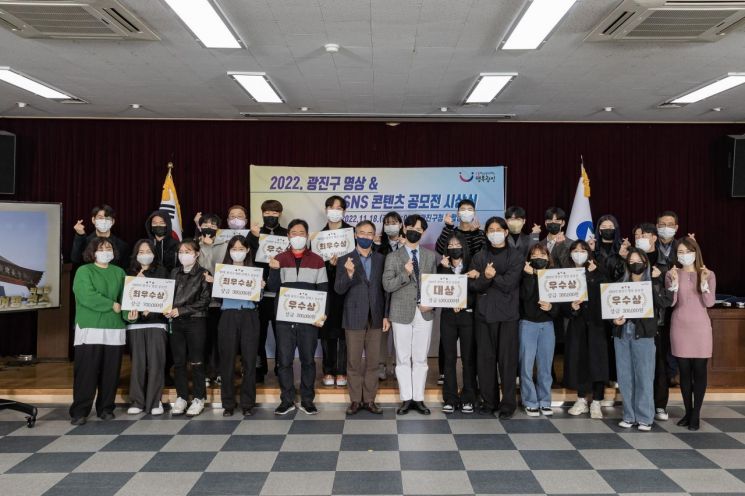
Gwangjin-gu (Mayor Kim Kyung-ho) held the ‘2nd Video & SNS Content Contest Awards Ceremony’ on the 18th at the Gwangjin-gu Office Comprehensive Situation Room.
The ‘Video & SNS Content Contest,’ held nationwide from August to October, was promoted to enhance Gwangjin-gu’s publicity effect and increase residents’ interest in district administration.
The video contest invited submissions of videos such as vlogs, music videos, documentaries, and animations under the theme of ‘Happy Gwangjin,’ the vision of the 8th term of the elected mayor. The SNS content contest called for image content such as card news, webtoons, and blog posts themed on ‘How to Use Gwangjin (Policy)’ and ‘Gwangjin Expedition Team (Attractions).’
As a result, in the video contest, a total of eight teams were selected: Grand Prize (1 team, 1 million KRW), Excellence Award (2 teams, 700,000 KRW each), and Merit Award (5 teams, 300,000 KRW each). In the SNS content contest, six individuals were honored: Excellence Award (1 person, 300,000 KRW), Merit Award (2 people, 200,000 KRW each), and Encouragement Award (3 people, 100,000 KRW each).
Deputy Mayor Baek Il-heon and the winners watched the grand prize works in each category at the ceremony and took commemorative photos at the photo zone after the awards. Since the contest was conducted in line with the social media environment, most winners were in their 20s, freely expressing their joy and filling the situation room with youthful energy.
The grand prize-winning video, ‘Gwangjin-gu Happy Radio,’ attracted attention by creatively presenting Gwangjin-gu’s attractions and projects in a visible radio format. The top SNS content, ‘Living Report in Gwangjin,’ was created by a resident living in Gwangjin-gu who introduced valuable projects related to local attractions through card news, sparking interest.
Other winning works included ‘Walking Gwangjin Daily Life,’ a video about spending a happy day in Gwangjin-gu with 10,000 KRW, and ‘Gwangjin-gu Traditional Market Tour Guide,’ a card news showcasing the restaurants and unique features of Gwangjin-gu’s traditional markets. A total of 14 works were selected as winners. The winning entries can be viewed on the Gwangjin-gu Office YouTube channel, blog, and Instagram.
Kim Kyung-ho, Mayor of Gwangjin-gu, said, “Thank you for the great interest and love shown in the second contest held this year,” and added, “It was very meaningful to see many people creatively showcase the happy life in Gwangjin-gu.”
© The Asia Business Daily(www.asiae.co.kr). All rights reserved.
![Clutching a Stolen Dior Bag, Saying "I Hate Being Poor but Real"... The Grotesque Con of a "Human Knockoff" [Slate]](https://cwcontent.asiae.co.kr/asiaresize/183/2026021902243444107_1771435474.jpg)

















