Foreigners Net Sold 380 Billion KRW in Domestic Stock Market Last Week
Net Buying Rally Halted Since Late September
Kia, Samsung SDI, POSCO Holdings Sold in Order
[Asia Economy Reporter Ji Yeon-jin] Foreign investors have turned to net selling in the domestic stock market for the first time in seven weeks.
According to the Korea Exchange on the 20th, foreign investors net sold domestic stocks worth 385.2 billion KRW from the 14th to the 18th. After nearly 3 trillion KRW of net selling through the second week of this month, they switched to net selling starting last week. Foreign investors, who had been offloading domestic stocks since the beginning of this year, turned to net buying from last month and continued a six-week streak of net purchases before showing a net selling bias for the first time last week. They net sold about 187.2 billion KRW in the KOSPI market and 197.9 billion KRW in the KOSDAQ market.
The stock most heavily net sold by foreign investors during this period was Kia (-116.5 billion KRW). This was followed by Samsung SDI (-98.5 billion KRW), NAVER (-72.5 billion KRW), POSCO Holdings (-56.6 billion KRW), and Hyundai Rotem (-56.1 billion KRW).
On the other hand, Samsung Electronics was the most net bought stock with purchases worth approximately 209.7 billion KRW. LG Energy Solution (180 billion KRW) followed, along with KakaoBank (92.9 billion KRW), Lotte Chemical (67 billion KRW), and Samsung Electro-Mechanics (63.2 billion KRW), which were also heavily purchased.
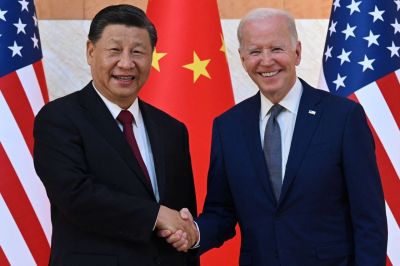
The shift to net buying by foreign investors is attributed to the smooth summit meeting between U.S. President Joe Biden and Chinese President Xi Jinping held on the 14th in Bali, Indonesia, which eased the 'China run'?the outflow of funds from China.
Foreign investors had expanded their domestic stock purchases after withdrawing investments from China due to concerns over long-term leadership risks following President Xi’s successful third-term election at the Communist Party meeting in September.
Meanwhile, the domestic stock market had rebounded as foreign investors bought stocks near historically low valuations, and the downward revision of future earnings forecasts also appears to have influenced foreign investor flows. The KOSPI price-to-book ratio (PBR) plunged to 0.8 but recently recovered to 0.95 with the rise in stock prices.
Jung Da-woon, a researcher at Ebest Investment & Securities, said, "With bargain hunting in fund flows coming to an end and the KOSPI PBR rising to 0.95 times, during the earnings season, rather than expecting further sharp index gains due to additional downward revisions in earnings consensus, there is a possibility of differentiation by sector and individual stocks."
© The Asia Business Daily(www.asiae.co.kr). All rights reserved.

















