Korea Institute of Public Finance Survey of 1,000 Adult Men and Women Nationwide
"56.9% Agree with the Easing of the Comprehensive Real Estate Holding Tax"
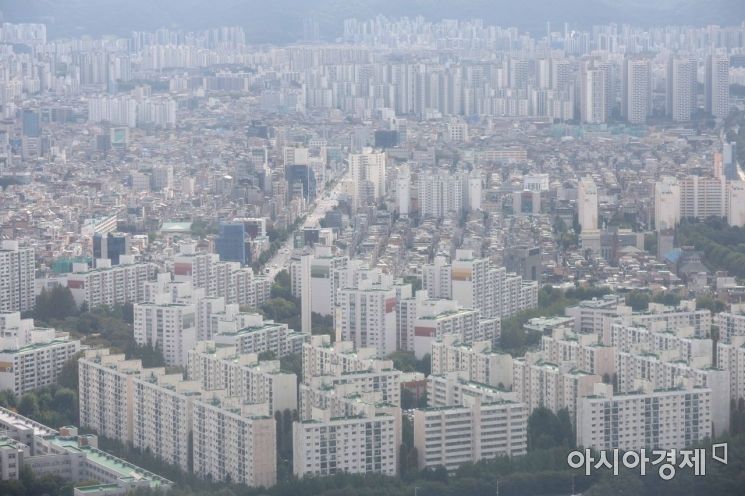
[Asia Economy Reporter Kim Junran] A public opinion survey revealed that more than half of the population agrees with the easing of the comprehensive real estate holding tax (종합부동산세, Jonghap Budongsanse). Six out of ten people believe that the burden of real estate holding taxes is heavy, and they agree with raising the basic deduction threshold for the 종부세.
According to the tax and fiscal brief "Directions for Improving Real Estate Holding Taxes" published on the 18th by the Korea Institute of Public Finance (KIPF), 56.9% of the public (25.8% strongly agree, 31.1% generally agree) support the easing of the 종부세.
KIPF conducted an online survey from July 6 to 13 targeting 1,000 adults aged 19 and older nationwide to use as discussion material for the 종부세 reform direction (sampling error ±3.1% at a 95% confidence level).
The most common reason for agreeing with the 종부세 easing was "heavy taxation on speculative forces even when there is no speculative intent" (63.3%). This was followed by "normalization of real estate taxation" (39.2%) and "violation of property rights due to excessive tax burden" (33.2%).
The proportion of those who did not agree with easing the 종부세 was 43.1%. The main reason was "worsening inequality due to tax cuts for multi-homeowners and the wealthy" (74%). Next were "inducing speculative demand and destabilizing the real estate market" (51%) and "deterioration of fiscal soundness due to reduced tax revenue" (16.2%).
The percentage of people who think the burden of real estate holding taxes, including 종부세, is high was 66.2% (43.2% high, 23% very high). By region, Daegu and Gyeongbuk reported the highest burden, followed by the Seoul metropolitan area, the southeast region, and the Honam region.
Regarding the opinion that the basic deduction amount for 종부세 should be raised, 65.9% agreed, while 34.1% disagreed. Additionally, 68.9% agreed that 종부세 and property tax should be integrated.
When asked whether the real estate market is stable, 88.1% perceived it as unstable. Among them, 40.3% said "very unstable," and 47.8% said "generally unstable." Regarding the impact of strengthened real estate tax measures on market stability, 63.1% of respondents evaluated it negatively, while 37% evaluated it positively.
When asked if they would purchase a new home if the real estate tax burden decreased, 26.8% said they would consider buying immediately if conditions allowed. Meanwhile, 60% said they had no intention to buy for the time being.
KIPF explained that real estate holding taxes should be lowered to an affordable level while being made predictable. This is because an increase in real estate tax burden leads to rising monthly rent prices, increasing the burden on both homeowners and non-homeowners. Real estate holding tax revenue increased by nearly 40% from 14.3 trillion won in 2017 to 20 trillion won in 2020 over three years.
© The Asia Business Daily(www.asiae.co.kr). All rights reserved.

















