Mortality Rate Below 10% but No Vaccine or Definitive Treatment
High Fever and Lumps Occur... Spreading from Europe to Southeast Asia and China
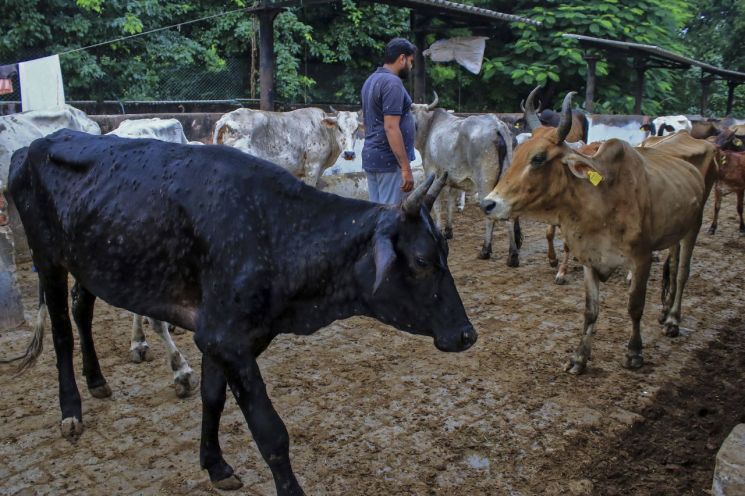
[Asia Economy Reporter Hyunju Park] Lumpy Skin Disease (LSD) has rapidly spread mainly in northwestern India, causing the death of more than 150,000 cattle. As the disease spreads to Southeast Asia and China, the Ministry of Agriculture, Food and Rural Affairs has begun preparing measures to block its entry into South Korea.
Sujit Nayak, Director of the Livestock and Dairy Department of the Indian government, told EFE News Agency on the 17th (local time) that more than 2 million cattle have been infected with Lumpy Skin Disease this year. According to local media, as of September 21, the death toll was about 60,000, but the situation has worsened over the past two months. In response, thousands protested against the spread of LSD in Jaipur, Rajasthan, in the northwest.
The damage is concentrated mainly in Rajasthan, where livestock farming is well developed. The Rajasthan authorities are making every effort to secure vaccines and have requested support from the federal government.
First identified in Zambia, Africa, in 1929, Lumpy Skin Disease is primarily transmitted by blood-sucking insects such as mosquitoes, contaminated syringes, or water troughs. When cattle are infected with LSD, they develop nodules 1 to 5 cm in diameter on their skin along with high fever, reduced milk production, and loss of appetite. Although the mortality rate is relatively low at under 10%, there is no definitive treatment or vaccine for LSD, so caution is necessary. Livestock farmers are currently administering the goatpox vaccine to cattle.
Experts estimate that it will take an additional 3 to 6 months to complete the development of an LSD vaccine specifically for cattle. K.P. Singh, Director of the Indian Veterinary Research Institute, explained, "Once the goatpox vaccine is administered, even if cattle become infected, they only show mild symptoms. However, due to insufficient information, it has not yet been determined whether this disease can be transmitted to humans or other livestock."
Lumpy Skin Disease is currently spreading through Europe to Southeast Asia and China. As concerns about its entry into South Korea grow, the Animal and Plant Quarantine Agency conducted detailed diagnostic training last month for livestock quarantine officials nationwide. Additionally, in August, it announced plans to import vaccines sufficient for 540,000 cattle.
© The Asia Business Daily(www.asiae.co.kr). All rights reserved.
![Clutching a Stolen Dior Bag, Saying "I Hate Being Poor but Real"... The Grotesque Con of a "Human Knockoff" [Slate]](https://cwcontent.asiae.co.kr/asiaresize/183/2026021902243444107_1771435474.jpg)















