Seoul House Prices and Jeonse Prices Both Decline
Villas with Deposit>Sale Price Increase
Villa Winning Bid Rate Also Falls to 12%
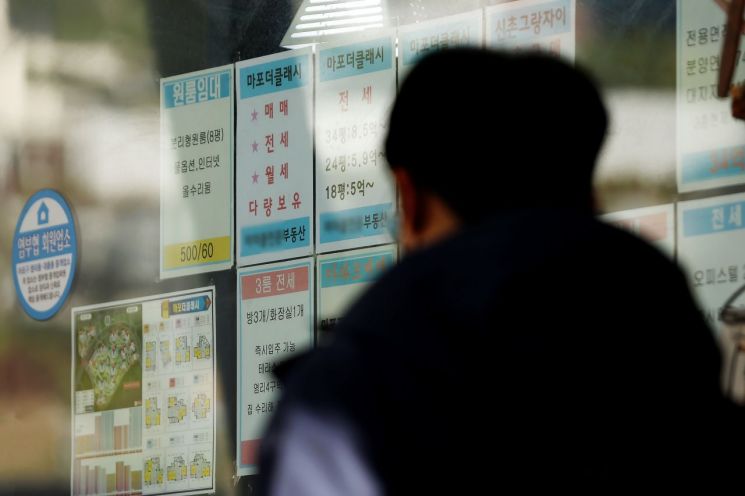
[Asia Economy Reporter Minyoung Kim] As both the jeonse (long-term lease) prices and sale prices in the Seoul area decline simultaneously, the number of auction cases in Seoul villas where tenants’ security deposits exceed the appraised value has increased by 40% compared to a year ago. This indicates that even if the villa is disposed of through auction, the tenant’s deposit cannot be fully compensated, confirming the spread of reverse jeonse and “empty shell” houses due to the housing market downturn in the auction market as well. As more tenants apply for compulsory auctions because landlords do not return deposits, such cases are expected to increase further.
On the 18th, Asia Economy requested data from Gigi Auction and found that the number of auction cases in Seoul villas where the tenant’s lease deposit exceeds the appraised value increased from 58 cases in 2020 to 94 cases in 2021, and further rose by 40% to 132 cases by November this year compared to last year. This is more than double the number from two years ago. Especially, looking at the monthly figures over the past three years, November of this year recorded the highest number with 39 cases. The fact that the lease deposit is higher than the appraised value means that the deposit is more expensive than the appraised price set at auction, indicating that even after disposal, the tenant’s deposit cannot be fully returned.
The reason for the increasing cases where deposits exceed appraised values appears to be the rise in “empty shell jeonse” properties, where the jeonse deposit is higher than the sale price, causing landlords to be unable to return deposits to tenants and leading to auctions. The recent decline in housing prices is also accelerating this phenomenon. If an investor buys a villa where the jeonse price exceeds the sale price and rents it out, but the housing price continues to decline, the villa immediately becomes an empty shell jeonse. Investors who bought with jeonse must find new tenants and return deposits, but if jeonse prices fall, they cannot return the deposits. This situation has led to an increase in the number of empty shell villas entering the auction market.
In fact, the number of tenants who reluctantly apply for compulsory auctions because landlords do not return deposits is increasing. According to Gigi Auction, from July to October this year, the total number of compulsory auction cases filed by tenants and the Korea Housing & Urban Guarantee Corporation (HUG) nationwide was 598.
Also, as housing prices fall, the appraised values of villas are also declining. This is because appraisals reflect market prices.
Senior Researcher Juhyun Lee of Gigi Auction said, “Last year, villa jeonse prices were high, but with the continued decline in housing prices this year, villa auction appraised values are also decreasing. Typically, after one or two failed auctions, prices fall below the jeonse price, resulting in empty shell jeonse cases, but now the prices are actually higher than the first auction price.”
The villa auction success rate is also declining. Villas tend to be more neglected in the auction market than apartments during housing price downturns due to lower liquidity.
According to Gigi Auction, out of 591 villa auction cases conducted in Seoul in October, only 71 were successfully sold, recording a success rate of 12.0%. This is the lowest figure since Gigi Auction began compiling related statistics in January 2001. Since the minimum bid price decreases by 20% each time an auction fails, the deposit amount tenants can recover inevitably decreases with repeated failures.
This phenomenon is expected to increase further with the spread of reverse jeonse and empty shell jeonse. Senior Researcher Juhyun Lee said, “During a real estate market downturn where both sale and jeonse prices fall together, the number of empty shell houses increases, and the number of compulsory auction applications is likely to rise.”
© The Asia Business Daily(www.asiae.co.kr). All rights reserved.
![Clutching a Stolen Dior Bag, Saying "I Hate Being Poor but Real"... The Grotesque Con of a "Human Knockoff" [Slate]](https://cwcontent.asiae.co.kr/asiaresize/183/2026021902243444107_1771435474.jpg)















