Rising Raw Material Import Costs Due to Weak Yen
Economic Virtuous Cycle Disrupted by Slowed Facility Investment
Government Consumption Surges 6.3%
Weak Recovery Raises Risk of Impact from Global Economic Downturn
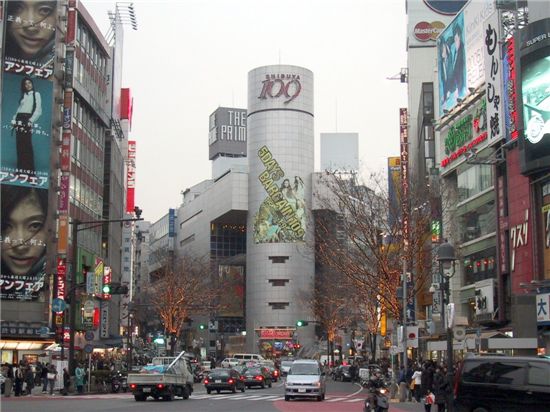 [Image source=Asia Economy]
[Asia Economy Reporter Lee Ji-eun] Due to the yen's depreciation and a slowdown in capital investment, Japan's third-quarter (July-September) gross domestic product (GDP) recorded negative growth for the first time in four quarters, leading to analyses that the Japanese economy has fallen into a swamp of uncertainty.
According to statistics released by Japan's Cabinet Office on the 15th, this year's third-quarter GDP decreased by 1.2% quarter-on-quarter (annualized). Compared to the previous quarter, it fell by 0.3%. This marks the first decline in Japan's real GDP excluding price changes since the third quarter of last year. This figure is far below the forecast of 1.2% surveyed by the Japan Center for Economic Research (JCER), which polled 36 private economic experts.
Bloomberg analyzed that the third-quarter GDP significantly underperformed expectations largely due to the yen's value falling to its lowest level in 32 years. The yen's sharp depreciation led to increased costs for energy and raw material imports for export companies, resulting in a reduced current account surplus.
The exchange rate of the Japanese yen against the US dollar surpassed the psychological threshold of 150 yen in mid-last month, then dropped back to the low 140 yen range on the 11th after signs of easing US inflation appeared, marking a decline after two months.
In this context of a rapidly depreciating yen, the Ukraine war caused raw material and energy prices to surge, sharply increasing the share of imports in Japan's GDP. Japan's imports rose by 5.2% in the third quarter, with the contribution of external demand (overseas demand) to the overall GDP recording -0.7%.
Harumi Taguchi, chief economist at S&P Global Market Intelligence, told Bloomberg, "When the yen depreciates at such a rapid pace, companies suffer significant damage from rising material import costs," adding, "During a global economic downturn like now, it is difficult to pass on increased material costs to exported goods, putting companies in a tough situation."
The sluggishness in capital investment is also analyzed to have affected the slowdown in economic growth. According to Nihon Keizai Shimbun, Japan's second-quarter capital investment increased by 2.4% compared to the previous quarter, but this is a sharp decline compared to 4.8% in the second quarter of 2019 before the spread of COVID-19. Nihon Keizai Shimbun analyzed, "The current capital investment rate of Japanese companies is only at the stage of barely resuming since 2020," and "The virtuous cycle where vigorous investment drives economic growth has been broken."
Personal consumption, which accounts for more than half of GDP, also only slightly increased by 0.3% compared to the previous quarter. Compared to 2019 before the COVID-19 outbreak, it decreased by as much as 0.9%. On the other hand, government consumption increased by more than 6.3% during the same period. This means that the national economy has been maintained by public demand supporting the weakened personal consumption due to COVID-19.
Nihon Keizai Shimbun observed that since Japan's economy has not entered a recovery trajectory due to the yen's weakness and sluggish capital investment, it could be greatly shaken in the future depending on external variables such as the global economy. If the economic growth rates of major countries slow down due to interest rate hikes and China's zero-COVID policy, Japan will also be unable to avoid a recession.
Shigeyuki Goto, Minister for Economic Revitalization, expressed caution about the global economic slowdown at a press conference announcing Japan's economic measures the day before, stating, "With financial tightening continuing in the European region, caution is needed regarding a global economic recession," showing concern about the global economic slowdown.
© The Asia Business Daily(www.asiae.co.kr). All rights reserved.
![Clutching a Stolen Dior Bag, Saying "I Hate Being Poor but Real"... The Grotesque Con of a "Human Knockoff" [Slate]](https://cwcontent.asiae.co.kr/asiaresize/183/2026021902243444107_1771435474.jpg)














