China's 6 Ministries Extend Medium-Term Loan Principal and Interest Repayment Until End of June Next Year
Possible Market Liquidity Supply Through PBOC Base Rate and Reserve Requirement Ratio Cuts
[Asia Economy Senior Reporter Cho Young-shin] Chinese financial authorities have taken emergency measures to extend the repayment period for principal and interest on loans to small and medium-sized enterprises (SMEs). This is interpreted as a preemptive measure considering the impact of the epidemic on the economy, as the number of new COVID-19 infections in China has exceeded 10,000 for four consecutive days.
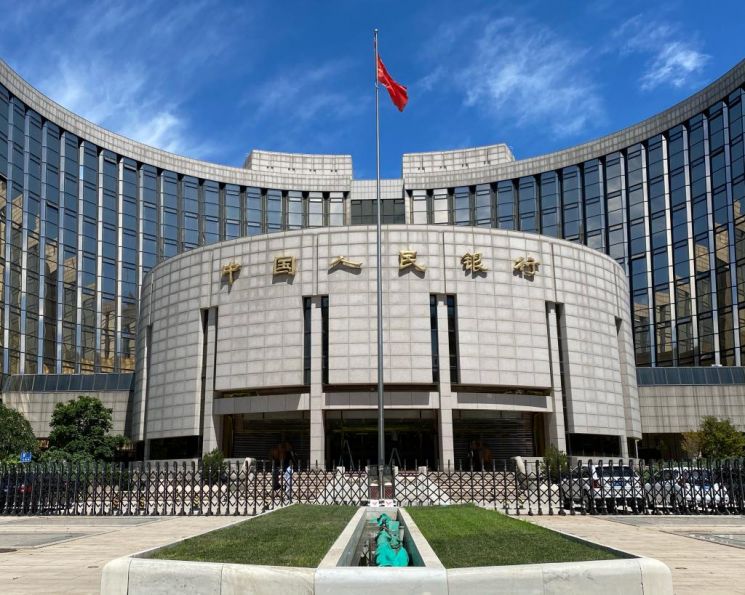
The central bank, the People's Bank of China, may also lower the Loan Prime Rate (LPR), the benchmark lending rate, as of the 20th to prepare for liquidity tightening. Within China, there are concerns that the current COVID-19 outbreak could dampen the Chinese leadership's goal of an economic growth rebound in the fourth quarter.
According to Chinese media including the state-run Xinhua News Agency on the 15th, six departments including the People's Bank of China, the China Banking and Insurance Regulatory Commission, the State Administration for Market Regulation, the National Development and Reform Commission, and the Ministry of Finance jointly issued a "Notice on Strengthening Support for Extending the Repayment Period of SME Loan Principal and Interest" to banks and other financial institutions.
◆ Unusual Signs in the Chinese Economy
The six Chinese departments instructed through the notice to extend the repayment period for loan principal and interest for Chinese enterprises until June 30 next year. The repayment period for loans to not only SMEs but also small business owners and micro self-employed individuals was extended until the end of June next year.
They also directed not to include epidemic factors when classifying loan asset risks. Including the epidemic in loan risk ratings would lower the credit of SMEs and lead to a vicious cycle of rising interest rates, which they aim to prevent.
Along with this, considering the business characteristics and credit of SMEs, they demanded active response to new loan demand such as expanding unsecured loans. They also requested improvements in internal loan processes to simplify loan approval procedures so that SMEs can receive loans in a timely manner.
The six departments including the People's Bank of China also left a warning phrase in the notice that they will regularly manage and supervise related tasks such as loan repayment extensions by banks and other financial institutions.
Chinese financial authorities first decided to extend SME loan principal and interest repayments in March 2020 when COVID-19 broke out. Subsequently, they used the SME support card of loan repayment extensions in June 2020, April 2021, and December 2021 whenever the economic situation worsened.
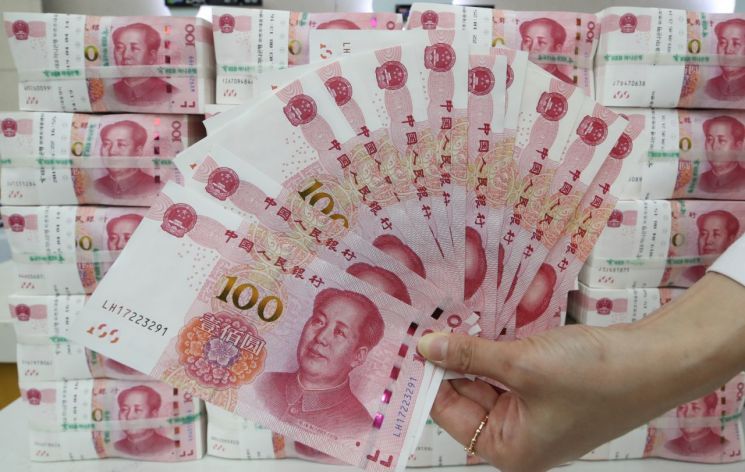
◆ China Contemplating Interest Rate Cut
The notice from the six Chinese departments including the People's Bank of China reflects the Chinese leadership's deep concerns about the weak economy.
Accordingly, expectations are growing that an interest rate cut measure will be implemented. The People's Bank of China has so far taken a somewhat cautious stance on rate cuts, considering the yuan's depreciation, overseas capital outflows, and inflation concerns.
The People's Bank of China cut the 1-year LPR in January and August this year. The 5-year LPR, which is closely related to real estate, was cut three times in January, May, and August.
Some speculate that the People's Bank of China may adjust rates on two tracks. From an economic stimulus perspective, the 5-year LPR rate could be cut significantly, and the reserve requirement ratio (RRR) could be lowered separately.
China's 5-year LPR currently stands at 4.30% per annum. There is a 0.65 percentage point gap compared to the 1-year LPR (3.65%). The prospect that Chinese financial authorities might significantly cut the 5-year LPR to ease the real estate market is gaining credibility.
For the 1-year LPR, which has a strong short-term funding nature, a slight cut or freeze is possible, while monetary policy might supply funds to the market through a reduction in the reserve requirement ratio. The reserve requirement ratio is the mandatory cash reserve that commercial banks must hold at the central bank. Lowering the RRR increases the lending capacity of commercial banks. The RRR can be adjusted anytime to control the money supply in the market if necessary.
Dong Ximiao, Chief Researcher at Zhao Lian Finance, said, "The fourth quarter is an important period for the Chinese economy. Monetary policy must be effectively transmitted to market participants, and financial institutions should realize the real economy through optimal allocation of financial resources."
© The Asia Business Daily(www.asiae.co.kr). All rights reserved.


















