Equipped with Professional Medical-Grade Features
Galaxy Watch Body Composition Analysis 98% Accuracy
Joint Research Results with US University Announced
Apple Watch Detects Arrhythmia with 0.5% Accuracy
Smartwatch Effective in Cardiopulmonary Resuscitation Use
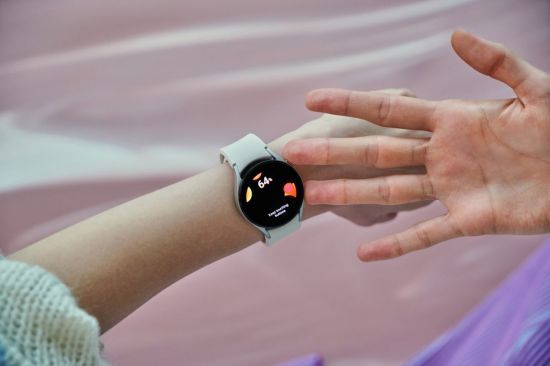 A person measuring body composition with the Samsung Electronics 'Galaxy Watch4'. Photo by Samsung Electronics
[Asia Economy Reporter Minyoung Cha] Smartwatches are evolving to capture the global digital healthcare market, which is expected to grow to 270 trillion KRW by 2023. Alongside Apple, the number one smartwatch maker, Samsung Electronics, ranked second, is also supporting related clinical research by equipping its devices with functions comparable to professional medical equipment.
Galaxy Watch Body Composition Analysis Results Show 98% Accuracy
According to industry sources on the 15th, a study published in the November 2022 issue of the American Journal of Clinical Nutrition (AJCN), a journal in the biological and medical fields, revealed that the body composition measurement accuracy of Samsung Electronics' 'Galaxy Watch4' is comparable to that of professional measuring devices. The study was jointly conducted by the Pennington Biomedical Research Center at Louisiana State University and the University of Hawaii Cancer Center. In the paper titled "Accuracy of Body Composition Measurement by Smartwatch," which involved 75 participants measuring six body composition items, it was reported that the correlation between the body composition values measured by the Watch4 and clinical standard devices such as Dual-energy X-ray Absorptiometry (DXA) and Bioelectrical Impedance Analysis (BIA) equipment ranged from a minimum of 93% to a maximum of 98%. Samsung provided only the product without any separate sponsorship.
The Galaxy Watch4 and Watch5 are equipped with body composition (BIA) measurement functions. Users of these products can measure their body composition using four electrodes: two buttons located on the side and two on the back. After wearing the watch, the user simply places two fingers on the side buttons for about 15 seconds to capture data points. Through the more advanced 'Samsung BioActive Sensor,' the Watch5 offers integrated health management functions including body composition, heart rate measurement, blood pressure, and electrocardiogram (ECG) monitoring.
Detecting Arrhythmia with Smartwatches, Also Aiding Cardiopulmonary Resuscitation
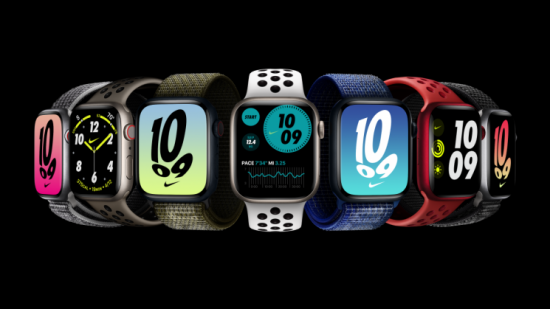
A preliminary study on the usefulness of detecting atrial fibrillation using the Apple Watch, supported by Apple and conducted by Stanford University, attracted attention when published in 2019 in the prestigious medical journal, The New England Journal of Medicine (NEJM). The research team monitored heartbeats of approximately 400,000 people over an average of eight months using the Apple Watch, and warnings indicating arrhythmia were observed in 0.5% of the participants. Dr. Mintu Turakhia, an associate professor of cardiovascular medicine, explained, "This study helps patients and clinicians understand the role devices like the Apple Watch can play in identifying atrial fibrillation, which is often fatal and difficult to diagnose."
In South Korea, research results have also been published showing that smartwatches assist in cardiopulmonary resuscitation (CPR). Using a smartwatch during CPR allows real-time accuracy monitoring, thereby improving the quality of resuscitation. This paper was published in November 2019 in 'Resuscitation,' the official journal of the European Resuscitation Council (ERC) and a scholarly journal in the field of emergency medicine.
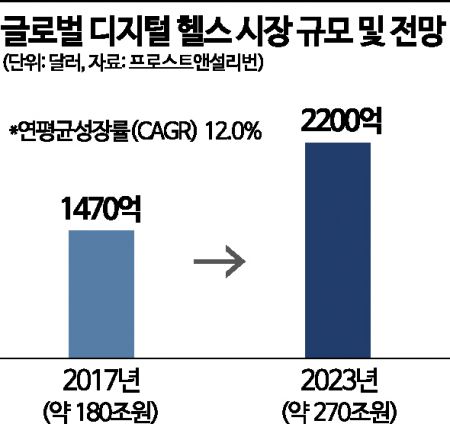
As the digital healthcare market expands, companies are focusing on smartwatches. According to Frost & Sullivan, the digital healthcare market is estimated to grow from $147 billion (approximately 180 trillion KRW) in 2017 to $220 billion (approximately 270 trillion KRW) in 2023. Once considered merely an accessory to smartphones, the smartwatch market has already surpassed the growth rate of smartphones. Despite a 9% decline in global smartphone sales in the second quarter of this year due to the economic downturn, the smartwatch market grew by 13%.
© The Asia Business Daily(www.asiae.co.kr). All rights reserved.
![Clutching a Stolen Dior Bag, Saying "I Hate Being Poor but Real"... The Grotesque Con of a "Human Knockoff" [Slate]](https://cwcontent.asiae.co.kr/asiaresize/183/2026021902243444107_1771435474.jpg)

















