Released areas express hope, saying "We have gained the capacity to endure"
Experts diagnose "Buying sentiment unlikely to recover in short term"
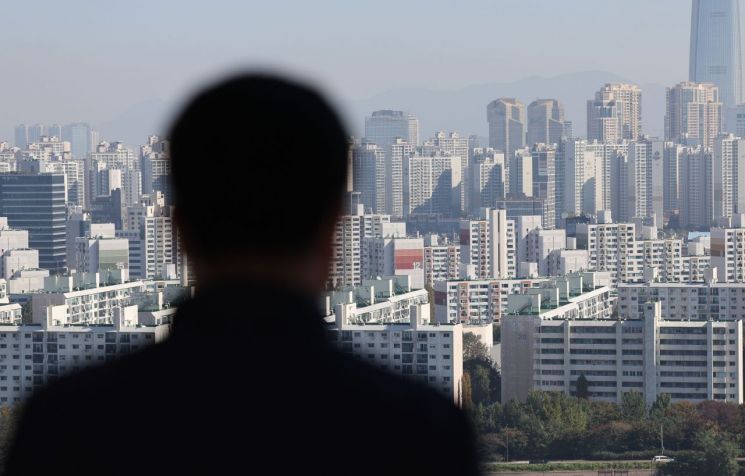
[Asia Economy Reporter Cha Wanyong] On the 10th, the government announced a comprehensive deregulation plan, lifting real estate regulations in the metropolitan area except for Seoul and Gyeonggi's Gwacheon, Seongnam (Bundang and Sujeong), Hanam, and Gwangmyeong, and advancing the easing of the Loan-to-Value ratio (LTV). This decision was made in response to the recent serious downturn in the housing market. While the market hopes that this deregulation will bring warmth back to the real estate market, experts remain cautiously pessimistic.
With the November 10 real estate deregulation measures, all areas except the 25 districts of Seoul and Gyeonggi's Gwacheon, Seongnam (Bundang and Sujeong districts), Hanam, and Gwangmyeong will be removed from the speculative overheated zones and adjusted target areas starting from the 14th. The LTV, which had been applied differentially (0~50%) depending on the region and house price, will be unified at 50% from the 1st of next month for those without homes and one-home owners (conditional on disposing of existing homes). The ban on housing loans exceeding 1.5 billion KRW in speculative overheated zones, introduced in December 2019, will also be lifted after three years, allowing loans up to 50%.
In particular, areas removed from the adjusted target zones will now enjoy various benefits such as loans, tax incentives, and subscription advantages. In non-regulated areas, acquisition tax is set at 1~3% for two-home owners and 8% for three-home owners. Property tax ranges from 0.6~3% for two-home owners, and capital gains tax exemptions apply after holding for just two years. Loan regulations are also more lenient compared to adjusted target areas. In non-regulated areas, homebuyers without a home can get an LTV of up to 70% when purchasing homes priced below 900 million KRW. There are no restrictions on resale or re-winning bids.
As a result, some areas removed from the adjusted target zones are showing signs of recovery in transaction volumes and expectations of rising prices. Immediately after the government announced the deregulated areas, several related posts were shared on local internet communities, with responses such as "We now have the strength to endure."
In fact, the removal from adjusted target zones has had a considerable impact on the market. In areas like Paju and Pyeongtaek, where deregulation was announced in September, transaction volumes slightly increased. According to the Gyeonggi Real Estate Portal, apartment transactions in Paju in October were 135 cases, up 13.4% from 119 cases in the previous month. Pyeongtaek apartment transactions also rose by 9.6%, from 300 cases to 332 cases.
However, most experts believe that buyer sentiment will not recover quickly. The fatigue from years of rising house prices is significant, and with interest rates continuing to rise, housing demand is unlikely to revive in the short term.
Lee Eunhyung, a research fellow at the Korea Construction Policy Institute, said, "While it is positive that the government has shown its determination to normalize the market by announcing three rounds of deregulation within six months of its launch, the strong sentiment that house prices will fall further makes it difficult for housing transactions to rebound in the short term."
Im Byungcheol, head of the research team at Real Estate R114, also analyzed, "DSR regulations still make it difficult to get loans, and the high interest rates increase the burden of interest payments. Due to rapid interest rate hikes and economic slowdown, buyer sentiment is unlikely to recover quickly."
© The Asia Business Daily(www.asiae.co.kr). All rights reserved.
![Clutching a Stolen Dior Bag, Saying "I Hate Being Poor but Real"... The Grotesque Con of a "Human Knockoff" [Slate]](https://cwcontent.asiae.co.kr/asiaresize/183/2026021902243444107_1771435474.jpg)















