On the 9th, the '2nd Trade Industry Forum' Held... Over 100 Export Industry Workers and Experts Attend
[Asia Economy Reporter Kim Pyeonghwa] Amid growing logistics cost burdens on export companies, there are calls for the abolition of the Cargo Truck Safety Freight Rate System, whose safety effects remain unclear. Suggestions were also made to secure labor flexibility in logistics facilities and to conduct regular surveys on companies' logistics status.
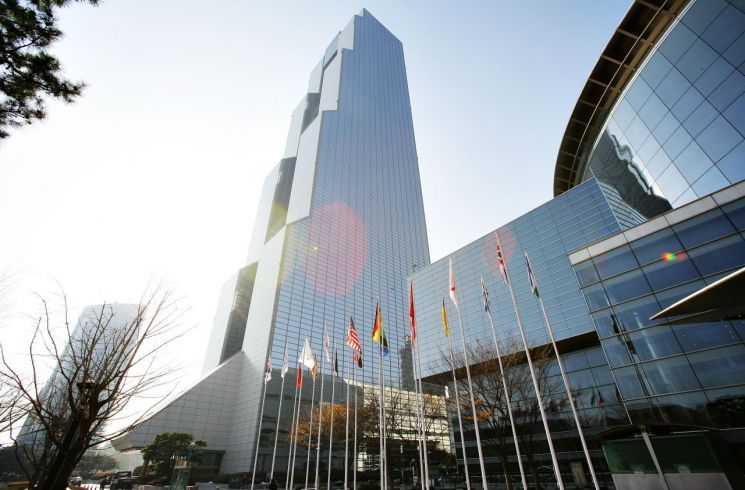
The Korea International Trade Association (KITA) held the "2nd Trade Industry Forum" on the 9th at the Trade Tower in Samseong-dong, Seoul. About 100 experts from export and logistics industries, academia, and research sectors attended the forum to discuss issues related to rising logistics costs and opinions on the Cargo Truck Safety Freight Rate System. The system was established in 2020 to guarantee appropriate profits for transport operators and ensure the safety of cargo transportation. It is a three-year sunset system.
In his opening remarks, KITA Vice Chairman Jeong Manki pointed out the declining share of domestic exports in the global export scale. He explained that various corporate regulations and worsening labor flexibility are causing domestic companies to move overseas, weakening the export industry base and eliminating quality jobs. He particularly noted that while logistics costs are a key factor weakening export competitiveness, the safety freight rate system could cause market problems.
Vice Chairman Jeong emphasized, "The safety freight rate system allows the shipper to be penalized simply because they requested transportation, even though the contracting parties are the carrier and the vehicle owner. Since its traffic safety effects are unclear and it is a system difficult to find precedent for worldwide, it must be abolished immediately."
Professor Park Minyoung of the Transportation Policy Economics Association, who presented at the forum, also expressed the need to improve the safety freight rate system. Professor Park said, "The Safety Freight Rate Committee should be reorganized so that the opinions of transport suppliers (vehicle owners, transport companies) and demanders (shippers) are equally reflected," adding, "The transport cost items should be simplified and objective cost investigations should be conducted."
A representative from a cement company participating in the discussion also appealed for system improvement, saying, "Although land logistics costs in the cement industry have increased by more than 40% since the implementation of the safety freight rate system, a shortage of dedicated vehicles due to transport refusals has occurred, intensifying pressure for further logistics cost increases."
According to Kim Byungyu, Head of Member Services at KITA, who presented on import-export trends, the logistics cost ratio to domestic GDP was 9.4% in 2018, higher than the U.S. (9.1%) and Japan (7.9%). The logistics cost ratio to corporate sales also rose from 6.5% in 2018 to 7.1% in 2020. Considering last year's logistics crisis, Kim explained that the logistics cost ratio to corporate sales likely increased even more.
KITA proposed four policy supports to reduce companies' logistics cost burdens: ▲ securing labor flexibility in logistics facilities ▲ supporting logistics digital transformation (DT) ▲ sunset of the safety freight rate system ▲ regular surveys on corporate logistics status. The proposal includes designating warehouses in major ports and airport hinterlands as special industries exempt from the 52-hour workweek and expanding employment of foreign workers. It also calls for integrated operation through standardization of national key logistics data and utilization of logistics digital platforms by innovative startups.
© The Asia Business Daily(www.asiae.co.kr). All rights reserved.
![Clutching a Stolen Dior Bag, Saying "I Hate Being Poor but Real"... The Grotesque Con of a "Human Knockoff" [Slate]](https://cwcontent.asiae.co.kr/asiaresize/183/2026021902243444107_1771435474.jpg)











