Caller ID blocking used with dozens of consecutive calls over 4 hours a day
Korean Women Lawyers Association: "Legal technical interpretation... Overlooking stalking victim context"
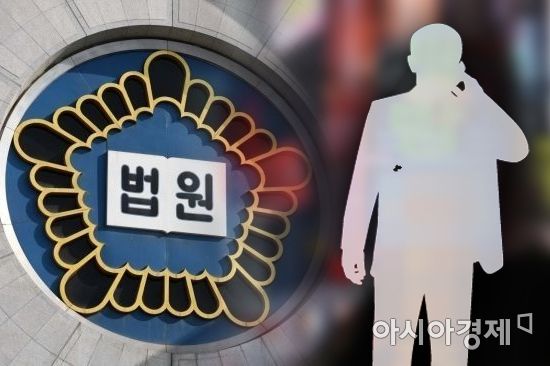
[Asia Economy Reporter Kim Jeong-wan] The prosecution has appealed a court ruling that stalking cannot be punished if the victim did not answer the phone calls, even if the caller persistently made calls.
According to the legal community on the 8th, the Incheon District Prosecutors' Office recently filed an appeal against the first trial verdict that acquitted A (54), who was indicted for violating the Act on the Punishment of Stalking Crimes and other charges. The prosecution stated the reason for the appeal, saying, "The court misunderstood the legal principles in the part where it judged not guilty."
A was indicted on charges of stalking by repeatedly calling or sending text messages to former partner B from March 26 to June 3. A used the 'caller ID restriction' feature, which hides the phone number from the recipient. A also attempted video calls and was found to have made dozens of consecutive calls over four hours in a single day.
However, the first trial court ruled that even if A continued to call, if B did not answer and the calls were shown as 'missed calls,' it could not be punished under the Stalking Punishment Act. Judge Jeong Hee-young of the Incheon District Court Criminal Division 9 stated, "A made calls, but B did not answer," and "The ringing sound on the recipient's phone cannot be considered a sound transmitted to the recipient via the information and communication network." The judge also said, "Even if a missed call is displayed on B's phone, it is merely a display function of the phone itself," and "It is difficult to consider it as a code delivered to B by A," thus acquitting A.
The court cited a Supreme Court precedent from 17 years ago in 2005 as the basis. At that time, before the Stalking Act existed, repeated calls and similar stalking acts were punished under the Act on Promotion of Information and Communications Network Utilization and Information Protection. According to the precedent, the Supreme Court ruled that "the ringing sound on the recipient's phone is not a sound transmitted via the information and communication network," and "even if repeated ringing caused fear or anxiety to the recipient, it cannot be considered a violation of the law."
In response, legal circles have pointed out that this ruling failed to properly reflect the intent of the Stalking Act, which has been in effect since October last year, because it was based on an old precedent related to similar provisions.
Regarding this, the Korean Women Lawyers Association issued a statement on the same day, criticizing, "This ruling interpreted the legal provisions defining stalking too technically and failed to properly consider the context of stalking victims." The association also urged, "It overlooked that the legislative purposes of the Act on Promotion of Information and Communications Network Utilization, which aims to protect users of information and communication services, and the Stalking Punishment Act, which aims to punish stalking and protect victims, are completely different," and called for "a thorough review of the legislative purpose of the Stalking Punishment Act, the problematic definitions, and a victim-centered judgment in handling such cases."
© The Asia Business Daily(www.asiae.co.kr). All rights reserved.
![Clutching a Stolen Dior Bag, Saying "I Hate Being Poor but Real"... The Grotesque Con of a "Human Knockoff" [Slate]](https://cwcontent.asiae.co.kr/asiaresize/183/2026021902243444107_1771435474.jpg)















