Highest denomination 10,000 yen bill features bureaucrat and businessman Shibusawa Eiichi... Friendship with Ito Hirobumi
Bank of Japan to circulate in first half of 2024... Current bills production ends in September
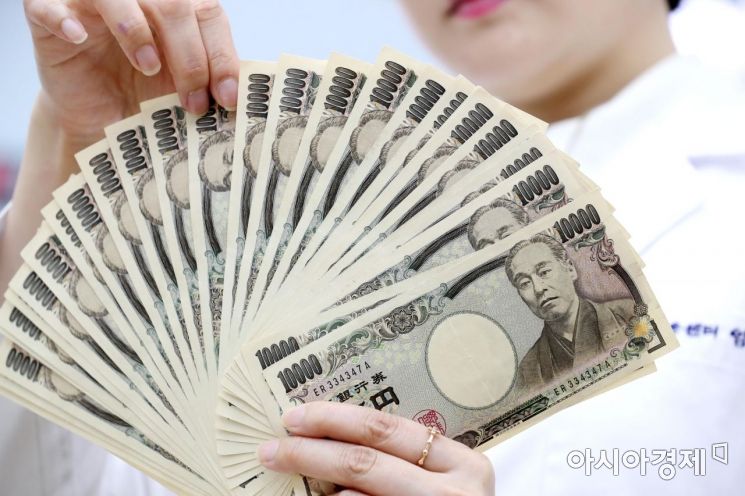
[Asia Economy Reporter Kim Hyunjung] The Bank of Japan halted production of three current banknote denominations last September and began mass production of new banknotes scheduled for circulation in the first half of 2024.
According to Kyodo News and Nihon Keizai Shimbun on the 5th, the Bank of Japan started mass production of three new banknotes?the 1000 yen, 5000 yen, and 10,000 yen notes?with new portraits from June. The figures featured on the new banknotes were already decided in 2019. The highest denomination, the 10,000 yen note, will bear the portrait of Shibusawa Eiichi (1840?1931). Shibusawa was a Ministry of Finance official and businessman during the Meiji and early Taisho periods, and was closely associated with Ito Hirobumi. He is recognized as a representative Japanese entrepreneur and was selected multiple times as a candidate for portraits on Bank of Japan banknotes. He was a finalist candidate for the 1000 yen note issued in 1963 but was not ultimately chosen.
Shibusawa also has connections to the Korean Empire. He served as president of the Gyeongin Railway Joint Stock Company and the Gyeongbu Railway Company, acquiring and constructing the Gyeongin and Gyeongbu lines, and was also president of Kyungsung Electric (the predecessor of Korea Electric Power Corporation). Ironically, the currency bearing his portrait circulated in the Korean Peninsula before Japan. The Bank of Japan issued three banknotes?1 yen, 5 yen, and 10 yen?in 1902 without authorization to dominate the Korean financial market, featuring the portrait of Shibusawa, who was then president of the Bank of Japan. These banknotes were also the first banknotes issued domestically in Korea.
The new 5000 yen note features Tsuda Umeko (1886?1929), known as a pioneer of women's education in Japan. She was Japan's first female overseas student and founded the Joshi Eigakushuku (Women's English School). The 1000 yen note bears the portrait of Kitasato Shibasaburo (1853?1931), a disciple of German bacteriologist Robert Koch, famous for almost simultaneously discovering the plague bacillus in Hong Kong in 1894 along with Alexandre Yersin.
All three individuals featured on the new banknotes share the commonality of having lived during Japan's modernization period from the late 19th to early 20th century. With the production of the new banknotes, the 10,000 yen note, which has been in use since 1984, will receive a new design after 40 years. The currently used 5000 yen and 1000 yen notes have been produced since 2004.
In addition to these three denominations, Japan also has a 2000 yen note in circulation. However, due to low usage, the 2000 yen note issued in 2000 has not been produced since 2003. The 2000 yen note features the Shureimon gate of Shuri Castle in Okinawa, a UNESCO World Cultural Heritage site, rather than a portrait.
© The Asia Business Daily(www.asiae.co.kr). All rights reserved.

















