If Income Increases, Pay More; If It Decreases, Get Refund on Paid Insurance Premiums
No Change in Income Means No Change in Insurance Premiums
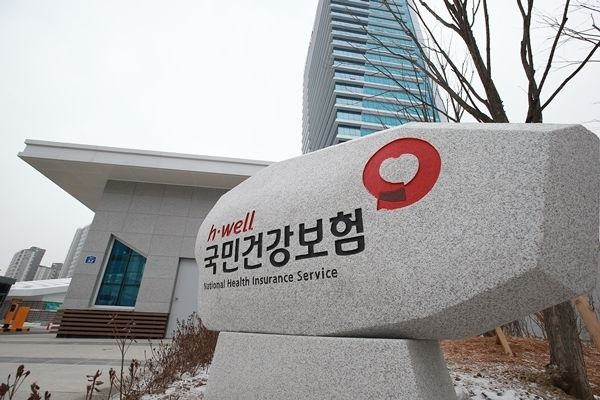 ▲National Health Insurance Service
[Asia Economy Reporter Kim Young-won] From now on, regional health insurance subscribers will have their health insurance premiums adjusted based on income changes, just like workplace subscribers. If their income increased compared to the previous year, they will pay more premiums; if it decreased, they will receive a refund for the excess premiums paid. This is in line with the second phase of the income-based health insurance premium system reform implemented since last September, aiming to enhance fairness in premium burdens among subscribers and expand the foundation for equitable premium assessments.
According to the National Health Insurance Service (NHIS) on the 4th, the year-end premium adjustment currently applied to workplace subscribers will also be implemented for regional subscribers. To this end, the "income adjustment system" will be introduced, initially applied in 2023 to some regional subscribers who requested premium reductions, and will be fully expanded to all regional subscribers starting in 2025.
The NHIS plans to recalculate regional subscribers' premiums annually in November based on income data linked with the National Tax Service, and the difference will be charged or refunded in the November premium payment of that year. Through this, the NHIS expects to secure an additional revenue of 1.3567 trillion KRW over five years.
South Korea's health insurance premium system is dualized: workplace subscribers are charged premiums based solely on their current year's income, whereas regional subscribers are charged premiums based on income, property, and automobiles.
The issue is that the income used to calculate premiums for regional subscribers, such as self-employed individuals or freelancers, is not the income earned in the current year but the previous year's income. When self-employed individuals report their comprehensive income for the previous year to the National Tax Service every May, the NHIS receives this income data in October. Based on this, new premium notices are sent out every November. This process creates a time lag of 10 to 33 months between the income occurrence and premium assessment for regional subscribers.
Until now, the NHIS has adjusted premiums for workplace subscribers to reflect income changes but did not apply the year-end adjustment system to regional subscribers. However, considering the income volatility of self-employed individuals sensitive to economic conditions, since the IMF financial crisis in 1998, an adjustment request system has been in place that allows self-employed individuals who prove they currently have no income due to business closure or other reasons to receive premium reductions. By submitting documents such as business closure (or suspension) certificates, income reduction certificates, or retirement (dismissal) certificates to the NHIS, they can request premium adjustments, reducing premiums based on the fact that their current payment ability has significantly declined despite premiums being assessed on the previous year's income.
However, some freelancers with annual incomes in the hundreds of millions of KRW, such as entertainers, athletes, and webtoon artists, have abused the adjustment request system to evade premiums through loopholes. To prevent such moral hazard and promote fairness in premium assessments, the year-end premium adjustment system will now be applied to regional premiums as well, just like for workplace subscribers.
Accordingly, even if a subscriber receives a premium adjustment by submitting income reduction certificates due to business closure or income loss, if subsequent income is confirmed through linked National Tax Service data, premiums will be retroactively charged.
The adjusted premium is the amount that should have been paid during the year but is deferred until April of the following year, differing from a uniform premium increase.
© The Asia Business Daily(www.asiae.co.kr). All rights reserved.
![Clutching a Stolen Dior Bag, Saying "I Hate Being Poor but Real"... The Grotesque Con of a "Human Knockoff" [Slate]](https://cwcontent.asiae.co.kr/asiaresize/183/2026021902243444107_1771435474.jpg)














