4% of All Adults Suffer from Nightmares... Treatment Methods Are Also Not Well Known
Geneva University Researchers Develop Image Rehearsal Therapy Adding Specific Sounds During Sleep
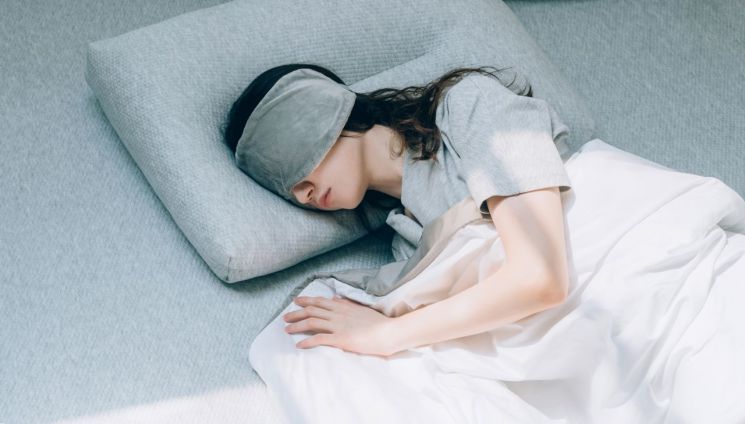
[Asia Economy Reporter Kim Kyung-mi] Mr. K, who is suffering from depression, is frequently plagued by nightmares. Not only does his heart race, but he also breaks out in cold sweat and sometimes sits upright in a panic state. Sometimes he wakes up startled. Having often lost sleep due to frightening dreams, Mr. K is trying to eliminate nightmares through a 'sound therapy' method.
Recently, researchers at the University of Geneva in Switzerland published a new treatment method in Current Biology, showing that playing specific sounds to people suffering from nightmares can be helpful.
Professor Jennifer Munt, a behavioral sleep medicine expert at Northwestern University in the U.S., said, "Many people are unaware that 4% of adults suffer from nightmares, and they also do not know about treatments for it."
Professor Munt explained, "Adding sounds at the right timing during REM sleep, when dreams occur, has been shown to enhance the effectiveness of Imagery Rehearsal Therapy (IRT). This method involves recalling the content of a scary dream with the help of an expert, then changing the negative story into a pleasant ending and rehearsing it as a script."
However, Imagery Rehearsal Therapy does not work for everyone. According to Professor Lampros Perogambros and his team at the Geneva University Sleep Research Institute, about 30% of adults with nightmare disorder did not benefit from IRT. Therefore, the researchers decided to add 'targeted memory reactivation,' which includes other stimuli such as smells as well as sounds.
To investigate whether 'targeted memory reactivation' helps recall the positive stories acquired through Imagery Rehearsal Therapy, the researchers recruited 26 adults who experienced nightmares at least once a week. They were divided into a group receiving standard Imagery Rehearsal Therapy and a group receiving Imagery Rehearsal Therapy combined with targeted memory reactivation.
The latter group listened to specific sounds while imagining new and positive dreams. After the first IRT session, both groups read positive dream scenarios daily at home for two weeks. The targeted memory reactivation group listened to the corresponding sounds during rehearsal.
Additionally, all participants wore wireless headbands while falling asleep at night. This device monitors brainwave activity and emits the same sound during REM sleep. Only the targeted memory reactivation group heard the pre-learned sounds during treatment.
After two weeks, positive experimental results were observed. People in the targeted memory reactivation group reduced their nightmares from an average of 3 times per week to 0.2 times. In contrast, the group receiving standard Imagery Rehearsal Therapy showed minimal improvement, with nightmares occurring about 3 times per week on average.
An important point is the persistence of the effect. The treatment conducted over 14 days continued to be effective even after 3 months. As seen in the experiment, it was found that the standard memory reactivation group experienced more positive dreams.
© The Asia Business Daily(www.asiae.co.kr). All rights reserved.
![Clutching a Stolen Dior Bag, Saying "I Hate Being Poor but Real"... The Grotesque Con of a "Human Knockoff" [Slate]](https://cwcontent.asiae.co.kr/asiaresize/183/2026021902243444107_1771435474.jpg)















