Recorded numerous albums in the Santaryeong genre while performing various shows
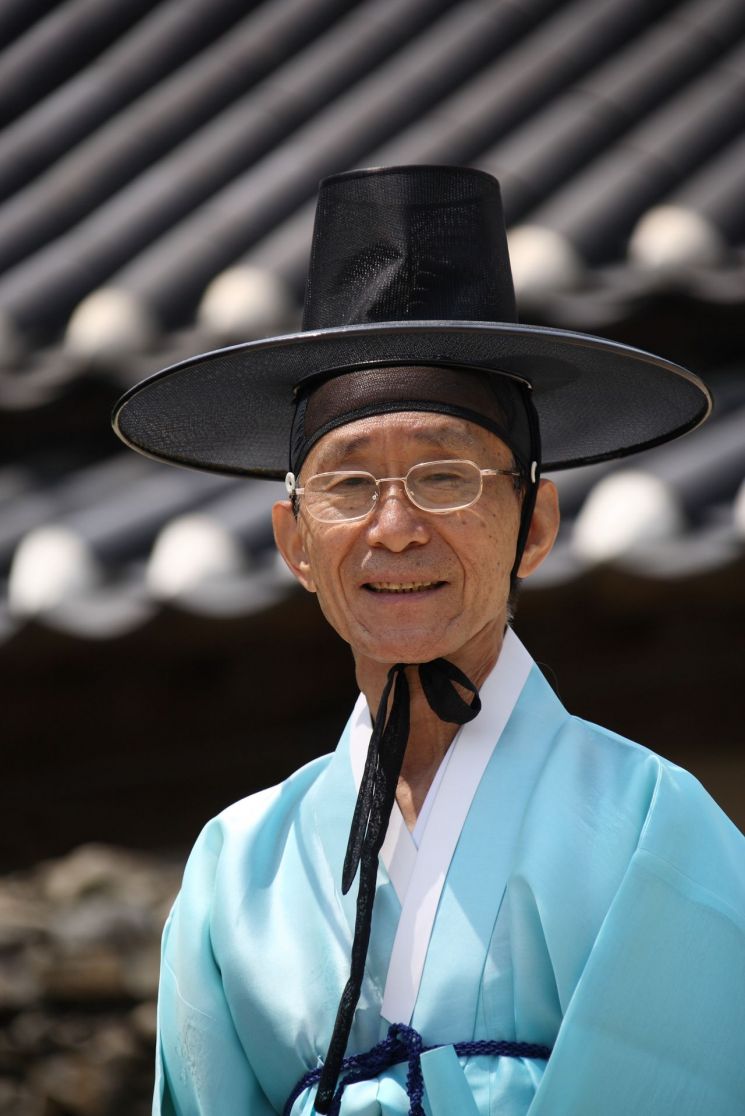
Hwang Yong-ju, a master singer and holder of the national intangible cultural asset 'Seonsori Santaryeong,' passed away from old age on the 31st of last month at the age of 85.
He began his connection with traditional Korean music when he joined the Sijo class at the National Gugak Center in his teens. From 1960, he learned Gyeongseo-dochang and Seonsori Santaryeong from Lee Chang-bae (1916?1983), the previous holder of Seonsori Santaryeong, and started his full-fledged activities in 1972 as a scholarship student for the transmission of Seonsori Santaryeong.
Seonsori Taryeong is a type of miscellaneous song from Gyeonggi Province and the Seodo (Western) region that sings about the scenery of Sancheong. It is called 'Seonsori' because several singers stand in a row and sing together. The leader of the Seonsori group, called Mogabi, who carries the Janggu drum, leads the front singing, while several singers holding small drums perform gestures and respond with back singing. It was designated as a national intangible cultural asset in April 1968.
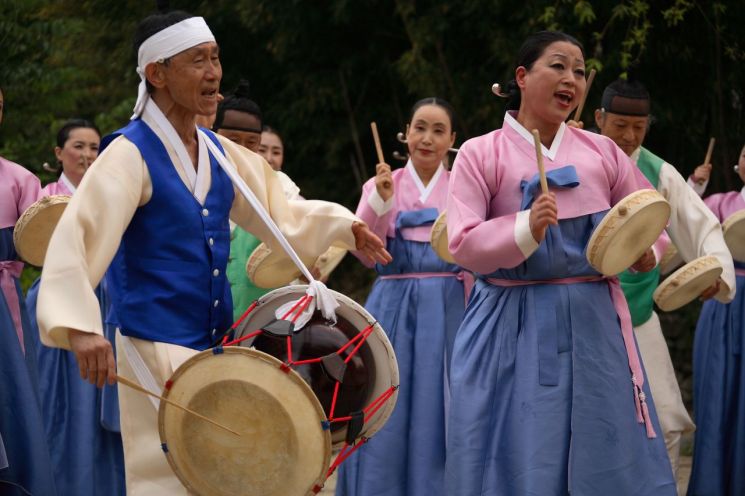
He was recognized as a master (Isuja) in 1977, an assistant instructor in 1985, and was acknowledged as a holder in 1992. He performed various shows and recorded many albums in the Hwimori Jabka and Santaryeong genres. He also published works such as 'Anthology of Korean Classical Music' and 'Comprehensive Collection of Korean Gyeongseo-dochang Music.' For his lifelong dedication to the transmission and development of Seonsori Santaryeong, he received the Korea Gugak Association Merit Award in 1992, the Grand Prize from the Korea Federation of Artistic and Cultural Organizations in 1998, and the Hwagwan Cultural Medal in 2001.
He is survived by his wife, Choi Sang-ran, and sons Ui-gyeong, Ui-min, and Ui-yun. The funeral hall is set up at Yonsei University Sinchon Severance Funeral Hall, Basement Level 2, Room 13, Seodaemun-gu, Seoul. The funeral procession will be held on the 3rd, and the burial site is in Seonsan, Mungyeong, Gyeongbuk.
© The Asia Business Daily(www.asiae.co.kr). All rights reserved.
![Clutching a Stolen Dior Bag, Saying "I Hate Being Poor but Real"... The Grotesque Con of a "Human Knockoff" [Slate]](https://cwcontent.asiae.co.kr/asiaresize/183/2026021902243444107_1771435474.jpg)
















