Rapid Growth of Metaverse Industry Drives Increased Platform-Based Marketing in Food Sector
Nongshim Operates 'Shin Ramyun Snack Bar' in Zepeto... Plans to Release Popular Limited Edition Options
Lotte, Ourhome Utilize Metaverse Platforms for In-House Training and System Environment Setup
[Asia Economy Reporter Eunmo Koo] The metaverse (extended virtual world), primarily used in gaming, social media, and education, is expanding its reach into the food industry. As the metaverse meets the food industry, consumers now have more opportunities to enjoy the atmosphere of dining out and various experiential spaces of food companies through virtual reality (VR) devices and augmented reality (AR) systems without physically visiting the locations. Companies can directly observe customers and analyze or predict patterns by converting data whenever they launch specific products and services, suggesting that the metaverse in the food industry will expand further in the future.
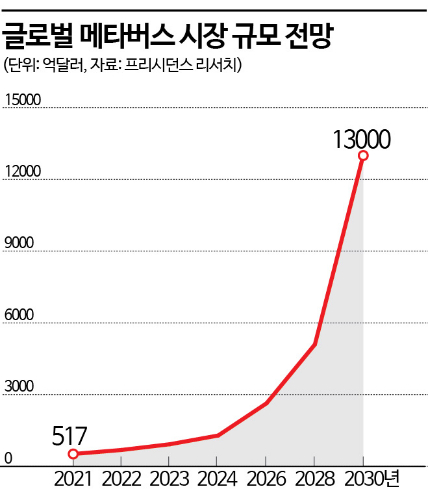
According to market research firm Precedence Research on the 30th, the global metaverse industry size was estimated at $51.7 billion (approximately 73 trillion KRW) last year. The metaverse industry is expected to continue its steady growth, with an average annual growth rate of 44.5% from this year through 2030, reaching $1.3 trillion (approximately 1,848 trillion KRW) by 2030.
With the metaverse industry showing rapid growth and the MZ generation (Millennials + Generation Z) emerging as the main consumer base, the food industry is promoting products and increasing brand familiarity by planning online-offline linked events through metaverse platforms, partnership commerce with metaverse service providers, and virtual parties. In particular, services are provided in collaboration with existing metaverse platforms so that consumers can easily access each brand’s virtual environment without special devices. Consumers can create new products themselves in the virtual brand world, enjoy games themed around products, and obtain coupons usable in actual stores.
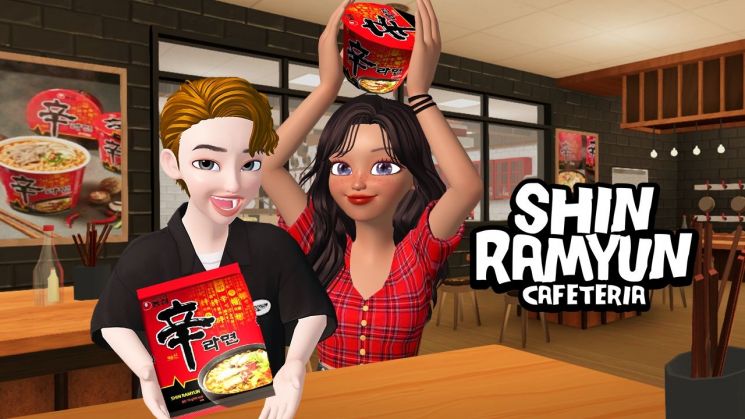
Nongshim is a representative example, having opened the “Shin Ramyun Snack Bar” within the metaverse platform Zepeto. Since the 12th, Nongshim has been offering a virtual experience where consumers can choose options according to their preferences to cook ramen, and plans to apply the most popular options to an actual product, releasing it as a limited edition early next year. A Nongshim official explained, “We built the metaverse and planned an event to decide new products to increase intimacy with the 10s and 20s generations who frequently enjoy cup noodles and value diverse experiences.”
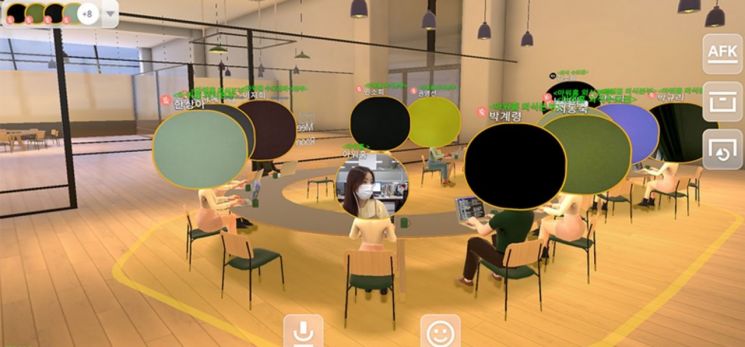
More companies are also using metaverse platforms for in-house training and system environment improvements. They conduct food safety and hygiene education in virtual spaces and build metaverse-based environments for customer service centers and logistics centers to eliminate the limitations of non-face-to-face work methods and improve efficiency.
Lotte Central Research Institute opened the metaverse food safety education center “Lotte Meta Eduville,” creating an interactive educational environment for food managers within the group. Ourhome also operates a customer service center within the metaverse office “Soma.” In the future, they plan to operate logistics centers via the metaverse to establish a 24-hour customer response system.
Additionally, attempts are being made to help consumers improve their eating habits using VR technology. This can address problems caused by abnormal food intake such as anorexia and bulimia, which stem from psychological issues. If commercialized in the future, it is expected that general consumers on diets will also be able to use it. Furthermore, AR technology is anticipated to be increasingly utilized not only in marketing but also in customized food production reflecting consumer preferences.
As metaverse-related services become more active, consumer perceptions are also showing positive trends. In virtual spaces, consumers can freely express their personal tastes and tendencies and overcome physical limitations of time and space. According to the Korea Agro-Fisheries & Food Trade Corporation (aT), domestic consumers also show a very high willingness (96.2%) to visit restaurants within the metaverse and tend to want to enjoy real-world services in virtual worlds as well.
Especially with Generation Z consumers, who mainly use metaverse platforms, expected to lead the metacommerce era, distribution companies are likely to reinterpret and adapt customer experiences previously offered offline into virtual spaces, providing customers with immersive experiences that maximize engagement.
© The Asia Business Daily(www.asiae.co.kr). All rights reserved.
![Clutching a Stolen Dior Bag, Saying "I Hate Being Poor but Real"... The Grotesque Con of a "Human Knockoff" [Slate]](https://cwcontent.asiae.co.kr/asiaresize/183/2026021902243444107_1771435474.jpg)

















