Participation in the Naval Review After 7 Years... North Korean Provocations Create Opportunity to Strengthen South Korea-Japan Military Cooperation
Interest Grows Over Whether GSOMIA, Barely Maintained Under Moon Jae-in Government, Will Be Normalized
[Asia Economy Yang Nak-gyu, Military Specialist Reporter] The Yoon Suk-yeol administration is accelerating the normalization of Korea-Japan relations, drawing attention to whether the Korea-Japan General Security of Military Information Agreement (GSOMIA), a core part of security cooperation, will be re-pursued.
According to the Ministry of National Defense on the 28th, the Republic of Korea Navy will participate in the fleet review hosted by the Japan Maritime Self-Defense Force in Sagami Bay, Kanagawa Prefecture, Japan, on the 6th of next month. Sending a Korean warship to the Japanese fleet review is the first time in seven years since the Park Geun-hye administration in 2015.
During the fleet review, in accordance with international customs, the Korean naval crew must salute the Japanese flagship flying the Rising Sun Flag. Despite this action being at odds with public sentiment, the decision to participate in the fleet review is interpreted as a move to strengthen Korea-Japan security cooperation amid ongoing provocations from North Korea. A total of 13 countries, including Korea, will participate in this fleet review, and following the event, the warships will engage in the multinational humanitarian combined exercise for search and rescue (SAREX).
High-level talks between Korea and Japan are also gaining momentum. On the 25th, a Korea-Japan and Korea-US-Japan deputy foreign ministers' meeting was held in Tokyo, and on the 23rd of next month, the defense ministers of the three countries will meet in Cambodia. It is expected that the timeline for normalizing the Korea-Japan GSOMIA will be advanced at this meeting.
The Korea-Japan General Security of Military Information Agreement was signed on November 23, 2016. This was the first military agreement between Korea and Japan. Its official title is the "Agreement between the Government of the Republic of Korea and the Government of Japan concerning the Protection of Military Secret Information." Military secrets refer to "all defense-related information produced or held by the parties that require protection for national security interests." Essentially, all information except for top-secret classified by both countries is subject to exchange.
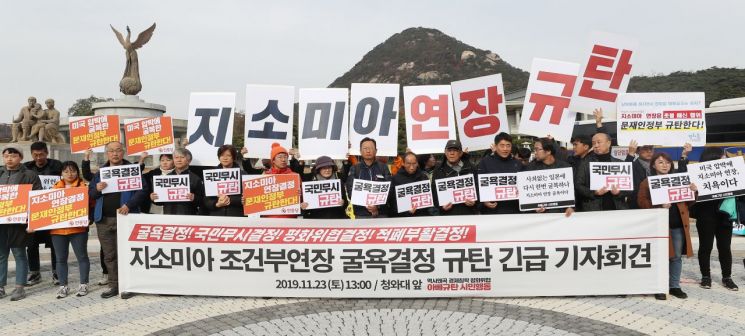
However, due to the de facto collapse of the 'Comfort Women Agreement' under the Moon Jae-in administration in 2019 and Japan's export controls, the agreement nearly faced termination but was conditionally suspended through U.S. mediation, maintaining only its existence.
Within the military, there is a stance that GSOMIA is necessary for monitoring North Korea. GSOMIA offers faster transmission speed compared to the Korea-US-Japan intelligence-sharing agreement. Using the latter requires going through the U.S. and involves classification processes, resulting in slower speed. This can be problematic in the military intelligence-sharing process where rapidity is crucial.
Moreover, Japan's satellites, ground surveillance radars, early warning aircraft, and Aegis destroyers are superior to Korean military equipment. Japanese equipment can track ballistic missiles almost in real-time, so immediately sharing this information through GSOMIA helps prepare for North Korean provocations.
© The Asia Business Daily(www.asiae.co.kr). All rights reserved.
![Clutching a Stolen Dior Bag, Saying "I Hate Being Poor but Real"... The Grotesque Con of a "Human Knockoff" [Slate]](https://cwcontent.asiae.co.kr/asiaresize/183/2026021902243444107_1771435474.jpg)















