[Seoul District News] Jungnang-gu to Install Monument Honoring Yu Gwan-sun at Itaewon Cemetery in Mangu History and Culture Park on 26th, Unveiling Ceremony Held ... Gangbuk-gu to Host 30th Anniversary Symposium of Korea-China Diplomatic Relations at Provisional Government Memorial Hall on 28th, Featuring Presentations and Discussions on Independence War, Korea-China Solidarity, and Cultural Arts ... Dobong-gu to Hold Job Fair with Mobility Service Platform Company i.M for 132 Drivers and Others from 1 PM on 31st
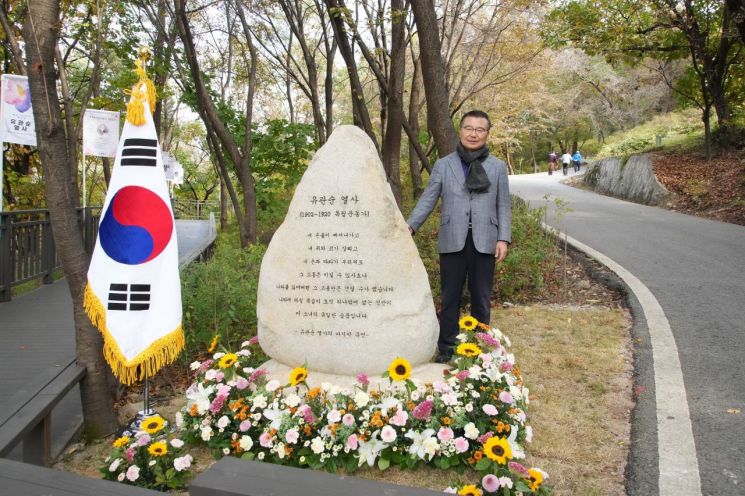 Jungnang-gu and the Yu Gwan-sun Martyrs Memorial Association erected a monument at the entrance to the Itaewon Cemetery's mass grave area (Yu Gwan-sun's joint grave) on the afternoon of the 26th and held an unveiling ceremony.
[Asia Economy Reporter Park Jong-il] Jungnang-gu (Mayor Ryu Kyung-gi) installed a monument honoring Yu Gwan-sun at the Muyeon Grave Consolidation Area of Itaewon Cemetery in Mangwoo Historical and Cultural Park on the afternoon of the 26th, and held an unveiling ceremony with the Yu Gwan-sun Memorial Project Association (Chairman Ryu Jung-woo).
In the burial area, there is a memorial stone erected after cremating unclaimed graves and consolidating them in Mangwoo-ri following the martyrdom and burial of Yu Gwan-sun in the Itaewon communal cemetery. It has now become a symbolic site where Yu Gwan-sun can be most closely commemorated, and an annual memorial service is held in her honor.
The district plans to erect a monument at the entrance of the burial area symbolizing the martyr’s dedication and tears of hardship, so that many visitors passing by daily can frequently recall their gratitude and respect.
Jungnang-gu Mayor Ryu Kyung-gi said, “We pay endless respect and remembrance to Yu Gwan-sun and will devote all efforts to further publicize her contributions,” adding, “We will continue to nurture the precious Mangwoo Historical and Cultural Park with residents and strive to inherit its historical and cultural value.”
In September 2020, the district carried out a maintenance project for the Muyeon Grave Consolidation Area of Itaewon Cemetery, expanding the worship space and creating a deck entrance to make it more accessible to many residents.
Gangbuk-gu (Mayor Lee Soon-hee) will hold an academic symposium titled “The Development of the Korea-China Joint Front during the Anti-Japanese War Period” on the 28th at the multipurpose hall of the National Provisional Government of the Republic of Korea Memorial Hall to commemorate the 30th anniversary of Korea-China diplomatic relations and the Year of Korea-China Cultural Exchange.
This academic symposium focuses on reexamining the cooperation and joint response of Korean and Chinese anti-Japanese forces during the Japanese invasion period by era, region, and field. It is co-hosted by Gangbuk-gu and the Institute for Korean Historical Issues and organized by the Gangbuk-gu Modern History Memorial Hall.
The event will proceed with an opening ceremony, keynote presentations, Part 1 on the independence war and Korea-China solidarity, Part 2 on anti-Japanese solidarity through culture and arts, and a comprehensive discussion. This academic presentation is significant in that it broadens the perspective beyond the previously emphasized military solidarity to include the cultural and artistic fields.
Former Independence Hall Director Lee Joon-sik, delivering the keynote speech titled “Korea’s Independence Movement and the Chinese Revolution,” will review changes in the perception of independence movement history since Korea-China diplomatic relations and analyze the solidarity and influence between Korean and Chinese anti-Japanese forces during the Japanese invasion period. He will particularly emphasize that the participation of independence activists in the Chinese revolution was part of the independence movement and will call for a shift in the Korean government’s recognition and a reestablishment of award criteria fitting the 30th anniversary of Korea-China diplomatic relations.
Professor Son Yeom-hong of Konkuk University will present “The Establishment of the Korean Liberation Army and Korea-China Cooperation Seen through Chinese Official Documents,” providing an in-depth analysis of negotiations, cooperation, and conflicts during the establishment of the Korean Liberation Army using Chinese historical materials. Professor Son will reveal that issues such as the unification of Korean political parties, approval of the Provisional Government, and international relations acted as obstacles to the formal approval and financial support of the Korean Liberation Army, and that the northward movement of the Joseon Volunteer Army prompted active policy changes by the National Government.
Research Professor Moon Mi-ra of Chungbuk National University will focus on “The Anti-Japanese Theatrical Activities of the Joseon Volunteer Army and Korea-China Solidarity.” She highlights that the theatrical activities of the Joseon Volunteer Army were not mere propaganda but a record recreating their struggle experience and constituted the anti-Japanese independence movement itself.
Senior Researcher Jang Se-yoon of Sungkyunkwan University’s East Asian History Research Institute will address the sensitive topic of “Korea-China Solidarity Struggles in Northeast China (Manchuria) in the 1930s.” He evaluates the independence movement in Manchuria during the 1930s as a model of armed anti-Japanese struggle and, despite some fluctuations in timing, attributes historical significance to the “Chinese-Korean National United Forces” as a successful example of Korea-China joint front solidarity. Furthermore, he will emphasize the need for an open perspective in Korean academia and the reflection of this in formal education.
Professor Maeng Moon-jae of Anyang University will analyze “Dan-jae Shin Chae-ho and the Anti-Japanese Literary Activities of Chinese Comrades” focusing on the anarchist movement and highlighting its literary achievements. He points out that Dan-jae deepened his acceptance of anarchism through ideological exchanges with Chinese scholars such as Lee Seok-jeung and Chae Won-bae at Peking University, and that the support of Chinese comrades was instrumental in publishing the magazine Cheon-go (Heavenly Drum) and establishing the Shin Chae-ho Society. Additionally, he will provide a precise analysis of the anarchistic tendencies in Shin Chae-ho’s literature from a critic’s perspective.
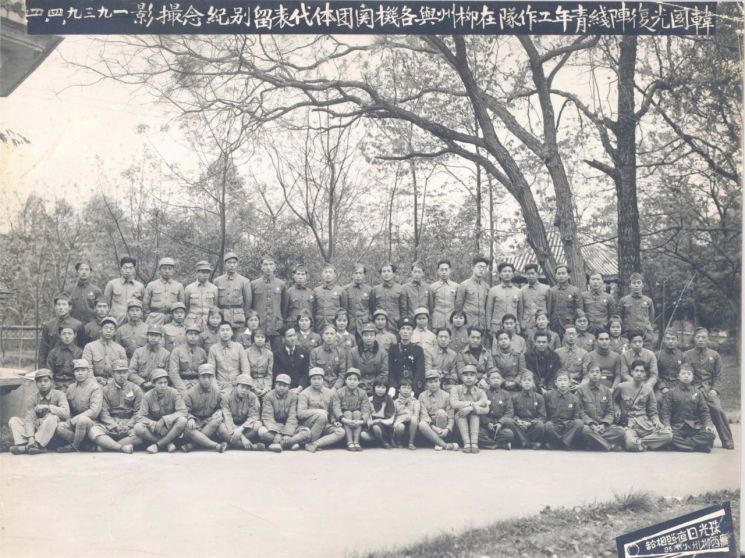
Senior Researcher Lee Myung-sook of the Institute for Korean Historical Issues will examine Korea-China solidarity in anti-Japanese music. “Korea-China Solidarity through Performances and Music” analyzes the three-year anti-Japanese propaganda activities of two youth organizations, the Korean Liberation Front Youth Work Team (Hanguk Gwangbok Jinseon Cheongnyeon Gongjakdae) and the Korean Youth Frontline Work Team (Hanguk Cheongnyeon Jeonji Gongjakdae), focusing on theatrical and musical performances to summarize their significance.
Researcher Hong Sung-hoo of the Korean Art History Research Institute will trace the anti-Japanese activities of artist Jang Jin-gwang, who is little known in the south. “Jang Jin-gwang’s Anti-Japanese Struggle and Artistic Activities in Yan’an” newly introduces his anti-Japanese activities in the Uiyoldan, Joseon National Revolutionary Party, Joseon Youth Federation, and Joseon Independence League, as well as his propaganda and agitation art work while serving in the Chinese People’s Anti-Japanese Military and the Eighth Route Army in Yan’an.
Lecturer Nam Ki-woong of Ajou University will analyze “The Shanghai Connection: Film Exchanges between Korean Filmmakers and Chinese Filmmakers.” His presentation examines the activities of Korean filmmakers in “Old Shanghai” (before the establishment of the People’s Republic of China in 1949) during the 1920s and 1930s and their exchanges and cooperation with Chinese filmmakers. He evaluates that Korean filmmakers produced many outstanding works that sounded an alarm in Chinese society beyond the dichotomy of “exile” and “advancement” and emphasizes the revolutionary value of these works.
The comprehensive discussion will be chaired by Yoon Kyung-ro, director of the Modern History Memorial Hall, with all presenters and discussants including a research professor from Pusan National University, Oh Eun-ah from the Ministry of Patriots and Veterans Affairs, Professor Hwang Min-ho of Soongsil University, Professor Lee Dong-soon of Chosun University, Research Professor Kim Myung-seop of Dankook University, art critic Choi Yeol, and Professor Kang Sung-ryul of Kwangwoon University participating.
The organizers announced that Chinese Ambassador to Korea Xing Haiming will attend the opening ceremony to encourage the symposium held in celebration of the 30th anniversary of Korea-China diplomatic relations and deliver a congratulatory speech pledging Korea-China friendship.
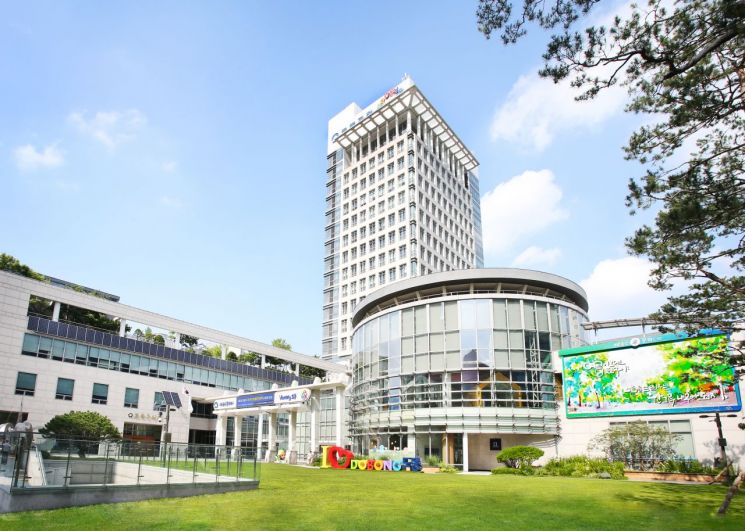
Dobong-gu (Mayor Oh Eon-seok) will hold the “2022 i.M Job Fair with Dobong-gu Office” in collaboration with the local mobility service platform company i.M to support residents facing difficulties in job seeking.
The job fair will take place on the 31st from 1 PM to 5 PM at the Seoninbong Hall of Dobong-gu Office, featuring a recruitment briefing session at 1 PM and on-site interviews. They plan to hire 132 people on-site across 10 fields including Genie (driver), general affairs, sales management, education H/R, vehicle control, and labor.
Dobong-gu held the 4th Dobong-gu Job Fair on September 30th with 112 participating companies, resulting in 47 people securing employment.
Dobong-gu Mayor Oh Eon-seok said, “I would like to express my gratitude to CEO Lee Sung-wook and the i.M staff who helped with this event. I hope the job fair continues steadily and greatly contributes to creating local jobs.”
© The Asia Business Daily(www.asiae.co.kr). All rights reserved.
![Clutching a Stolen Dior Bag, Saying "I Hate Being Poor but Real"... The Grotesque Con of a "Human Knockoff" [Slate]](https://cwcontent.asiae.co.kr/asiaresize/183/2026021902243444107_1771435474.jpg)


















