Yeogyeonghyeop Hosts Management Training... Over 1,000 CEOs Gather
52-Hour Workweek Applied to Businesses with Fewer Than 30 Employees Starting Next Year
Over 150 Business Issue Consultations at 'Women Entrepreneurs DESK'
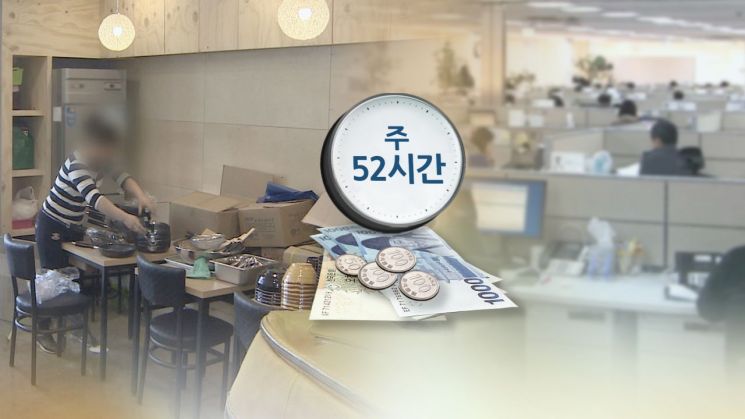
Jung, the CEO of a software development company, outsources program development to freelancers and short-term contract workers to circumvent the 52-hour workweek system. Jung said, "If I post a notice on an online platform saying 'looking for someone to do this kind of work,' applications from freelancers flood in." He explained that because projects are distributed appropriately, a single person can complete the work in 3 to 5 hours if they focus.
Although Jung's company has about 20 employees, most of the development workforce is outsourced without formal hiring. He said, "As a small business, it is difficult to find personnel, and using short-term workers is more efficient than hiring full-time employees." He added, "Business owners will struggle if they cannot quickly adapt to government policies," and noted, "Fortunately, with the rise of the 'gig economy,' it aligns well with market demand."
This is Jung's own solution to the 52-hour workweek system. Choi, CEO of a company specializing in information and communication facility installation and maintenance, said, "Because work must be done according to construction schedules, it is impossible to distinguish between weekdays and holidays," and lamented, "Small businesses realistically find it difficult to comply with the 52-hour workweek." Jung Su-yeon, CEO of a charter bus company in the metropolitan area, said, "For tour bus drivers who have to drive round trips from Seoul to Busan, sometimes over 12 hours, it is difficult to comply with the 52-hour workweek."
Small business owners appeal for the permanent implementation of the 8-hour additional overtime system allowed for workplaces with fewer than 30 regular employees. This system permits up to 60 hours of work per week if agreed upon by labor and management. According to government policy, it applies to companies with fewer than 30 employees until the end of December this year. From January next year, even small businesses must strictly comply with the 52-hour workweek.
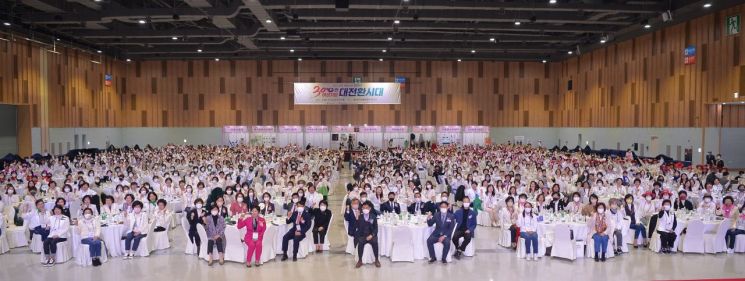
The three female entrepreneurs were met on the 26th at the 'Women CEO Management Training' held by the Korea Women Entrepreneurs Association in Ulsan. On that day, about 1,000 female entrepreneurs gathered to network and seek ways to strengthen competitiveness. On one side of the venue, the 'Women Entrepreneurs DESK' provided free consulting to business owners facing difficulties. More than 150 cases of consultations on various management issues such as funding, sales channels, and human resources were conducted with experts that day.
According to the Basic Statistics on Small and Medium Enterprises, as of 2020, there are about 2.95 million women-owned businesses, accounting for over 40% of all SMEs, but their share of sales is only 18.7%, and employees account for 28.3%. Since most are small-scale microenterprises and small businesses, the impact of applying the 52-hour workweek system is expected to be even greater.
Kim Kyung-man, a specialist at the Women Entrepreneurs Comprehensive Support Center, said, "Requests such as 'It would be good to relax the 52-hour workweek system' have been received, showing that the working hours system is a concern among entrepreneurs recently," and added, "Because it is applied uniformly regardless of industry or size, there is no sharp solution unless there is a special social agreement."
© The Asia Business Daily(www.asiae.co.kr). All rights reserved.
![Clutching a Stolen Dior Bag, Saying "I Hate Being Poor but Real"... The Grotesque Con of a "Human Knockoff" [Slate]](https://cwcontent.asiae.co.kr/asiaresize/183/2026021902243444107_1771435474.jpg)

















