Concerns Raised Over Decreased Imports from Germany and Netherlands
Controversy Over Introducing Price Cap Only for Gas Used in Power Generation
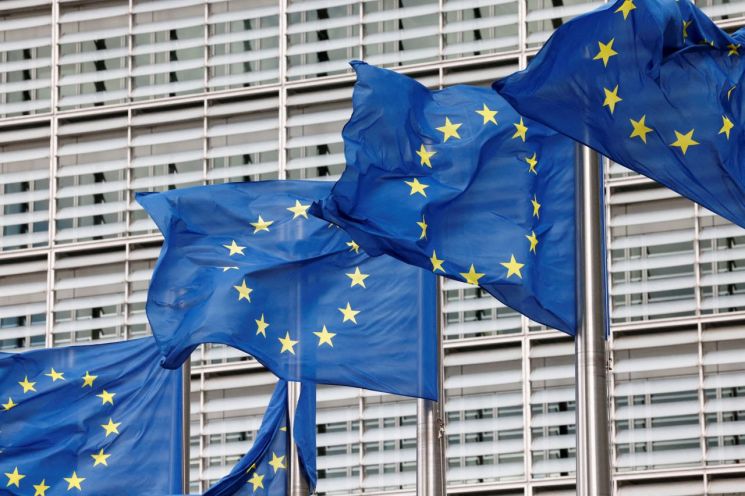
[Asia Economy Reporter Hyunwoo Lee] The European Union (EU) sought to reach an agreement on the gas price cap system, which is being introduced to sanction Russian natural gas and stabilize gas prices within the region, but failed to do so due to differences among member states. The EU announced it will hold another meeting at the end of next month to pursue an agreement, but with continued opposition from Germany, the Netherlands, and others, finding a consensus appears difficult.
According to the Associated Press on the 25th (local time), Josef S?kela, the Czech Minister of Industry and Trade and chair of the EU, held a press conference after the EU Transport, Telecommunications and Energy Council meeting in Luxembourg that afternoon, stating, "Member states still hold somewhat differing views on the introduction of the price cap," and added, "An emergency meeting is scheduled to be convened again on the 24th of next month."
Minister S?kela did not specifically name countries opposing the price cap, but within the EU, Germany, Austria, Hungary, and the Netherlands are known to have continued expressing opposition to the price cap system. These countries argue that introducing a price cap could discourage gas exports from alternative suppliers such as the United States and Middle Eastern countries, which serve as substitutes for Russian gas imports.
Minister S?kela also emphasized, "The core question from the opposing countries is whether we will still be able to purchase the necessary gas even if a price cap is set."
During the meeting, there was also debate over the so-called 'Iberian model,' which proposes applying the price cap only to gas used for power generation. The Iberian model limits the price fluctuations of gas used for power generation, while the government compensates power companies for the difference between the actual transaction price and the capped price. This system is currently operated by Spain and Portugal, located on the Iberian Peninsula, hence the name.
However, concerns grew that if this proposal were expanded across the entire EU, disparities in national electricity prices and the share of gas-fired power generation would lead to mixed outcomes. Countries like France and some others, with relatively small gas power capacity, could benefit significantly, whereas Germany and Eastern European countries, which rely heavily on gas power generation, might face increased fiscal pressure, making implementation challenging.
© The Asia Business Daily(www.asiae.co.kr). All rights reserved.
![Clutching a Stolen Dior Bag, Saying "I Hate Being Poor but Real"... The Grotesque Con of a "Human Knockoff" [Slate]](https://cwcontent.asiae.co.kr/asiaresize/183/2026021902243444107_1771435474.jpg)















