[Seoul District News] Gwanak-gu Develops Long-Term Plans with Government and Seoul City for 'Dorimcheon Stormwater Drainage Tunnel' & Implements Flood Prevention Facilities Including Flood Barriers for All Previously Flooded Households and Small Businesses & Installs Openable Security Windows to Prevent Casualties in Semi-Basements, Creates Flood Disaster Maps and Builds Database ... Seongdong-Type Smart Stormwater Inlets Installed to Resolve Odor and Flood Damage
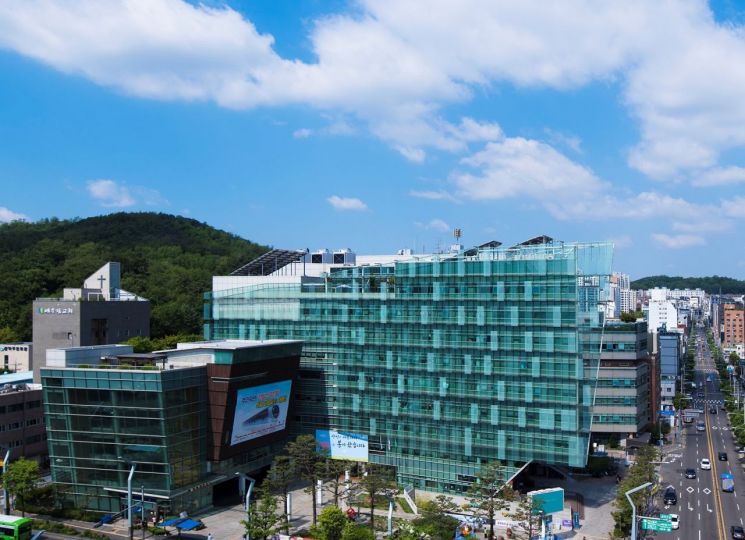
[Asia Economy Reporter Park Jong-il] Gwanak-gu (Mayor Park Jun-hee) will invest a total of 316.3 billion KRW from this year through 2027 to establish and implement a comprehensive plan aimed at the proactive protection of flood disaster vulnerable groups and the prevention of recurring flood damage.
In September, the district quickly formed the 'Flood Damage Comprehensive Measures TF' together with external experts and key functional departments, and established the 'Comprehensive Measures to Prevent Flood Damage,' which includes 18 measures across four areas that residents can directly feel.
As a long-term task, in cooperation with the government and Seoul City, Gwanak-gu will build the 'Dorimcheon Rainwater Drainage Tunnel' and the 'Dorimcheon AI Flood Forecast System' to prevent the frequent flooding of the Starlight Rainy Stream (Dorimcheon) in Gwanak-gu.
The 'Dorimcheon Rainwater Drainage Tunnel,' capable of quickly channeling over 100mm of rainwater per hour into the Han River, is scheduled for completion in 2027 with an investment of 300 billion KRW from national and city funds.
Additionally, by the 2023 rainy season, the district will install the 'Dorimcheon AI Flood Forecast System,' which integrates AI-based rainfall and river water level monitoring with sewer flow measurement, moving beyond the existing simple river forecasts.
Mayor Park Jun-hee emphasized thorough preparation, stating, “Until the rainwater drainage tunnel and AI flood forecast system are completed, we will devise and implement medium- and short-term flood damage prevention measures that can be immediately executed at the district level to prevent repeated underground facility flooding in advance.”
By the next rainy season, the district plans to install 'flood barriers and indoor backflow preventers' in over 70% (3,371 households) of previously flood-damaged households, investing 11 billion KRW to complete installations in all households (4,816 households) by 2024. Support for flood barrier installation will also be extended to small business owners’ flood-damaged stores starting next year.
A total of 1.8 billion KRW will be invested to install and support 'openable security windows' in all semi-basement homes occupied by safety-vulnerable groups to prevent casualties.
Special measures will also be prepared for semi-basement households inhabited by flood-vulnerable groups such as persons with disabilities and elderly living alone, who face difficulties in emergency evacuation during crises.
For flood-vulnerable households, one-on-one assignments of public officials, volunteers, and community leaders will be made to regularly inspect flood prevention facilities and equipment before the rainy season and to assist with on-site rescue operations during heavy rain through an expanded 'Flood Care Service.'
An 'AI-based emergency alert system' will be established inside the homes of flood-damaged persons with disabilities and elderly living alone aged 80 or above, enabling calls to designated institutions and individuals for emergency response and special management.
In particular, the district will build a 'Flood Map and Vulnerable Group Database' to strengthen responses for evacuation-vulnerable individuals during disasters, including information on semi-basement homes, flood-prone houses, vulnerable groups, and emergency contact networks, ensuring thorough protection of the lives and safety of socially disadvantaged people.
Furthermore, various administrative and institutional improvements and measures to minimize flood damage will be promptly implemented, including imposing fines for unauthorized installation of rainwater drain covers, fundamentally prohibiting the construction of new semi-basement homes, and establishing an IoT (monitoring) system to prevent facility collapse and secondary damage during heavy rain.
Mayor Park Jun-hee stated, “We will immediately implement comprehensive flood damage prevention measures for flood-vulnerable groups, focusing the district’s disaster response capabilities on ensuring that no casualties occur even if record-breaking heavy rain falls.”
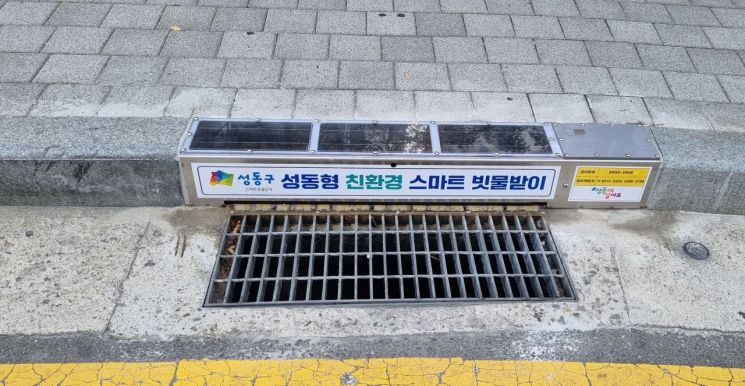
Seongdong-gu (Mayor Jeong Won-oh) has developed the ‘Seongdong-type Eco-friendly Smart Rainwater Drain’ to improve existing rainwater drains and prevent odors and flood damage, completing a pilot installation in the Wangsimni Doseon-dong area.
Rainwater drains, commonly seen on roads and alleys, are important facilities that drain rainwater into sewer pipes to prevent flood damage. In August, during an unprecedented heavy rain in the metropolitan area, a ‘hero at Gangnam Station’ attracted attention for manually removing trash from a rainwater drain with bare hands to prevent damage from spreading.
However, these drains often cause inconvenience to many residents due to odors and illegal dumping. In particular, residents sometimes arbitrarily install covers on rainwater drains to block odors, which become the main cause of flood damage when these covers are not removed in time during heavy rain.
To simultaneously solve odor and flood damage issues, Seongdong-gu developed the Seongdong-type Smart Rainwater Drain over about one year and six months from last year until September this year. The cover automatically opens when it rains.
The newly developed ‘Seongdong-type Smart Rainwater Drain’ blocks sewer odors with its cover during normal times and automatically opens during rainfall to allow drainage, integrating various cutting-edge technologies.
A district official said, “The Seongdong-type Smart Rainwater Drain uses solar power as an energy source to solve odor and flood damage at once,” adding, “We plan to continuously monitor and improve the pilot-installed drains.”
Seongdong-gu Mayor Jeong Won-oh said, “Since last year, we have developed the Seongdong-type Smart Rainwater Drain, analyzed its operation, and installed it as a pilot in the region,” and added, “We will continue to gather residents’ opinions and expand this resident-friendly administration suitable for the smart city Seongdong-gu, along with smart shelters and smart crosswalks.”
© The Asia Business Daily(www.asiae.co.kr). All rights reserved.
![Clutching a Stolen Dior Bag, Saying "I Hate Being Poor but Real"... The Grotesque Con of a "Human Knockoff" [Slate]](https://cwcontent.asiae.co.kr/asiaresize/183/2026021902243444107_1771435474.jpg)
















