Climate Crisis Causes Coastal Flooding and Heavy Rainfall Anomalies
At Least 600 Dead So Far in Nigeria Floods
UN Secretary-General: "A Counterattack on the War Declared by Humans Against Nature"
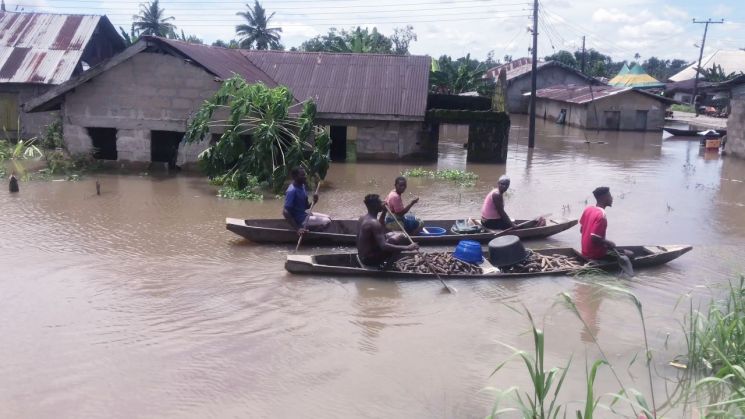
[Asia Economy Reporter Bang Je-il] This year, various parts of the world including Pakistan, Thailand, Cambodia, Australia, Nigeria, and Venezuela are suffering from severe flooding caused by climate change.
According to a report by the British daily The Guardian on the 20th (local time), Pakistan has faced an unprecedented disaster with one-third of its territory submerged due to rains since June, resulting in over 1,000 deaths and the worst situation ever. The economic damage related to the massive floods in Pakistan has surged to an estimated $40 billion (about 57.4 trillion KRW), as reported by the Associated Press, highlighting the enormous economic impact.
Nigeria, a 'resource-rich' country in West Africa, has also experienced its worst floods, with 18 out of 36 states affected. The floods have caused around 600 deaths and displaced over one million people. Hundreds of villages in southeastern and north-central Nigeria remain isolated, lacking access to drinking water, fuel, and food supplies. Moreover, the local meteorological agency forecasts more rain to come, even though flood recovery efforts from a month ago are still incomplete.
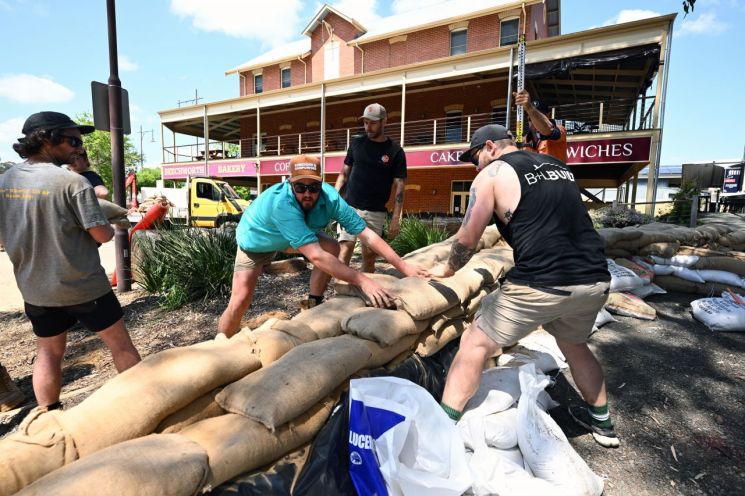
In Australia, recent heavy rains in the southeastern region caused at least 16 rivers to overflow in New South Wales, Victoria, and the island state of Tasmania, leaving thousands homeless. In Melbourne, the amount of rain that fell in one hour on the 7th exceeded half of the average monthly rainfall, breaking October rainfall records that had stood for 100 years in many surrounding areas.
The western suburbs of Melbourne were flooded, and residents are evacuating livestock, creating water channels, and stacking sandbags to prevent riverbanks from collapsing. Sydney experienced its highest rainfall this year, and the Victorian city of Kerang, like Melbourne, is preparing for the worst possible flooding.
In Southeast Asia, severe monsoon rains and sudden downpours have claimed dozens of lives and caused thousands to lose their homes and farmland.
In Thailand, 59 out of 77 provinces suffered flood damage, with about 450,000 houses and 100,000 hectares of farmland lost. The Thai government has allocated approximately 2.3 billion baht (about 61 billion KRW) for disaster relief, but heavy rains are expected to continue.
In central Vietnam, continuous rain has increased the death toll to 10, and about 11,000 houses in the coastal city of Da Nang have been flooded. Cambodian Prime Minister Hun Sen dismissed the Minister of Agriculture after rice fields across several northern provinces were washed away by floods.
In Latin America, Venezuela has also suffered significant damage in several cities in Aragua state due to rains over the past few weeks. On the 8th, a landslide struck the village of Las Tejerias, killing at least 54 people. On the 17th, El Casta?o, the only area in Aragua state previously spared from flooding, was submerged after a dam collapsed due to heavy rain. Most residents evacuated in advance and sought refuge in nearby isolated villages. The government has dispatched 2,800 soldiers to assist with recovery efforts.
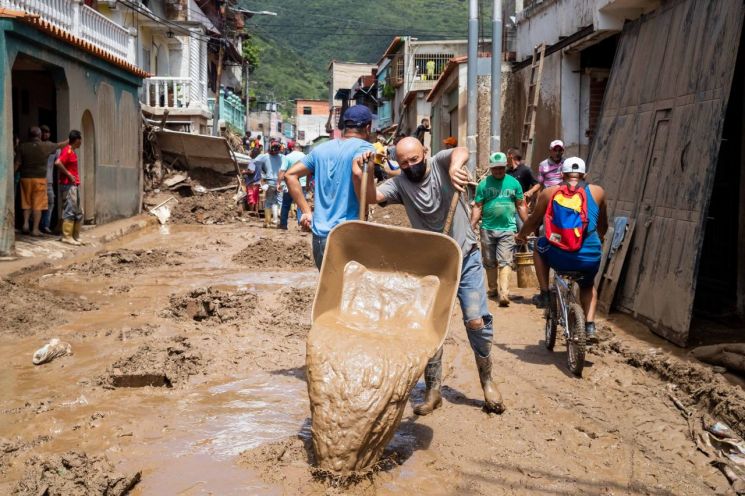 A citizen is using a cart to clear the mud that flowed into the downtown area due to the landslide in Las Tejerias, Venezuela, and the flooding of the Los Patos River. Photo by EPA, Yonhap News
Experts diagnosed, "The amount of rain that fell in Las Tejerias in one day was equivalent to what would normally fall over 35 days, attributing this to the climate crisis." Melting glaciers and thermal expansion of seawater have raised sea levels, submerging coastlines worldwide, while high temperatures cause moisture accumulation in the atmosphere, triggering heavy rains and snowfalls.
Experts further emphasized, "Flooding caused by heavy rain is a natural phenomenon, but the damage is increasing due to human-induced climate change. Some regions face alternating severe droughts and sudden heavy rains, raising the risk of landslides and causing serious chain effects."
Specifically, experts point out that Nigeria's flood damage was worsened by poor land management and insufficient government investment in social infrastructure, leading to inadequate disaster preparedness.
Adedamola Ogunseesan, Project Manager at the Nigeria Conservation Foundation, said, "This flood was largely due to poor management of the plains and the government's complacent response. The early warning system did not function properly, causing confusion, and there were no clear guidelines for resident evacuation and relocation."
Meanwhile, UN Secretary-General Ant?nio Guterres, during his visit to Pakistan last month after the severe flooding, stressed, "We have started a war against nature, and nature is retaliating in destructive ways."
© The Asia Business Daily(www.asiae.co.kr). All rights reserved.
![Clutching a Stolen Dior Bag, Saying "I Hate Being Poor but Real"... The Grotesque Con of a "Human Knockoff" [Slate]](https://cwcontent.asiae.co.kr/asiaresize/183/2026021902243444107_1771435474.jpg)

















