Seoul Northeast Area Buyer Sentiment Hits Record Low in Statistics
Seoul Apartment Prices Also See Largest Drop in 10 Years
As Downturn Deepens, Buyer Sentiment Freezes Further
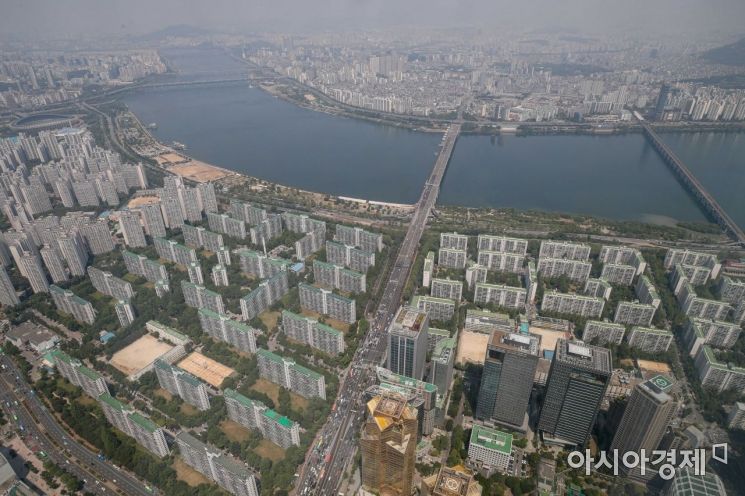
On a weekly basis, the nationwide apartment prices have recorded the largest drop in 10 years, and the sales supply-demand index is also falling relentlessly. In some parts of Seoul where the transaction freeze is severe, the sales supply-demand index has hit the lowest level since statistics began, indicating that the real estate sales market is experiencing an increasingly harsh winter.
According to the Korea Real Estate Board on the 21st, this week’s Seoul apartment sales supply-demand index was 76.0, down 0.9 points (p) from last week’s 76.9. This marks the 24th consecutive week of decline since the first week of May (91.1) and is the lowest figure in 3 years and 4 months since the second week of June 2019 (76.0).
The sales supply-demand index being below the baseline of '100' means that there are more people wanting to sell houses than those wanting to buy in the market.
Looking at Seoul by region, the supply-demand index, which was above 100 until last year, has plummeted vertically, with the 70-point level also collapsing one after another.
The Northeast area, which includes Nowon, Dobong, and Gangbuk districts, recorded 69.8 this week following last week’s 70.4, breaking below the 70-point level. This is the lowest figure since the Korea Real Estate Board began surveying the supply-demand index in July 2012.
The Northwest area, including Eunpyeong, Seodaemun, and Mapo districts, recorded an even lower 68.7, also falling below the 70-point level. This is the lowest in about 3 years and 3 months since the first week of July 2019 (63.5).
The Central area, including Yongsan and Jongno districts, recorded a sales supply-demand index of 70.3 this week, on the verge of breaking below the 70-point level.
The Southeast area, which includes the Gangnam 4 districts, fell from 81.5 last week to 80.5 this week, while the Southwest area, including Yeongdeungpo, Yangcheon, Gangseo, and Dongjak districts, dropped from 84.2 to 83.2.
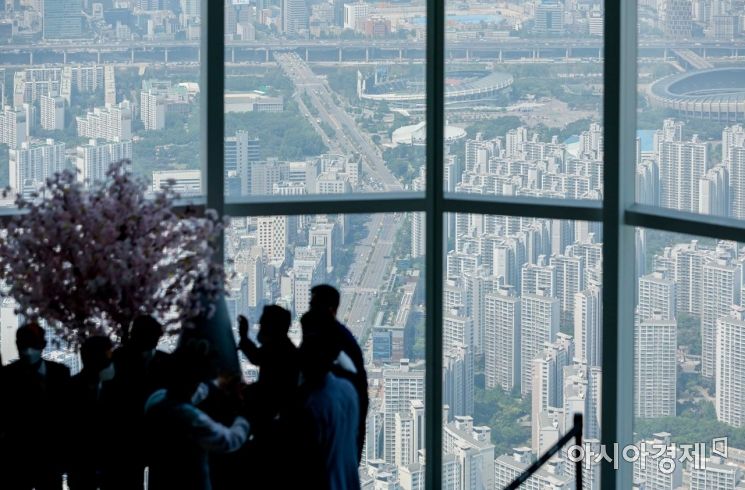
As the decline in apartment prices accelerates, the sales supply-demand index is expected to freeze further.
Seoul apartment prices have been falling for 21 consecutive weeks since the last week of May, when the capital gains tax surcharge on multiple homeowners was postponed, leading to an increase in listings.
According to data from the Korea Real Estate Board, Seoul apartment prices fell by 0.27% this week compared to last week. This is the largest drop in 10 years and 4 months since June 11, 2012 (-0.36%).
By district, Nowon (-0.41%) and Dobong (-0.42%) fell more than 0.4%, and Seongbuk (-0.37%), Seodaemun (-0.31%), and Geumcheon (-0.30%) also saw significant declines.
In the Gangnam area, apartment prices in Songpa district saw a larger drop from -0.31% last week to -0.38% this week, while Gangnam (-0.20%) and Seocho districts (-0.16%) also experienced an expanded decline compared to last week.
The Korea Real Estate Board analyzed, "With falling transactions mainly involving urgent sales and continuous downward price adjustments, market concerns over further interest rate hikes are deepening the real estate downturn, leading to a cautious buying stance and expanding the decline."
Apartment price declines in Gyeonggi (-0.39%) and Incheon (-0.41%) are also steep. Accordingly, the decline in apartment prices in the metropolitan area widened from -0.28% last week to -0.35% this week.
This is the first time since the Korea Real Estate Board began price surveys in May 2012 that the metropolitan area apartment prices have shown a decline rate in the 0.3% range.
Apartment prices in provincial areas also recorded a larger drop of -0.21%, compared to -0.17% last week, with transactions mainly involving urgent sales.
Due to weakness in both the metropolitan area and provincial regions, nationwide apartment prices fell by 0.28%, marking the largest drop since the survey began.
Meanwhile, in the jeonse (long-term lease) market, there are more landlords looking for tenants than tenants looking for properties.
The Seoul apartment jeonse supply-demand index was 80.0, down 1.7 points from last week’s 81.7, marking the lowest level in about 3 years and 3 months since the first week of July 2019 (79.0).
The Korea Real Estate Board explained, "Due to the ongoing interest rate hikes, new jeonse demand is decreasing, and even in renewals, there is a trend of switching to half-jeonse or monthly rent."
© The Asia Business Daily(www.asiae.co.kr). All rights reserved.


















