"Stalkers Do Not Consider the Other Person's Intentions or Feelings... Different from Courtship or Affection"
"With the Development of SNS, People Are More Vulnerable to Stalking as They Connect with an Unspecified Majority"
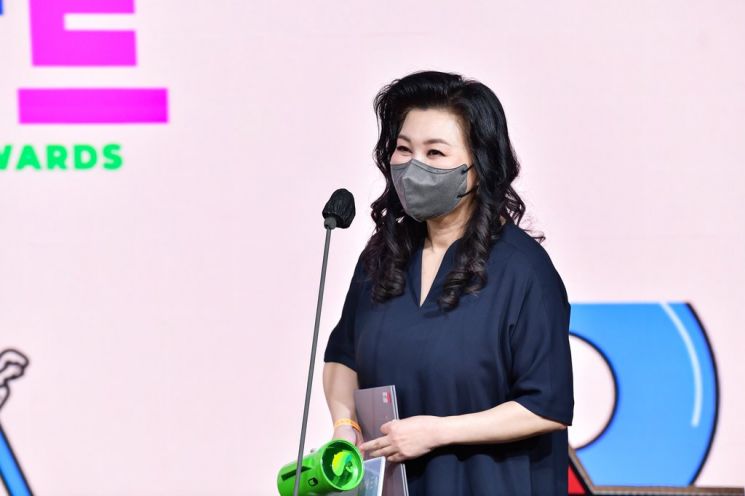 Dr. Oh Eun-young, a psychiatrist, recently emphasized the need to raise awareness about stalking crimes, noting that such crimes have increased due to the development of social networking services (SNS). Photo by Yonhap News Agency, provided by Green Umbrella Child Fund.
[Asia Economy Reporter Yoon Seul-gi] Psychiatrist Dr. Oh Eun-young revealed her past experience as a stalking victim and emphasized that stalking is a crime, not courtship, and that awareness must be raised accordingly.
On the 20th, Dr. Oh appeared on MBC Radio's 'Kim Jong-bae's Focus' and addressed the recent increase in stalking crimes, stating, "Nowadays, it has become possible to connect with an unspecified number of people," and added, "Because of that, people have become much more vulnerable to stalking."
She continued, "Stalking refers to a mistaken delusion or obsessive fixation on someone, which leads to crimes such as assault or murder. While there are many cases of face-to-face stalking, even without direct contact, stalking often begins through social networking services (SNS) or direct messages (DM), and many cases escalate into stalking crimes through these intermediate stages," she explained.
Regarding the psychology of stalking offenders, she said, "Usually, when people clearly reject obsession, the pursuer might give up or apologize, but stalkers do not consider the other person's will or feelings at all. Their emotional expressions and obsession are very one-sided and aggressive." She added, "Stalkers often have delusional thoughts related to the other person, and if the target remains silent or politely refuses, stalkers sometimes distort this as a positive message."
Dr. Oh also spoke about her own past experience as a stalking victim. She said, "When I was a psychiatric resident at Yonsei University Severance Hospital in the early 1990s, I suffered greatly as a stalking victim." She recalled, "(The stalker) would write his own name on the groom's name and my name on the bride's name on different people's wedding invitations every day and send them daily. He would come into the medical office (the university hospital resident waiting room) every day and steal my books or belongings."
She added, "He would suddenly appear while I was standing in the hallway, try to stab me with an umbrella, and show burns from a cigarette on his arm, saying, 'This is the kind of person I am.'" She said, "No matter how much I reported to the police, it was useless."
Furthermore, Dr. Oh pointed out the need to strengthen awareness of stalking crimes. She said, "What is important in stalking crimes is that police officers, prosecutors, judges, and public officials who enforce the law have a clear understanding." She added, "If they respond as if it is a matter of courtship, it becomes very difficult to receive any help." She also emphasized, "The entire nation must have this concept. People must clearly understand that when a man or woman shows an unusual affection toward the opposite sex, it can cause tremendous harm and can escalate into very serious crimes."
© The Asia Business Daily(www.asiae.co.kr). All rights reserved.
![Clutching a Stolen Dior Bag, Saying "I Hate Being Poor but Real"... The Grotesque Con of a "Human Knockoff" [Slate]](https://cwcontent.asiae.co.kr/asiaresize/183/2026021902243444107_1771435474.jpg)
















