Interest Shift Due to Overseas Travel and Tennis
High Green Fees, Caddy Fees, and Other Costs Increase Burden Amid Recession
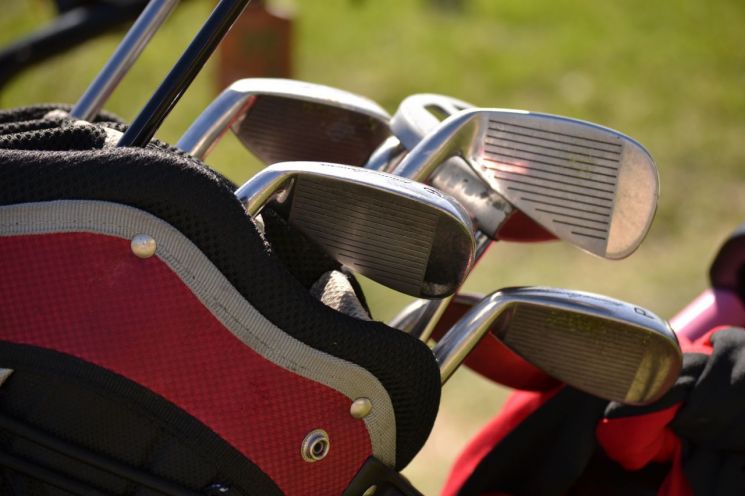
[Asia Economy Reporter Intern Lee Gyehwa] Recently, the interest of the 20s and 30s generation has shifted to overseas travel and tennis, leading to a cooling enthusiasm for golf among them. Analysts attribute this to the ongoing economic downturn, where unlike other sports, golf has a high entry barrier due to its significant initial costs, and the expenses for golfing rounds also pose a heavy burden.
During the COVID-19 pandemic, golf, an outdoor activity, gained attention, and the MZ (Millennial + Generation Z) generation actively entered the sport. According to the Korea Leisure Industry Research Institute, the domestic golf population increased from 4.7 million in 2019 to 5.64 million last year. Among them, those in their 20s and 30s accounted for about 22%. Especially among women in their 20s and 30s, it became a trend to wear golf wear and post 인증샷 (certification shots) on social networking services (SNS) with grass backgrounds, which the golf industry welcomed enthusiastically.
However, recently, the golf craze among the 20s and 30s generation has somewhat subsided. According to MaeKyung Economy, when asked about the reasons for the cooling golf enthusiasm (multiple responses allowed), the results were: △cost burden (39.8%) △availability of other leisure activities after the lifting of social distancing (27.4%) △too much time required to learn before going to the field (18.4%) △lack of fun (14.3%), in that order.
To play a round at a golf course, significant expenses are required to prepare equipment such as golf clothes, golf shoes, and golf balls. With fierce competition for golf course reservations, the recent green fees average around 200,000 KRW per person for 18 holes. Expensive courses approach 300,000 KRW on weekends, and caddy fees have risen to 150,000 KRW. Considering additional costs such as cart and caddy fees, the total easily exceeds 300,000 to 400,000 KRW per round.
Due to these factors, golf clubs and golf apparel are flooding the secondhand market. As the economic downturn continues, more people are quitting golf or using affordable secondhand transactions. According to the secondhand goods trading platform Bungaejangter, the transaction amount in the golf category from January to September this year increased by 119% compared to the same period last year. The transaction amount for golf clubs in the first half of this year rose by 171% compared to the previous year. Additionally, in August, more than 5,000 sales posts for golf-related products were uploaded on the secondhand trading site Junggonara.
Kim, a 30-year-old office worker, said, "A single round on the field costs at least 300,000 to 400,000 KRW including green fees, caddy fees, and other expenses." He added, "When you include lesson fees and practice costs for skill improvement and maintenance, it costs more than my salary." Professor Lee Eunhee of Inha University (Department of Consumer Studies) said, "To play golf, one needs the economic capacity to have the skills and equipment necessary for rounds," adding, "High-cost golf can be burdensome for those in their 20s and 30s."
© The Asia Business Daily(www.asiae.co.kr). All rights reserved.
![Clutching a Stolen Dior Bag, Saying "I Hate Being Poor but Real"... The Grotesque Con of a "Human Knockoff" [Slate]](https://cwcontent.asiae.co.kr/asiaresize/183/2026021902243444107_1771435474.jpg)
















