Revealed at the Ministry of Land, Infrastructure and Transport's National Assembly Audit
"Should the government bear all the burden of empty lease contracts?"
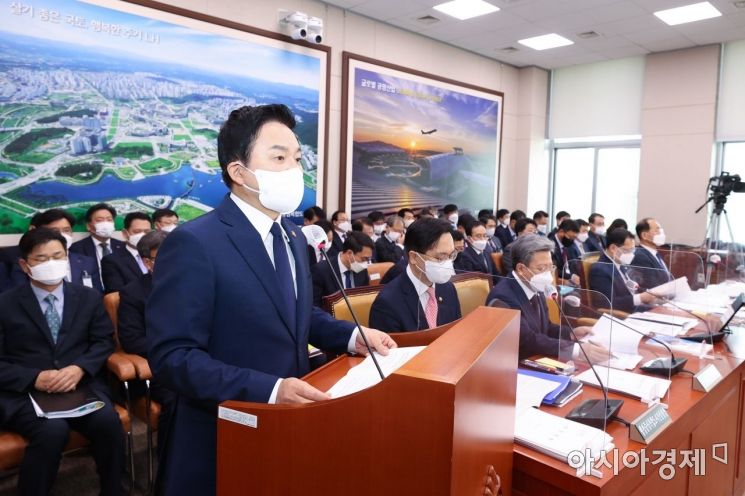
Won Hee-ryong, Minister of Land, Infrastructure and Transport, stated on the 6th, "Cases where parents' assets are gifted or inherited, or where parents purchase a house in their child's name during a period of rising real estate prices, are not considered targets for support or relief at all."
On the same day, during the National Assembly Land, Infrastructure and Transport Committee's audit, in response to Justice Party lawmaker Shim Sang-jung's question that "the government's youth cost-price housing initiative could become a second lottery housing," Minister Won replied, "We will carefully design the program to ensure there are no unfair cases by thoroughly examining economic activity status, income, assets, and eligibility requirements."
Regarding the issue of 'empty shell jeonse'?where the jeonse deposit exceeds the market price?Minister Won also expressed a cautious approach, asking, "Should the government bear all the burden?"
He said, "The problem of empty shell jeonse caused by reckless gap investment is a difficult issue," adding, "We will implement support measures such as financial grace periods or relaxations to prevent a rapid and violent adjustment process, but we must be very cautious about whether we should bear all the consequences caused by past irresponsible jeonse loans and multi-homeowners' gap investments."
He further stated, "From the perspective of preventing a hard landing, we will devise support measures and work on structural normalization to prevent such incidents from occurring in the long term."
Meanwhile, lawmaker Shim presented an analysis that the high-risk group for empty shell jeonse during a period of falling house prices is at least 230,000 households.
Shim analyzed 1.61 million housing financing plans submitted by the Ministry of Land, Infrastructure and Transport (from 2020 to August 2022) and found that there were 121,553 high-risk cases where the jeonse rate exceeded 80%, and 111,481 potential risk cases where the jeonse rate was between 60% and less than 80%, which could become empty shell jeonse if house prices fall in the future.
The government and experts consider that when the jeonse rate exceeds 80%, there is a high risk that the house will become an empty shell house, meaning the homeowner will have difficulty repaying loans or returning the tenant's deposit even if the house is sold.
© The Asia Business Daily(www.asiae.co.kr). All rights reserved.

















